London Hosts Emergency Talks as Sudan Nears Total Collapse

On April 15, as Sudan marks two years of relentless conflict, Britain will co-host a high-level summit at Lancaster House in London alongside Germany and France. The conference will gather foreign ministers from nearly 20 countries and international organizations with a single objective: to unite efforts in pushing Sudan’s rival generals toward a ceasefire—or, at the very least, toward accountability.

This diplomatic move is modest in contrast to the scale of Sudan’s suffering, a crisis that remains among the most devastating and underreported humanitarian emergencies in the world. While global attention remains largely concentrated on Gaza and Ukraine, Sudan—Africa’s third-largest country—is experiencing a slower-moving catastrophe that is every bit as grim.

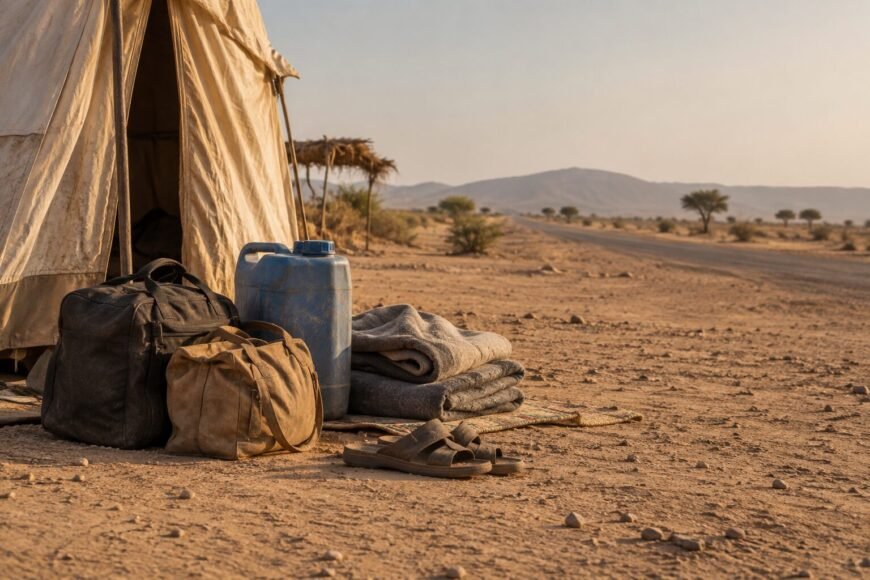
Over 12 million people have been displaced since the conflict broke out in April 2023. Entire cities lie in ruins, children face starvation, and the vibrant communities that once defined the nation are now little more than statistics in aid reports. What began as an internal power struggle has devolved into full-blown humanitarian collapse—and much of the world has looked away.

The conflict stems from a violent rivalry between Gen. Abdel Fattah al-Burhan of the Sudanese Armed Forces (SAF) and Gen. Mohamed Hamdan Dagalo—commonly known as Hemedti—who leads the paramilitary Rapid Support Forces (RSF). Once partners in a post-coup transition, they have turned on each other in a brutal war for control, fueled by impunity and international indifference.

The devastation is most visible in Darfur, where cities like El Geneina have suffered repeated attacks targeting the Masalit ethnic minority. Eyewitness reports and satellite imagery show widespread destruction. The RSF—descendants of the Janjaweed militias once accused of genocide—appear to be repeating history. Survivors recount brutal acts of sexual violence, starvation as a siege tactic, and the conscription of child soldiers.

In Sudan’s capital, Khartoum, once a bustling metropolis, war has shut down hospitals, cut off water supplies, and left schools inoperative. The RSF controls key urban areas and has established a shadow regime centered around torture, looting, and extortion.

One particularly tragic case involves Alwaleed Abdeen, a young Sudanese entrepreneur who was rescued from an RSF-run detention facility so emaciated and injured that his family did not recognize him. He later died of his wounds. His case is just one of many—made notable only because his story made it out.

The statistics reflect a crisis of immense proportions. According to the United Nations, nearly 18 million Sudanese are suffering from acute food insecurity. In North Darfur, famine is not a looming threat—it is already unfolding, slowed only by bureaucratic inertia and blocked aid corridors. Still, Sudan rarely garners media attention. Why? Because it is geopolitically inconvenient.

There are no clear heroes, no moral clarity, and no strategic benefits for the West. Instead, there are two ruthless commanders backed by regional powers, each seeking dominance at any cost.

Efforts by the African Union and Intergovernmental Authority on Development to mediate have yielded little progress. Western nations—quick to condemn atrocities elsewhere—have offered only muted responses to Sudan’s descent. But silence is not neutrality; it is complicity through inaction.

The London conference presents a vital opportunity to mobilize humanitarian resources, open aid corridors, and issue a united diplomatic demand for an end to the violence. For Sudanese civilians, it offers a flicker of hope.

Western and regional actors must pledge to apply real pressure on both warring factions, which includes targeted sanctions—not just symbolic visa bans—on those responsible for atrocities. It also means imposing a comprehensive arms embargo and confronting the countries that continue to supply weapons to both sides. Long-term diplomatic engagement, led not only by European partners but also by the United States, which once supported Sudan’s democratic transition in 2019, is urgent.

Notably, the Sudanese Armed Forces and the Rapid Support Forces have not been invited to the London talks—nor has the Sudanese government. The exclusion of these parties signals a calculated judgment: that neither side is currently willing to negotiate in good faith, both locked in a nihilistic power struggle.

For the UK, Germany, and France, the immediate aim is to build consensus among external players who are, in many cases, quietly prolonging the war. Yet this exclusion is not without consequence. Sudan’s foreign minister has already dismissed the conference as

Comments

7 responses to “London Hosts Emergency Talks as Sudan Nears Total Collapse”

  1. silver agent Avatar
    silver agent

    Look at that, London’s hosting a summit to resolve Sudan’s chaos while the rest of us are just trying to figure out how to keep our tea from going cold! ☕️🙄 Must be nice to gather 20 foreign ministers to chat while the real action is happening in a country that’s basically gone ‘off the grid.’

  2. rando tank Avatar
    rando tank

    Oh, lovely, another summit in London, because clearly a posh meeting with diplomats will magically fix all of Sudan’s problems—who needs boots on the ground when you have a fancy table and a nice tea set? 🙄☕ Let’s just hope the only thing getting bombed this time is their overpriced biscuits.

  3. blood taker Avatar
    blood taker

    Isn’t it just charming how the West organizes a fancy summit to “discuss” Sudan while the real action is happening in the back alleys? 🎩 Meanwhile, the Sudanese are probably thinking, “Cheers for the verbal gymnastics, but can we just get some food instead?” 😏

  4. Skirble Avatar

    In a world where we solve problems with high-level summits instead of, you know, actual solutions, it’s comforting to see London hosting talks about Sudan—maybe we should all just send a strongly worded email instead? 🤷‍♂️ #DiplomacyAtItsBest

  5. Lady Peach Avatar
    Lady Peach

    another lovely tea party for diplomats, where the only thing more absent than a solution will be any actual interest in helping. 🍵😏

  6. hemingway mirmillone Avatar
    hemingway mirmillone

    “just another posh tea party” ☕, while the rest of us wonder if they’ve considered sending a few scones to the folks on the ground—at least they might enjoy a nibble while the world debates from a distance. 🤷‍♂️

  7. flame out Avatar
    flame out

    just another posh tea party with a side of empty platitudes, innit? 🤷‍♂️ As if a bunch of diplomats in fancy suits can just wave a magic wand and fix a country that’s been a hot mess since forever! 🍵😏

Leave a Reply

Your email address will not be published. Required fields are marked *

Last News

Ukraine Repairs Druzhba Pipeline, Zelenskyy Announces

Ukraine Repairs Druzhba Pipeline, Zelenskyy Announces

The pipeline, which ceased oil transport from Russia to Central Europe after being damaged by a Russian strike in January, became central to a dispute between Ukraine and Hungary. Hungary, heavily reliant on Russian oil, accused Ukraine of delaying repairs and vetoed a €90 billion EU loan for Ukraine, approved by EU leaders in December.
Zelenskyy’s announcement clears the way for Hungary to lift i

Read More

Is It All About the Money?

Is It All About the Money?

Reflect on the question, ‘How much are you worth?’ Today, thinking in monetary terms seems logical, as money is omnipresent—it serves as a payment method, a success metric, and a social status indicator. Quite rightly so, as everything around us can be converted into money. I could sell the laptop I used to write this for a certain sum. You could sell the device you’re reading this on for a

Read More

UK Officials Didn’t See a Need to Vet Peter Mandelson, Says Sacked Olly Robbins

UK Officials Didn’t See a Need to Vet Peter Mandelson, Says Sacked Olly Robbins

UK officials did not find it necessary to vet Peter Mandelson for the role of U.K. ambassador to Washington, according to Olly Robbins, a former top Foreign Office official. Robbins, who was dismissed from his position, stated that Prime Minister was warned about the potential risks associated with appointing Mandelson, a controversial Labour figure, prior to his appointment.

Read More

The Importance of Taking Early Action for Cardiovascular Health

The Importance of Taking Early Action for Cardiovascular Health

Respiratory infections like influenza, Covid-19, and RSV significantly impact CVD and increase hospital strain during seasons. Influenza vaccination alone reduces major cardiovascular events by more than a third, yet there’s a mismatch across the EU: high disease burden with low vaccination coverage. Covid-19 vaccination rates have fallen to about 10 percent in many member states. Influenza

Read More

Romania Faces Political Turmoil as Social Democrats Attempt to Oust PM

Romania Faces Political Turmoil as Social Democrats Attempt to Oust PM

“PSD can no longer be held captive while our social base is being destroyed,” Grindeanu said to leading party members in Bucharest on Monday, referring to the Social Democrats.
According to local media, crowds gathered in the capital for an evening rally backing Bolojan, who stated he would not resign. The prime minister accused the Social Democrats of “cowardly running” from responsib

Read More

7 Reasons Starmer Can’t Shake Off the Mandelson Vetting Saga

7 Reasons Starmer Can’t Shake Off the Mandelson Vetting Saga

Starmer announced on Monday that he had ordered a review into any security concerns that arose during Mandelson’s time in office. This in itself suggests the scandal might expand.
MPs are questioning the extent of access Mandelson had to top secret documents under the UK’s “STRAP” protocol. Access to these high-level documents is complex and varies by situation, with each document havi

Read More

Magyar Appoints First Ministers in New Hungarian Government

Magyar Appoints First Ministers in New Hungarian Government

Zsolt Hegedűs, known for his dance moves and formerly a surgeon, will be the health minister. Former armed forces chief Romulusz Ruszin-Szendi will take over as defense minister. László Gajdos, director of an award-winning zoo, will become the environment minister, and Szabolcs Bóna, a former farmer, will manage agriculture and the food economy.
The complete cabinet will have 16 ministries, includ

Read More

Slovenia’s Prime Minister Concedes Inability to Form Government

Slovenia’s Prime Minister Concedes Inability to Form Government

Earlier this month, Janša’s party supported the pro-Russian Resni.ca party’s attempt to have their leader, Zoran Stevanović, elected as speaker of Slovenia’s parliament. This was widely seen as indicating an alliance between the two populist parties. However, after meeting with Pirc Musar on Monday, Janša admitted that his party had not yet secured enough support to return to power.
The populist l

Read More

The Council of Peace, EU Edition

The Council of Peace, EU Edition

This week is packed with high-level foreign affairs summits and meetings. The EU’s chief diplomat, Kaja Kallas, begins with a focus on Gaza.
Today, Kallas is hosting continuous events to promote a two-state solution for Israel and Palestinian territories. Ian and Nick discuss the EU’s attempt to position itself as an authority on Gaza’s future and offer an alternative perspective

Read More

Health, resilience, and prosperity: Why immunization matters

Health, resilience, and prosperity: Why immunization matters

The burden of infection extends beyond the initial illness to complications, hospitalizations, antibiotic use, long-term deterioration, and sustained pressure on already stretched health systems, along with broader societal impacts like transmission, caregiving burden, sick leave, and productivity losses.
This necessitates a policy shift: immunization should be integrated across disease prevention

Read More