The EU ETS – Key Measures Driving a Greener Future

The European Union Emissions Trading System (EU ETS): Building a Sustainable Future

The EU Emissions Trading System (ETS) plays a critical role in advancing the European Union’s climate goals. It not only helps reduce greenhouse gas emissions but also incentivizes businesses to adopt greener practices through market-based mechanisms. For individuals and companies alike, understanding how the EU ETS functions opens up opportunities to actively participate in protecting the environment while benefiting from economic and innovation-driven rewards.

What Is the EU Emissions Trading System?

Established in 2005, the EU ETS is the world’s first large-scale carbon market. It is a cornerstone of the EU’s strategy to combat climate change and facilitate the transition to a low-carbon economy. The system operates on a “cap-and-trade” principle, where a limit (cap) is set on the total amount of certain greenhouse gases that can be emitted by installations covered by the system.

Under this model, emissions allowances are distributed to businesses, and these can be traded in a regulated marketplace. The cap is reduced over time, ensuring that total emissions fall in line with EU climate targets.

Key Goals of the EU ETS

The central objectives of the EU ETS include:

– Reducing greenhouse gas emissions across sectors.
– Encouraging investment in renewable energy and low-carbon technologies.
– Creating a financial incentive through carbon pricing to stimulate sustainable innovation.
– Supporting the EU’s commitment to achieving net-zero emissions by 2050.

A Brief History

Launched as part of the EU’s response to the Kyoto Protocol’s call for binding emissions reductions, the EU ETS has evolved over several phases:

– Phase I (2005–2007): A pilot phase testing the basic framework.
– Phase II (2008–2012): Alignment with Kyoto Protocol targets.
– Phase III (2013–2020): Tighter caps, centralized allocation, and inclusion of new sectors.
– Phase IV (2021–2030): Focus on innovation, revised emission caps, and improved market stability mechanisms.

These phases reflect the EU’s growing commitment to environmental stewardship and its willingness to refine the system in response to economic and environmental challenges.

How the EU ETS Works

The cap-and-trade model is designed to be both flexible and enforceable.

Cap and Trade

Each year, a ceiling is set on total emissions permitted across all participating sectors. Companies receive or purchase allowances—each permitting the emission of one tonne of CO2. If they emit less than their allocated allowances, they can sell the surplus. If they exceed their allowances, they must buy more or face penalties.

Emission Allowances

Annually, approximately 15 billion allowances circulate in the system. Efficient companies that cut their emissions can profit by selling excess allowances. This approach encourages proactive strategies for emissions reduction, promoting more sustainable industry practices.

Impact on Industry

The EU ETS significantly influences operational practices and long-term strategies across numerous industries.

Sectors Most Affected

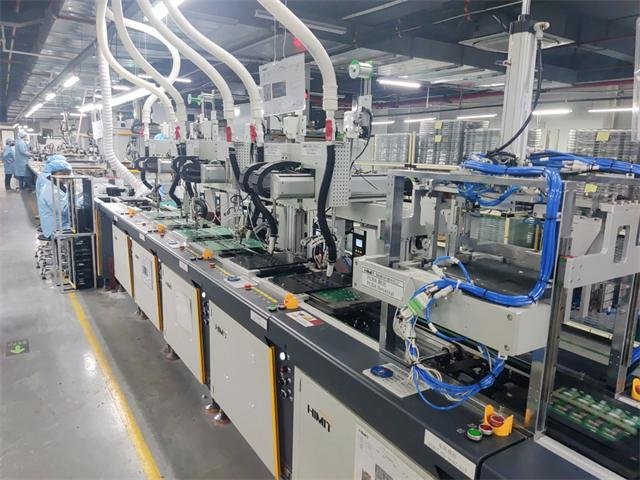
Industries with high emissions, such as power generation, heavy manufacturing, petroleum refining, and aviation, are central to the ETS. These sectors are required to monitor, report, and reduce their emissions in line with EU goals.

Economic Implications

The introduction of carbon pricing transforms emissions into a quantifiable cost. Companies are prompted to weigh the financial burden of allowances against the cost of investing in cleaner technologies. While some may face increased operating expenses, the potential for cost savings and improved efficiency provides compelling reasons to innovate. Additionally, companies perceived as environmentally responsible may enjoy enhanced customer trust and new market opportunities.

Environmental Benefits

Unlike traditional regulations, the EU ETS offers a dynamic way to drive environmental improvement.

Emissions Reduction

The core environmental benefit of the ETS is its ability to lower greenhouse gas emissions efficiently. By requiring companies to account for each tonne of CO2 emitted, the ETS enforces accountability and encourages greener operations.

Progress Toward Climate Goals

By aligning with major international agreements like the Paris Agreement, the EU ETS strengthens Europe’s contribution to global climate objectives. The system’s gradually decreasing emissions cap ensures that reductions continue, year by year, moving the EU closer to carbon neutrality.

Challenges and Criticisms

While the EU ETS has achieved measurable success, it is not without its flaws.

Market Volatility

The value of emissions allowances can fluctuate significantly, making it difficult for companies to plan long-term investments in greener technologies. This uncertainty can hinder the deployment of innovations essential for deep decarbonization.

Regulatory Complexity

Differences in how member states implement and enforce ETS policies can lead to inconsistencies and confusion. Frequent revisions to rules and procedures may discourage participation and delay progress, particularly among smaller firms or new entrants to regulated sectors.

Future Outlook

Despite these challenges, the EU ETS is set to become more robust and inclusive.

Planned Reforms

Proposed improvements aim to strengthen the system’s resilience and impact. These include adjustments to the Market Stability Reserve (which manages the supply of allowances) and an increased annual reduction rate in emission caps. Such reforms are designed


Comments

2 responses to “The EU ETS – Key Measures Driving a Greener Future”

  1. Street Squirrel Avatar
    Street Squirrel

    Oh, fantastic! A groundbreaking carbon market that’s been around since 2005—truly ahead of the game, eh? Who knew trading pollution could be the new “green” gold rush? 💸🌿

  2. carrot 
joker Avatar
    carrot joker

    Isn’t it charming how the EU ETS transforms carbon emissions into a trendy financial instrument? Just what we needed, a fancy trading system to make polluting feel like a nifty stock market gamble! 💼💨

Leave a Reply

Your email address will not be published. Required fields are marked *

Last News

Sustainability: Logic, Premise, and Critiques

Sustainability: Logic, Premise, and Critiques

The prevalent strategy for addressing the climate crisis today is focused on sustainability—sustainable development, trade, travel, economics, and more. Essentially, it’s all about going green, continuing current activities but in a more environmentally friendly way. This approach raises three fundamental questions: Can such changes occur in a system reliant on constant expansion and exploitation

Read More

US Ambassador to France Misses Diplomatic Summons

US Ambassador to France Misses Diplomatic Summons

The U.S. embassy did not respond immediately to POLITICO’s request for comment.
Kushner faced criticism from French authorities due to U.S. government posts on X regarding the death of 23-year-old Quentin Deranque, killed earlier this month during a fight at a political conference in Lyon. Individuals linked to ultra-left groups are under investigation for the incident.
The U.S. Embassy in F

Read More

Isaac Hammouch to Publish New Book on the Khashoggi Assassination

Isaac Hammouch to Publish New Book on the Khashoggi Assassination

Brussels — Journalist and political essayist Isaac Hammouch is preparing to launch a new book titled The Murder of Khashoggi: A State Crime? The Responsibility of Mohammed bin Salman.
The upcoming book revisits the assassination of Saudi journalist Jamal Khashoggi, killed inside the Saudi consulate in Istanbul on October 2, 2018. This case sparked global outrage and heightened scrutiny on state a

Read More

Poland’s Far Right Stages ‘Star Wars’ Merger to Avoid Deregistration Before 2027 Vote

Poland’s Far Right Stages ‘Star Wars’ Merger to Avoid Deregistration Before 2027 Vote

Mentzen appealed the November court ruling, but his allies registered The Empire Strikes Back in January as a backup plan, opting not to wait for the process to conclude. At a private congress on Saturday, delegates decided to merge the two entities, moving New Hope’s structures and assets to the new party.
Confederation officials have been open about their objectives.
“We can say that we outsmart

Read More

Khaled bin Mohamed bin Zayed Represents UAE President at New Delhi’s Global Summit on AI Impact

Khaled bin Mohamed bin Zayed Represents UAE President at New Delhi’s Global Summit on AI Impact

Representing the UAE President, the Crown Prince of Abu Dhabi, Khaled bin Mohamed bin Zayed Al Nahyan, participated in the opening session of the Summit on the Impact of Artificial Intelligence in New Delhi. This event, chaired by Indian Prime Minister Narendra Modi, gathered several heads of state, government leaders, senior officials, and key decision-makers from the global tech sector.
This in

Read More

Brussels’ Privacy Reforms Falter at the Start

Brussels’ Privacy Reforms Falter at the Start

In November, the Commission unveiled its “digital omnibus” plan, part of a broader revision of data and AI laws aimed at enhancing AI technology in Europe. This initiative is one of ten proposed by Ursula von der Leyen’s Commission to reduce bureaucracy and enhance European competitiveness.
A new document, dated February 20, was prepared by the current EU Council presidency held

Read More

How to Handle a Suspected Error on Your Energy Bill in the EU

How to Handle a Suspected Error on Your Energy Bill in the EU

Should your electricity or gas bill unexpectedly rise, EU regulations and national oversight provide clear avenues to contest it. Begin by verifying the meter and contract, submit a written complaint to your supplier, and, if the response is unsatisfactory, escalate the issue to an independent ombudsman or dispute body. This guide outlines practical steps—particularly beneficial for cross-border

Read More

EU’s Ukraine Envoy: Russian ‘War Crime’ Leaves Kyiv Civilians in the Cold

EU’s Ukraine Envoy: Russian ‘War Crime’ Leaves Kyiv Civilians in the Cold

Ukraine in the EU ‘house’
Despite ongoing challenges, Mathernová remains hopeful that the potential for some form of EU membership by 2027 could sustain Ukrainians’ determination. According to a POLITICO report, European Commission President Ursula von der Leyen suggested the idea of “reverse enlargement” to secure Ukraine’s place in the EU, even if it hasn’t fully met accession requirement

Read More

Le Premier ministre du Qatar à Caracas : diplomatie énergétique et équilibres mondiaux

Le Premier ministre du Qatar à Caracas : diplomatie énergétique et équilibres mondiaux

La visite du Premier ministre et ministre des Affaires étrangères du Qatar, Mohammed bin Abdulrahman al-Thani, au Venezuela ne se limite pas à un déplacement protocolaire. Elle s’intègre dans une stratégie plus vaste mêlant énergie, influence et recomposition géopolitique.
Le Venezuela reste un acteur énergétique stratégique, malgré des années de sanctions et d’instabilité politique. Ses va

Read More

Sanctions, Tensions — and a Birthday at the FAC

Sanctions, Tensions — and a Birthday at the FAC

EU foreign ministers are meeting in Brussels to finalize a 20th sanctions package against Russia. However, Hungary may block it, connecting its approval to an ongoing energy dispute with Ukraine concerning the Druzhba pipeline’s oil flows.
Host Zoya Sheftalovich and POLITICO’s chief foreign affairs correspondent Nick Vinocur discuss the implications at the Foreign Affairs Council.
Next, we t

Read More