The EU ETS – Key Measures Driving a Greener Future

The European Union Emissions Trading System (EU ETS): Building a Sustainable Future

The EU Emissions Trading System (ETS) plays a critical role in advancing the European Union’s climate goals. It not only helps reduce greenhouse gas emissions but also incentivizes businesses to adopt greener practices through market-based mechanisms. For individuals and companies alike, understanding how the EU ETS functions opens up opportunities to actively participate in protecting the environment while benefiting from economic and innovation-driven rewards.

What Is the EU Emissions Trading System?

Established in 2005, the EU ETS is the world’s first large-scale carbon market. It is a cornerstone of the EU’s strategy to combat climate change and facilitate the transition to a low-carbon economy. The system operates on a “cap-and-trade” principle, where a limit (cap) is set on the total amount of certain greenhouse gases that can be emitted by installations covered by the system.

Under this model, emissions allowances are distributed to businesses, and these can be traded in a regulated marketplace. The cap is reduced over time, ensuring that total emissions fall in line with EU climate targets.

Key Goals of the EU ETS

The central objectives of the EU ETS include:

– Reducing greenhouse gas emissions across sectors.
– Encouraging investment in renewable energy and low-carbon technologies.
– Creating a financial incentive through carbon pricing to stimulate sustainable innovation.
– Supporting the EU’s commitment to achieving net-zero emissions by 2050.

A Brief History

Launched as part of the EU’s response to the Kyoto Protocol’s call for binding emissions reductions, the EU ETS has evolved over several phases:

– Phase I (2005–2007): A pilot phase testing the basic framework.
– Phase II (2008–2012): Alignment with Kyoto Protocol targets.
– Phase III (2013–2020): Tighter caps, centralized allocation, and inclusion of new sectors.
– Phase IV (2021–2030): Focus on innovation, revised emission caps, and improved market stability mechanisms.

These phases reflect the EU’s growing commitment to environmental stewardship and its willingness to refine the system in response to economic and environmental challenges.

How the EU ETS Works

The cap-and-trade model is designed to be both flexible and enforceable.

Cap and Trade

Each year, a ceiling is set on total emissions permitted across all participating sectors. Companies receive or purchase allowances—each permitting the emission of one tonne of CO2. If they emit less than their allocated allowances, they can sell the surplus. If they exceed their allowances, they must buy more or face penalties.

Emission Allowances

Annually, approximately 15 billion allowances circulate in the system. Efficient companies that cut their emissions can profit by selling excess allowances. This approach encourages proactive strategies for emissions reduction, promoting more sustainable industry practices.

Impact on Industry

The EU ETS significantly influences operational practices and long-term strategies across numerous industries.

Sectors Most Affected

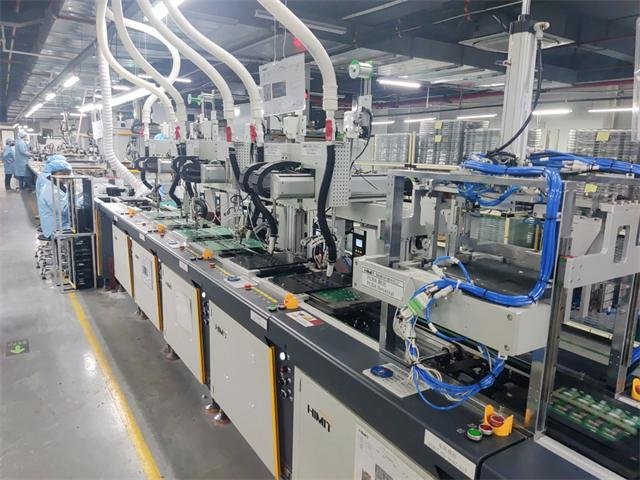
Industries with high emissions, such as power generation, heavy manufacturing, petroleum refining, and aviation, are central to the ETS. These sectors are required to monitor, report, and reduce their emissions in line with EU goals.

Economic Implications

The introduction of carbon pricing transforms emissions into a quantifiable cost. Companies are prompted to weigh the financial burden of allowances against the cost of investing in cleaner technologies. While some may face increased operating expenses, the potential for cost savings and improved efficiency provides compelling reasons to innovate. Additionally, companies perceived as environmentally responsible may enjoy enhanced customer trust and new market opportunities.

Environmental Benefits

Unlike traditional regulations, the EU ETS offers a dynamic way to drive environmental improvement.

Emissions Reduction

The core environmental benefit of the ETS is its ability to lower greenhouse gas emissions efficiently. By requiring companies to account for each tonne of CO2 emitted, the ETS enforces accountability and encourages greener operations.

Progress Toward Climate Goals

By aligning with major international agreements like the Paris Agreement, the EU ETS strengthens Europe’s contribution to global climate objectives. The system’s gradually decreasing emissions cap ensures that reductions continue, year by year, moving the EU closer to carbon neutrality.

Challenges and Criticisms

While the EU ETS has achieved measurable success, it is not without its flaws.

Market Volatility

The value of emissions allowances can fluctuate significantly, making it difficult for companies to plan long-term investments in greener technologies. This uncertainty can hinder the deployment of innovations essential for deep decarbonization.

Regulatory Complexity

Differences in how member states implement and enforce ETS policies can lead to inconsistencies and confusion. Frequent revisions to rules and procedures may discourage participation and delay progress, particularly among smaller firms or new entrants to regulated sectors.

Future Outlook

Despite these challenges, the EU ETS is set to become more robust and inclusive.

Planned Reforms

Proposed improvements aim to strengthen the system’s resilience and impact. These include adjustments to the Market Stability Reserve (which manages the supply of allowances) and an increased annual reduction rate in emission caps. Such reforms are designed



Comments

2 responses to “The EU ETS – Key Measures Driving a Greener Future”

  1. Street Squirrel Avatar
    Street Squirrel

    Oh, fantastic! A groundbreaking carbon market that’s been around since 2005—truly ahead of the game, eh? Who knew trading pollution could be the new “green” gold rush? 💸🌿

  2. carrot 
joker Avatar
    carrot joker

    Isn’t it charming how the EU ETS transforms carbon emissions into a trendy financial instrument? Just what we needed, a fancy trading system to make polluting feel like a nifty stock market gamble! 💼💨

Leave a Reply

Your email address will not be published. Required fields are marked *

Last News

Trump and Stubb Held ‘Constructive’ NATO Talks Amid Uncertain Alliance Future

Trump and Stubb Held ‘Constructive’ NATO Talks Amid Uncertain Alliance Future

Trump expressed anger towards European nations for their refusal to fully engage in the war against Iran, which commenced on February 28 with U.S. and Israeli airstrikes on the Persian state.
European countries have largely avoided military involvement in the Strait of Hormuz, a key trade point obstructed by Iran following the attacks. This week, EU and NATO members Italy and Spain implemented mea

Read More

„Ami go home“ oder Bündnis mit Trump?

„Ami go home“ oder Bündnis mit Trump?

Das Rentenniveau von 70 Prozent war lange Zeit ein zentrales Versprechen der AfD, obwohl Experten es als nicht finanzierbar betrachteten. Vor der Fraktionsklausur nach Ostern deutet sich nun ein radikaler Kurswechsel an. Pauline von Pezold und Frederik Schindler analysieren, wie die Partei von dieser Marke abrückt, warum ein „Junior-Depot“ für deutsche Kinder helfen soll und wie die AfD versucht,

Read More

"Rubio Warns US May Rethink NATO Post-Iran Conflict: ‘Not a Very Good Arrangement’"

"Rubio Warns US May Rethink NATO Post-Iran Conflict: ‘Not a Very Good Arrangement’"

European countries are increasingly resisting U.S. requests for assistance against Iran, despite President Donald Trump’s growing frustration with Washington’s historic allies.
Spain has emerged as a key point of tension in this transatlantic divide. Deputy Prime Minister Carlos Cuerpo stated on Monday that Madrid has barred U.S. military aircraft involved in the Middle East conflict f

Read More

Hungary’s Unfair Election: Why Viktor Orbán is So Hard to Beat

Hungary’s Unfair Election: Why Viktor Orbán is So Hard to Beat

The Hungarian Helsinki Committee, a human rights NGO, cautioned that a law on voter tourism “poses a risk of multiple voters reregistering in single constituencies expecting a tight race, aiming to influence election results.” The European Platform for Democratic Elections, an independent alliance of European election observers based in Warsaw, also raised alarms regarding this practice, indicatin

Read More

Le Pen Criticizes Trump Amid Escalating Energy Crisis Due to Iran Conflict

Le Pen Criticizes Trump Amid Escalating Energy Crisis Due to Iran Conflict

Following her initial support for the U.S.-Israeli strikes on Iran at the outset of the conflict, Le Pen last week criticized Trump for his “erratic war goals” and the “mistake” of targeting Iran, as stated in her interview with France Inter radio.
Trump had reached out to Le Pen and the National Rally upon beginning his second term in January 2025. However, the party has increasingly viewed Washi

Read More

The Prisoner of the Period: 14 Years in an Iranian Prison

The Prisoner of the Period: 14 Years in an Iranian Prison

Some narratives may not initially appear as violent as being shot for protesting, or hanged for asking for freedom, or refusing to sing the anthem at sports events. However, when you are arrested, beaten, and sentenced to 14 years in prison for merely correcting Iran’s supreme leader with a punctuation mark on social media, it exposes the intense ego and moral state of Iran’s theocr

Read More

Irish Lawmaker Urges Stripe to Defy US Sanctions on UN Investigator Albanese

Irish Lawmaker Urges Stripe to Defy US Sanctions on UN Investigator Albanese

Sanctions placed on Albanese by the Trump administration, following her allegations against governments and corporations for being involved in genocide in Gaza, resulted in her and her family being cut off from U.S. banking, travel, and technology — including transactions by American intermediaries such as Stripe. The Israeli government has firmly denied allegations of genocide.
“I understand, as

Read More

Ignitis Group Finalizes Sale Transaction

Ignitis Group Finalizes Sale Transaction

AB “Ignitis grupė“ (the Group) announces the completion of selling 49% of its shares in UAB Vilniaus kogeneracinė jėgainė (Vilnius CHP). The 49% stake was purchased by Quaero European Infrastructure Fund III, managed by Quaero Capital SA (Quaero Capital).
The transaction finalized on 30 March 2026, following approval from the Group’s General Meeting of Shareholders on 25 March 2026, regulat

Read More

Poland to Keep Patriot Air Defense Systems, Not Diverting to Gulf

Poland to Keep Patriot Air Defense Systems, Not Diverting to Gulf

The report from Polish daily Rzeczpospolita on Tuesday claimed that U.S. officials requested Poland to relocate one of its Patriot batteries to the Middle East due to increased pressure on air defense resources amid Iran’s retaliatory drone strikes on U.S. Gulf allies.
A senior defense official from a NATO country, speaking anonymously, clarified that Poland was not specifically targeted by

Read More

OSCE Evaluation of France: Secularism, Security, and Minority Issues

OSCE Evaluation of France: Secularism, Security, and Minority Issues

A Rigorous Assessment in Paris
PARIS — In June 2025, a delegation of officials from the Organization for Security and Co-operation in Europe (OSCE) arrived in Paris. Led by Ambassador Evren Dağdelen Akgün, Rabbi Andrew Baker, and Professor Wolfgang Palaver, the Personal Representatives of the OSCE Chair-in-Office undertook a comprehensive mission to assess the state of freedom of religion or beli

Read More