


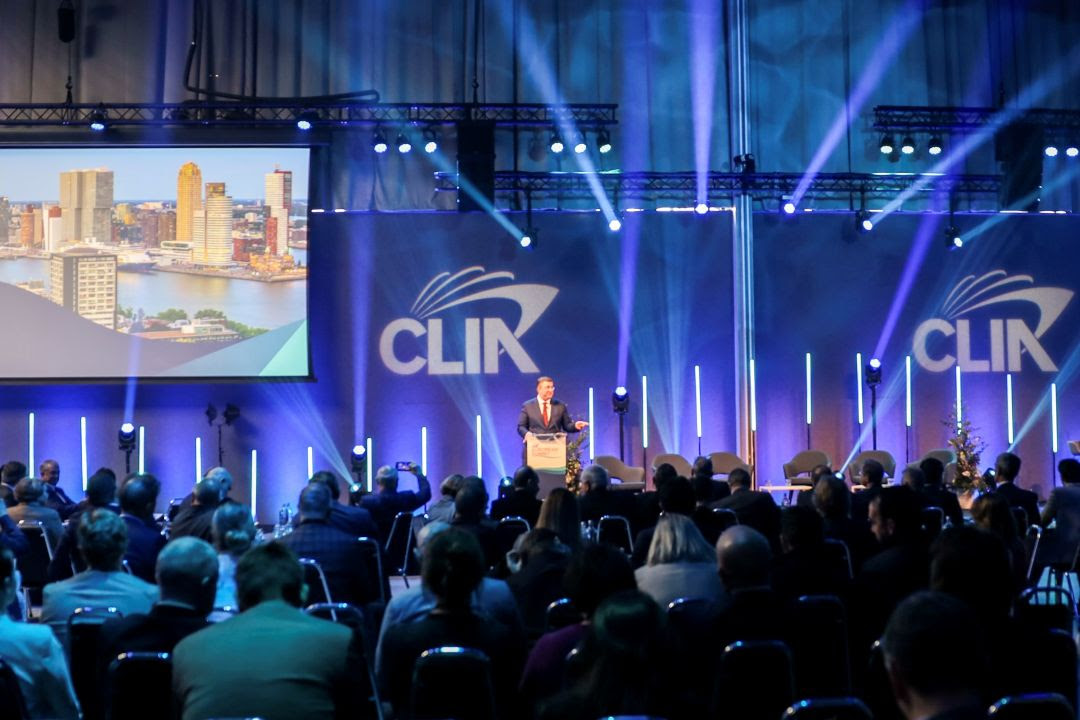
Apostolos Tzitzikostas, the Commissioner for Sustainable Transport and Tourism, recently visited Europe’s largest port, Rotterdam. During the trip, he served as the keynote speaker at the European Cruise Summit, part of CLIA Cruise Week, and held a productive meeting with CEOs from cruise line companies and shipyards globally.
Each year, the Port of Rotterdam accommodates 28,000 deep-sea vessels and 91,000 inland waterway vessels, managing a remarkable 435.8 million tons of cargo last year.
Commissioner Tzitzikostas praised the Port of Rotterdam, stating, “Not only is it the largest port in Europe, but it also spearheads the energy transition. The port is heavily investing in sustainable electric power and green hydrogen infrastructure while implementing clean energy solutions across its facilities.” He underscored its role as a leading refueling port, offering alternative fuels and preparing for future hydrogen and ammonia refueling.
During his discussions with global cruise industry leaders, the Commissioner explored the “challenges, future developments, and opportunities” facing European cruises, alongside the upcoming changes that come with transitioning to a new era.
Highlighting Europe’s dominance in cruise ship construction, Tzitzikostas remarked, “European shipyards are the sole constructors of iconic and state-of-the-art cruise vessels globally.” He expressed optimism about the sector’s economic prospects, forecasting an annual growth rate of 4% to 5%, with demand now exceeding levels seen before the pandemic.
In his keynote address at the European Cruise Summit, the Commissioner emphasized the event’s critical agenda for the European cruise industry, focusing on priorities such as cruise ship infrastructure, industry competitiveness, responsible tourism practices, sustainable fuels, and workforce development.
“Cruising is an economically significant sector for Europe, linking our continent with the wider world,” he remarked.
Tzitzikostas also acknowledged the various challenges the cruise industry faces amid global tensions and regional instabilities that impact maritime operations. Regarding safety, he affirmed, “The safety and protection of passengers and crew remain our utmost priority.” He urged the need for vigilance and adaptability, stating, “We invest in a robust, coordinated approach to maritime safety within the EU and in partnership with international allies.”
On the subject of the European cruise market’s competitiveness, the Commissioner noted, “The cruise sector is essential to Europe’s tourism landscape, driving economic growth in coastal regions while showcasing our continent’s beauty.” He referenced the International Cruise Association (CLIA), which highlights the industry’s contributions to employment and technological advancement. He acknowledged the sector’s innovative nature but also emphasized the significant challenges it currently faces. “Striking a balance between economic growth and environmental sustainability is vital. This dual approach is key to supporting the cruise industry’s transition and ensuring its long-term success in Europe,” he stated.
Tzitzikostas stressed the importance of regulatory support and collaboration among cruise companies, national authorities, and port operators in investing in new sustainable fuels and technologies. He pointed to the upcoming International Maritime Organization (IMO) meeting in April as a crucial opportunity for establishing equitable competitive conditions globally within the maritime sector. “We urgently need to implement an ambitious package of medium-term measures,” he added, noting that digitization will also enhance efficiency and reduce the carbon footprint of the maritime industry.
The Commissioner highlighted the necessity for training and upskilling in the cruise sector, emphasizing that ports must be equipped to tackle future challenges. “We are developing a new European strategy for ports that will address a range of issues, including economic and cybersecurity, competitiveness, sustainability, military mobility, energy transition, and resilience. The cruise sector will be a critical partner in this initiative,” he concluded.
Finally, Tzitzikostas called for collaboration within the cruise industry to ensure it remains at the forefront of innovation, serves as a driving force for the European economy, and leads in environmental sustainability. “This is how we will secure a continuous increase in the number of cruise passengers,” he affirmed.





Leave a Reply