



When Jonas Salk developed the polio vaccine in 1955, health authorities did not restrict its use over concerns it might “renormalize injection.” Similarly, regulators did not ban antiretroviral therapy for HIV out of concern that patients might neglect abstinence. Every major public health breakthrough, from vaccines to clean water to seatbelts, has relied on innovation and technology. Smoking should be approached with the same commitment to progress.
Media coverage of nicotine pouches focuses on market dynamics and investor returns. Buried in that narrative is a public health revolution happening in real time, one European regulators are trying to kill before it can save lives.
Sweden’s smoking rate dropped to 5.3% in 2024, the lowest in the EU. The EU average is 24%, barely changed since 2020. At current trends, Sweden will be smoke-free this year. The rest of Europe? Try 2100. What accounts for this gap? Stockholm is not blessed with superhuman willpower. Swedes have access to a wide range of innovative nicotine products, including nicotine pouches. These small, tobacco-free pouches deliver pharmaceutical-grade nicotine without combustion, tar, or the thousands of toxicants in cigarette smoke.
Czechia saw smoking rates plummet by 7 percentage points between 2020 and 2023 after coordinating harm-reduction policies across government ministries. Greece, stuck at 42% for fifteen years, cut smoking by six points after reversing its ban on these products. Japan’s cigarette sales fell 52% as heated tobacco gained acceptance. The UK dropped from 16.4% to 10.4% after incorporating vaping into cessation strategies. A clear pattern emerges: countries that treat nicotine products based on their actual risk profiles see smoking rates collapse. Countries clinging to the fiction that all nicotine delivery is equally harmful watch their citizens keep smoking and getting sick.
The U.S. Food and Drug Administration recognized this when it authorized the marketing of nicotine pouches last year. As doctors Riccardo Polosa, Karl Fagerstrom, and Brad Rodu note in a recent paper, the FDA made a key distinction: “Nicotine is what keeps people using tobacco products. However, it’s the thousands of chemicals contained in tobacco and tobacco smoke that make tobacco use so deadly.”
Yet Belgium, France, Germany, and the Netherlands have banned these products outright. The prohibition reflex reveals a failure of imagination about what public health can achieve. Traditional interventions like taxation, advertising bans, and smoking restrictions remain valuable. But they have hit their ceiling. Smokers in 2026 need better options than “quit or die.”
This matters beyond Europe’s borders. Low- and middle-income countries face an explosion in smoking-related disease with minimal cessation infrastructure. India’s oral cancer rates are among the world’s highest, driven by smokeless tobacco use. Nicotine pouches could provide a direct substitution with the same delivery method and a fraction of the risk. But international development aid continues funding abstinence-only programs that do not work at scale.
Skeptics invoke the precautionary principle. Yet precaution demands weighing all risks, including those of doing nothing. Belgium has chosen prohibition while Sweden has chosen smart regulation and now faces smoking rates a fifth of the EU average. Perhaps both approaches carry risks. But what is certain is that only one appears to be working at scale.
Defeating smoking requires more than willpower and taxation. Technology has consistently been the catalyst for public health breakthroughs, creating pathways that make healthier behaviors practical rather than heroic. Nicotine delivery without combustion offers that pathway now. Europe can still lead this revolution instead of banning it.
Dear reader,
Opinions expressed in the op-ed section are solely those of the individual author and do not represent the official stance of our newspaper. We believe in providing a platform for a wide range of voices and perspectives, even those that may challenge or differ from our own. We remain committed to providing our readers with high-quality, fair, and balanced journalism. Thank you for your continued support.
Comments
20 responses to “Will the EU Choose Cigarettes or Innovation?”
-
Seems like the EU has decided to stick to its guns—who needs innovation when you can just keep puffing away at those stale regulations? 😂 It’s like watching a bus driver refuse to upgrade to a GPS while everyone else is zooming ahead with their fancy tech.
-
Looks like the EU’s approach to public health is as forward-thinking as a flip phone in 2023. 😂 While Sweden’s strutting towards a smoke-free future, the rest of us are stuck in a nicotine time warp, clinging to outdated ideas like a toddler to their favorite blankie. 🥴
-
Choosing between cigarettes and innovation? Brilliant! Let’s just stick our heads in the sand while the Swedes show us how it’s done. 🧐💨
-
Cigarettes or innovation? Tough choice, like deciding between stale baguettes or a gourmet croissant! 🍰 Let’s just hope the EU doesn’t mistake harm reduction for a new flavor of cheese.
-
Looks like Europe is at a crossroads: stick with the old-school smokes or get a whiff of innovation. 🚬💨 I mean, why embrace progress when you can cling to the past like a stubborn old goat, right? 😂
-
Fancy a game of ‘choose your poison’? While some of us are lighting up innovation, others are still stuck in the smoke-filled rooms of the ’50s. 🚬💨
-
Quite the pickle, innit? On one side, we’ve got the EU champions of health, and on the other, a bunch of nicotine pouches that could save lives faster than a dodgy taxi ride through Brussels! 🚖💨
-
Just love how the EU is all about tradition, like keeping smoking rates high while Sweden’s busy revolutionizing health—who needs innovation when you’ve got nostalgia, right? 😂💨
-
Deciding between cigarettes and innovation, eh? It’s like choosing between a fine Bordeaux and a bottle of cheap plonk—one’s clearly better for your health, but who am I to spoil the fun? 🍷😏
-
So, the EU’s big plan is to choose between puffing away or actually innovating? Brilliant strategy—because who needs the whole ‘public health’ thing when we can just stick to our old habits, right? 💨😂
-
Cigarettes or innovation? Quite the dilemma, eh? It’s like choosing between a dodgy kebab or a Michelin star meal—some folks just can’t see past the smoke and mirrors. 🙄💨
-
Oh, brilliant! Let’s choose the age-old habit of puffing away like it’s 1955, while our neighbors are busy innovating their way to a smoke-free future. I suppose the EU thinks “better late than never” applies to public health too, eh? 😂✌️
-
Choosing between cigarettes and innovation? Sounds like picking between a flat tire and a speed bump. 🚬💨 If only the EU could take a leaf out of Sweden’s book instead of clutching its pearls!
-
Oh, brilliant! Let’s stick with the old ways and watch Europe puff away while Sweden practically unlocks the smoke-free achievement. Innovation? Nah, just more tax and a cough! 😂💨
-
Seems like the EU’s playing a game of “who can ignore innovation the longest” while Sweden’s busy showing us how to actually reduce smoking rates. Perhaps Brussels thinks “smoke-free” is just a fancy term for more regulations? 😂
-
Seems like the EU is gearing up for an epic showdown: cigarettes vs. innovation. Because who needs progress when you can just sit back and watch the smoke clear, right? 🤷♂️💨
-
Smoking or innovation? Choices, choices! 🤔 It’s like deciding between a fine Bordeaux and a bottle of plonk—one gets you ahead, the other just leaves you gasping for air. 🍷🚬
-
If the EU had a euro for every time it chose cigarettes over innovation, we might have a smoke-free budget by now! At this rate, Stockholm will be hosting our smoke-free Olympics by 2100 while the rest of us are still puffing away. 💨😂
-
Choosing between ciggies and innovation, eh? Must be a tough call for the EU—it’s like picking between a rainy day and a full-on deluge! 🤷♂️
-
Talk about a tough choice! It’s like deciding between a lovely espresso and a cup of mud—let’s just hope the EU doesn’t take up smoking just to keep it interesting. 🤷♂️💨

Last News

Germany’s Church Tax Faces Rights Scrutiny
In 2025, Germany’s church tax generated approximately €12.7 billion for the country’s two largest Christian churches, with around €6.7 billion for the Roman Catholic Church and about €6.0 billion for Protestant churches, according to the Institut

Multiple Investigations Escalate Spain Government Controversy Amid Growing Pressure on Sanchez Administration Madrid, 2026

Understanding the Creation Process
Concepts of the World’s Composition
Historically, Jewish and Christian traditions have had different interpretations regarding the composition of the world.
Creation from Nothing
The belief in God’s creation of the world from nothing (L

Politico
Prosecutors in Rome investigating the case said Al-Masri’s militia was part of Libya’s state security and worked with Italian security to stop illegal boat departures from Libya. The Italian government stated the action was

Italian Exports Surge, Boosting Italy’s First-Quarter Growth Outlook, Rome 2026
The updated
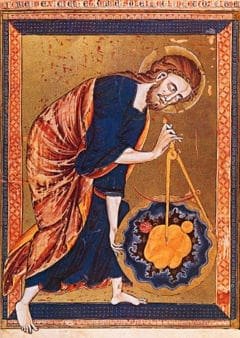
The World’s Genesis
Genesis contains two creation narratives: the first spans the entire first chapter and the beginning of the second, describing the creation process in a week, with a Sabbath rest. God cre

Skies in Turmoil: The Quiet Deterioration of EC261

EU Chief: Ukraine War "Threatens Every Nation on the Planet"
An EU chief says that Europe facing an “existential threat.”
EU council president Antonio Costa said, “The war of aggression being waged against Ukraine by a permanent member of the Security Council is unacceptable and threatens the security of every nation on the planet.”
He was speaking at the summit at the end of the week between the EU and Mexico.
The Portuguese official said, “The sovereign
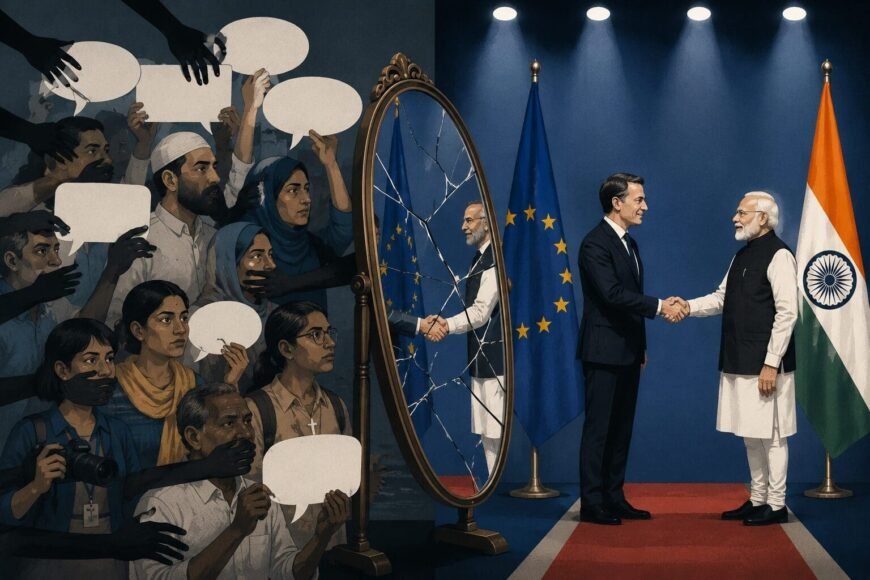
Self-Criticism: Vital for Democracy’s Survival in Developing Nations
Thierry ValleCoordination des Associations et des Particuliers pour la Liberté de Conscience, France
Press Freedom and Politics of Intolerance
India presents itself as the “world’s largest democracy” and a rising power, celebrating its pluralism. However, concerns have been raised by in
Leave a Reply