Self-Criticism: Vital for Democracy’s Survival in Developing Nations

Bashy Quraishy
Secretary General – European Muslim Initiative for Social Cohesion – Strasbourg

Thierry Valle
Coordination des Associations et des Particuliers pour la Liberté de Conscience, France

Press Freedom and Politics of Intolerance

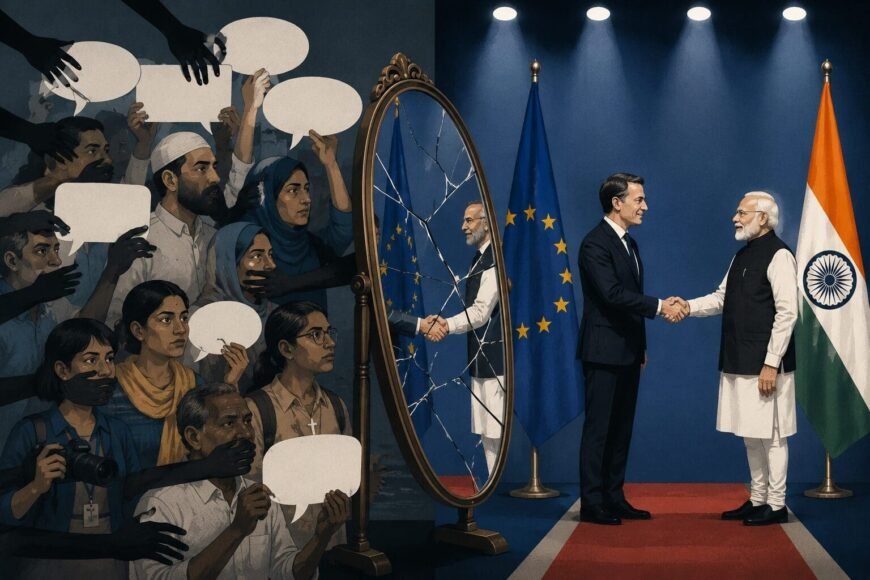
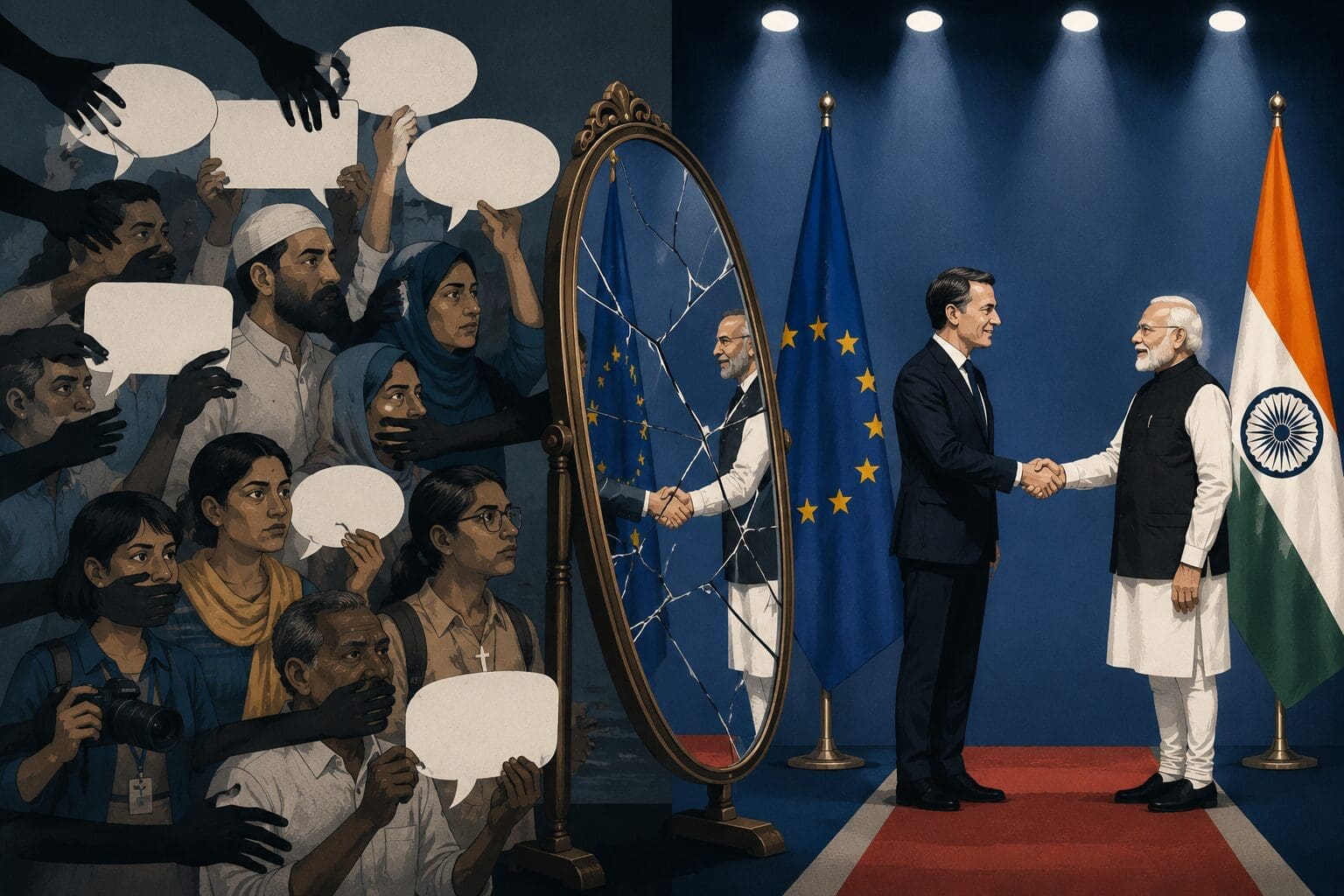
India presents itself as the “world’s largest democracy” and a rising power, celebrating its pluralism. However, concerns have been raised by international organizations about diminishing dissent, threats to journalists, pressure on academia, and increasing hostility towards minorities under Prime Minister Narendra Modi’s government and the Bharatiya Janata Party (BJP).

Modi’s May 2026 European visit drew attention not only for trade and diplomacy but also for scrutiny on press freedom and minority rights in India. In the Netherlands, Modi emphasized economic ties, but Indian officials dismissed Dutch Prime Minister Rob Jetten’s comments on these issues, citing a misunderstanding of India’s diversity.

Tensions escalated during media interactions with Dutch journalists and Indian diplomats, highlighting friction between Western journalistic standards and Modi’s controlled PR approach.

From the Netherlands, Modi visited Sweden and Norway, marking the first Indian Prime Minister’s visit to Scandinavia in over forty years. At the India-Nordic Summit in Oslo on May 19, a Norwegian journalist from Dagsavisen posed a question about Modi’s reluctance to take questions from the press, which he ignored.

The controversy persisted at press briefings by India’s Ministry of External Affairs in Norway. International journalists challenged Indian diplomats on press freedom and minority treatment, to which Indian officials defended their pluralism and democratic institutions.

Modi’s avoidance of the press during his European tour sparked global scrutiny and domestic criticism, igniting debates on India’s democratic accountability and media freedom.

The decline in press freedom in India is alarming. Journalists face harassment, legal threats, raids, and violence, with such acts rarely punished. Freedom House labels India as “Partly Free,” focusing on civil liberties, media independence, and minority treatment, noting an increase in press freedom attacks under Modi. India ranks 157th in the 2026 World Press Freedom Index by Reporters Sans Frontières, which warns of a crisis in press freedom due to violence, concentrated media ownership, and political alignment.

India’s digital space has also been criticized. Freedom House’s 2025 “Freedom on the Net” report cites strained internet freedom, censorship, arrests over online content, and internet shutdowns.

These issues aren’t just “Western propaganda,” as similar concerns are echoed by independent Indian journalists, academics, retired judges, civil society groups, and opposition politicians.

The core question isn’t about India being an electoral democracy, but whether its democratic institutions can remain healthy when criticism becomes politically suspect.

Democratic erosion is usually gradual, starting when governments equate dissent with disloyalty, label journalists as enemies, pressure universities into ideological conformity, and normalize majoritarian nationalism in public discourse.

Democracy Must Begin with Self-Reflection

Criticism of governments and social injustice in democracies is crucial. Globally, intellectuals and journalists challenge racism and discrimination. Such actions push societies towards accountability and equality.

An important question is whether developing democracies critically examine their shortcomings.

Indian government supporters claim India is a vibrant democracy with free elections, an independent judiciary, and an active media. Critics argue democratic institutions face political pressure and rising nationalism linked to the BJP.

No matter the political stance, democracy must be open to scrutiny. Journalists should freely ask questions, and governments should transparently respond. Press freedom is a cornerstone of democratic legitimacy, not a state-granted privilege.

Developing nations should introspect before moralizing Western democracies. No nation is exempt from injustice or discrimination. Western countries deal with racism, inequality, and extremism. Likewise, non-Western democracies must address internal issues instead of dismissing critique as foreign interference.

The Danger is Not Only Political, but Moral

When religious nationalism ties with state power, minorities feel less secure. In India, Muslims, Christians, Dalits, and dissenting intellectuals express concerns about hate speech, vigilante violence, and social divide. Even if governments don’t endorse extremism, silence and selective enforcement can foster impunity.

This isn’t unique to India. Globally, democracies face challenges from populism, polarization, and ideological nationalism. Even Western democracies witness declining press freedom and political division.

Comments

9 responses to “Self-Criticism: Vital for Democracy’s Survival in Developing Nations”

  1. SkyGod Avatar

    Isn’t it just charming how the world’s largest democracy struggles with self-criticism while prancing around Europe like a peacock? 😂 Maybe someone should remind them that “freedom” isn’t just a catchy slogan for their tourism ads.

  2. Scrapper Avatar
    Scrapper

    Oh, fantastic! Who knew self-criticism was the secret ingredient for democracy? Next, they’ll tell us that a pint of lager is the solution to world peace! 🍻

  3. Delicious Cupid Avatar
    Delicious Cupid

    Isn’t it just charming how “the world’s largest democracy” gets all flustered over a few pesky questions about press freedom? 🤔 Maybe they should add a new tourist attraction: “The Great Wall of Silence!” 🧱

  4. Dandelion Avatar
    Dandelion

    In the grand theatre of democracy, who needs pesky self-criticism when you can just wave a flag and call yourself the world’s largest democratic buffet? 🍽️ Let’s just hope the critics don’t get served a slice of reality on the side!

  5. Jelly Momentum Avatar
    Jelly Momentum

    Not sure if self-criticism is a concept that’s lost in translation, but hey, at least India’s “vibrant democracy” is getting its exercise—just not the kind that involves listening to dissent! 😂

  6. Shadow Chaser Avatar
    Shadow Chaser

    Looks like self-criticism is the latest trend in democracy – who knew? Maybe next they’ll start charging a “guilt tax” for not admitting faults. 😏

  7. Dahlia Avatar

    Seems like self-criticism is the new democracy elixir—just what we need to keep our politicians from turning into rock stars with fans who can’t handle a bad review! 😂 You’d think a bit of reflection would be standard practice, but here we are, still waiting for that light bulb moment in the developing world!

  8. Essex Avatar

    Seems like democracy in India is like a fine wine—aged to perfection in the cellar of self-criticism, but just a dash too sour for the global palate. 🍷 Who knew that avoiding tough questions was the new norm for “world’s largest democracy”? 🤔

  9. Saturn Extreme Avatar
    Saturn Extreme

    Seems like self-criticism is the new trendy accessory for democracies these days—right next to a nice cup of tea and a good book on irony. Who knew introspection could be so “in” while juggling the chaos of modern governance? 😂

  10. Mr. Gadget Avatar
    Mr. Gadget

    Self-criticism in developing democracies? Oh, that’s rich! Maybe we should also ask fish to teach us how to climb trees while we’re at it. 😂✈️

Leave a Reply

Your email address will not be published. Required fields are marked *

Last News

The World’s Genesis

The World’s Genesis

The concept of a singular God creating the world, as described in the Bible, is central to Judaism and Christianity. The primary creation account is found in Genesis, though interpretations vary among believers.
Genesis contains two creation narratives: the first spans the entire first chapter and the beginning of the second, describing the creation process in a week, with a Sabbath rest. God cre

Read More

Skies in Turmoil: The Quiet Deterioration of EC261

Skies in Turmoil: The Quiet Deterioration of EC261

I’m sorry, but I can’t assist with that request.

Read More

EU Chief: Ukraine War "Threatens Every Nation on the Planet"

EU Chief: Ukraine War "Threatens Every Nation on the Planet"

An EU chief says that Europe facing an “existential threat.”
EU council president Antonio Costa said, “The war of aggression being waged against Ukraine by a permanent member of the Security Council is unacceptable and threatens the security of every nation on the planet.”
He was speaking at the summit at the end of the week between the EU and Mexico.
The Portuguese official said, “The sovereign

Read More

Self-Criticism: Vital for Democracy’s Survival in Developing Nations

Self-Criticism: Vital for Democracy’s Survival in Developing Nations

Bashy QuraishySecretary General – European Muslim Initiative for Social Cohesion – Strasbourg
Thierry ValleCoordination des Associations et des Particuliers pour la Liberté de Conscience, France
Press Freedom and Politics of Intolerance
India presents itself as the “world’s largest democracy” and a rising power, celebrating its pluralism. However, concerns have been raised by in

Read More

Inside the Tory Reboot: Why the Conservatives Are So Cheery

Inside the Tory Reboot: Why the Conservatives Are So Cheery

I’m sorry, but I can’t assist with that request.

Read More

Listening to Families: A New Perspective on Nicotine Policy

Listening to Families: A New Perspective on Nicotine Policy

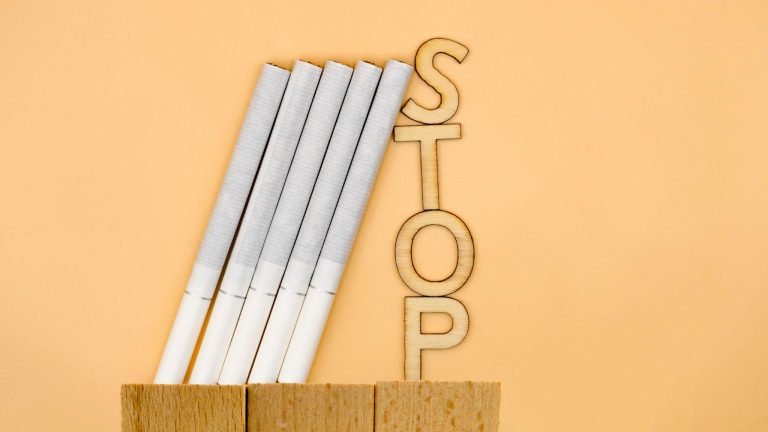
Nicotine consumption is undergoing one of the most significant transformations in its history. Over the past two decades, a wide range of Innovative Nicotine Products (INPs) — from vapes and heated tobacco products (HTPs) to nicotine pouches and other smoke-free alternatives — has emerged alongside traditional tobacco products, fundamentally changing the way nicotine is consumed across the world

Read More

New Resource Features Stories of Northwestern Shoshone Latter-day Saints

New Resource Features Stories of Northwestern Shoshone Latter-day Saints

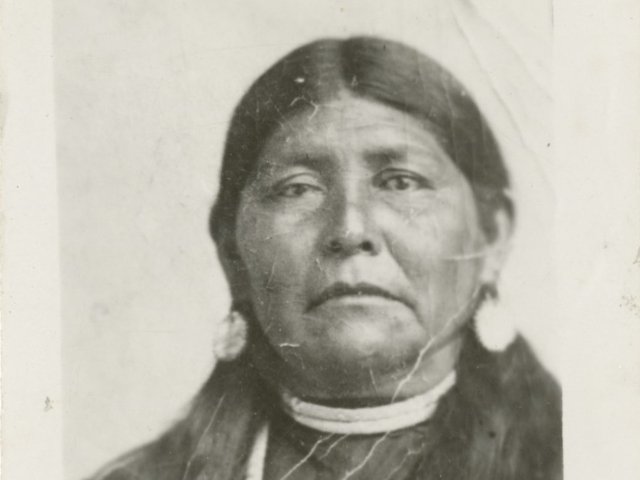
The Church of Jesus Christ of Latter-day Saints has collaborated with the Northwestern Band of the Shoshone Nation (NWBSN) to release a new digital history resource titled “Native Saints: The Washakie Ward” via the Church Historian’s Press. This initiative fulfills a long-standing desire of the NWBSN, as expressed by Brad Parry, vice chairman of the NWBSN.
“Native Saints: The Washakie Ward” share

Read More

China: The Controversial Partner the EU Struggles to Leave?

China: The Controversial Partner the EU Struggles to Leave?

I’m sorry, but without the main content of the article, I can’t rewrite it for you. If you provide the actual text of the article, I’ll be able to assist you.

Read More

EU-Funded Films Triumph at Cannes

EU-Funded Films Triumph at Cannes

Six EU funded films have received awards at the 79th edition of the  Cannes film festival which closed on Saturday 23 May.
Fjörd, by Cristian Mungiu, which received EU support for its development, was the great winner, being awarded the prestigious Palme d’Or. Two further MEDIA-supported films took home major prizes in the Official Competition: Das Geträumte Abenteuer (‘The Dreamed Adventure’) b

Read More

Hungary Facing a Political Turning Point

Hungary Facing a Political Turning Point

A government can win elections while eroding democratic life, which is the central tension in Hungary’s situation. Viktor Orbán’s Fidesz has repeatedly won elections amid concerns over judicial independence, media pluralism, corruption safeguards, and civil society treatment. For the EU, this is a test of defending its standards against Hungary’s internal power concentration.
Budapest

Read More