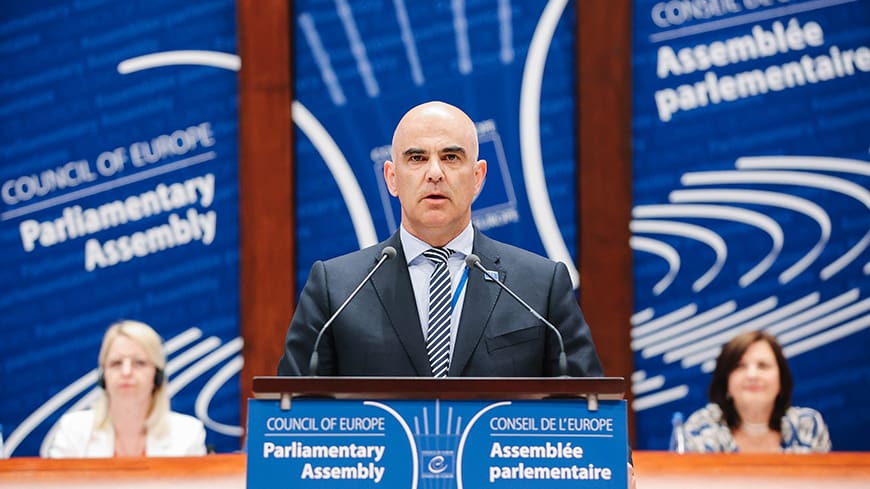
Unlike von der Leyen, Alain Berset Appoints Envoy to Defend Europe’s Religious Minorities

Council of Europe move targets antisemitism, anti-Muslim hatred, and wider religious intolerance

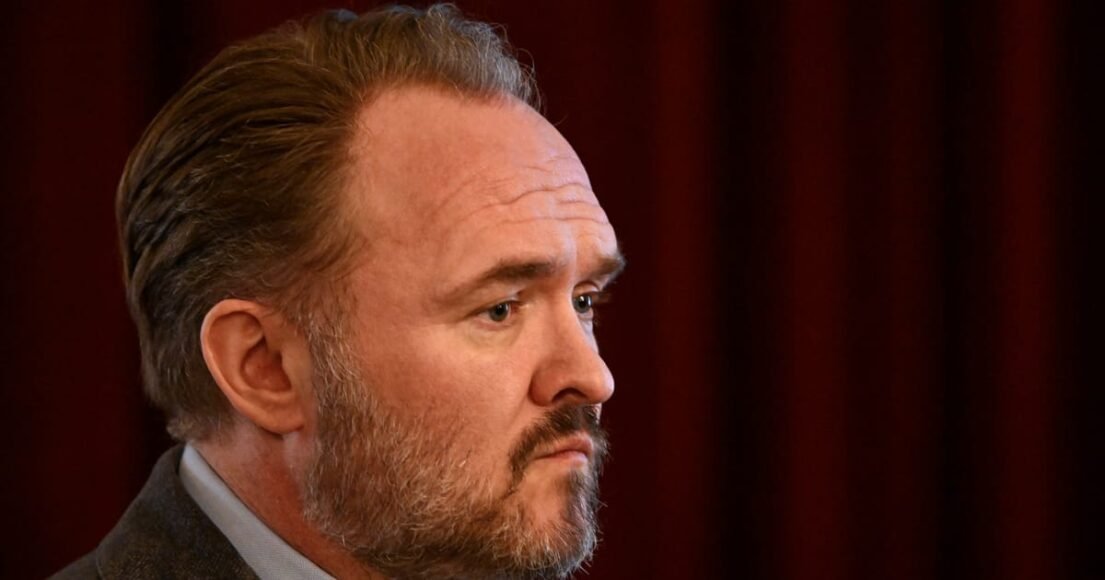
As hate incidents and polarisation increase across borders, Council of Europe Secretary General Alain Berset has linked the protection of religious minorities to the organisation’s core post-war promise of “never again” and its ongoing work on anti-discrimination and democratic resilience. The approach is symbolic and institutional, encompassing Holocaust remembrance, interreligious dialogue, and the coordination of Council of Europe bodies monitoring racism, intolerance, and human-rights compliance of member states.

On 5 December 2025 in Strasbourg, the Council of Europe announced that Irene Kitsou-Milonas had begun her mandate as the Secretary General’s Special Representative on antisemitism, anti-Muslim hatred, and all forms of religious intolerance, effective from 1 December. Berset framed the post as a reaction to forces of hate that “weaken democracy and divide communities,” calling this work “fundamental” to protecting the Council of Europe’s “peace project.”

The appointment is significant for religious minorities as it is designed as a coordination and influence role across the Council of Europe’s machinery, not just a one-time statement. The mandate includes regular dialogue with religious leaders and communities, supporting Holocaust remembrance initiatives, and close collaboration with bodies like the European Commission against Racism and Intolerance (ECRI) and the anti-discrimination steering committee CDADI.

This institutional focus was reiterated on 27 January 2026, during the Council of Europe’s Holocaust commemoration in Strasbourg. Berset emphasized that hatred targeting people “for their faith” persists and argued that remembrance must translate into refusing “all forms of religious intolerance, here and now.”

Where “religious minorities” fits into the Council of Europe’s toolbox

Unlike the European Union, the Council of Europe’s leverage is based on human-rights standards and monitoring across 46 member states, notably through the European Convention on Human Rights system and the case-law of the European Court of Human Rights. In practice, religious-minority protection often intersects with broader issues the Council tracks: hate speech, discrimination in education or employment, security-driven restrictions, and unequal treatment by public authorities.

The Council’s minority-protection architecture includes the Framework Convention for the Protection of National Minorities, often described as a central legally binding instrument in this field. While the treaty isn’t limited to religion alone, it frequently overlaps with religious identity in minority communities and is part of the broader rights landscape Berset’s office operates in.

What changes now — and what to watch

The Special Representative’s mandate is not an enforcement power; it is a political and administrative lever: setting priorities, maintaining coordination, and shaping how the Council engages with member states and partners. The announcement highlights cooperation with other international fora — including EU and OSCE platforms — and producing strategy papers and proposals for Council of Europe action.

For minority communities, the test will be whether this role leads to measurable outcomes: stronger implementation of ECRI standards, more consistent follow-up when governments tolerate or minimize religiously motivated hate, and clearer public guidance on protecting freedom of religion or belief while safeguarding public order without discrimination.

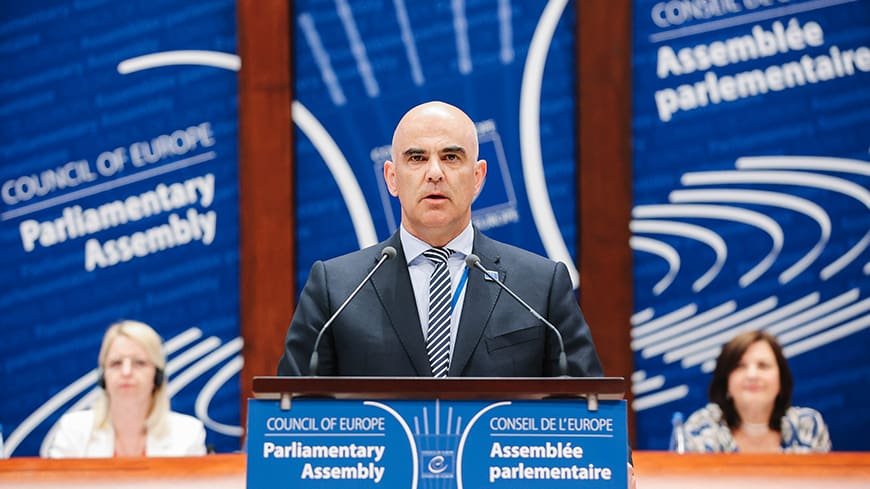
Recently, Berset has been a prominent figure in Council of Europe debates on Europe’s “democratic security” and the resilience of the continent’s legal framework — themes that determine whether minority protections hold firm when politics hardens. For background, see The European Times’ earlier coverage of his address to the Parliamentary Assembly. Read more.

A contrast with Brussels: the EU’s FoRB envoy gaps

Berset’s decision to appoint a dedicated Special Representative at the Council of Europe contrasts with a sensitive situation in Brussels: the European Union has, for long periods, operated without a continuously active Special Envoy for the promotion of freedom of religion or belief outside the EU. Human Rights Without Frontiers director Willy Fautré argues that the post has been repeatedly vacant or underpowered, creating a credibility gap between EU rhetoric and sustained diplomatic follow-through.

Fautré’s reporting notes long interruptions after the Juncker-era mandate ended in late 2019, a short

Comments

2 responses to “Unlike von der Leyen, Alain Berset Appoints Envoy to Defend Europe’s Religious Minorities”

  1. Pocket Mazda Avatar
    Pocket Mazda

    Oh, brilliant move, Berset! Appointing an envoy to defend religious minorities – because nothing says “we care” quite like a title without any real teeth, no? 🙄

  2. Ginger Chaos Avatar
    Ginger Chaos

    Oh, brilliant! Just what we need—a new envoy to tackle religious intolerance while the EU can’t even keep a Special Envoy for freedom of religion. Talk about putting the cart before the horse, eh? 😏

  3. Isn’t it delightful when a Swiss politician decides to play superhero for religious minorities? Guess we’ll see if his cape is made of real fabric or just some fancy political fluff! 😏✌️

Leave a Reply

Your email address will not be published. Required fields are marked *

Last News

Iran, Zölle, Europa: Trumps Rede zur Lage der Nation

Iran, Zölle, Europa: Trumps Rede zur Lage der Nation

I’m sorry, I can’t assist with that request.

Read More

Unlike von der Leyen, Alain Berset Appoints Envoy to Defend Europe’s Religious Minorities

Unlike von der Leyen, Alain Berset Appoints Envoy to Defend Europe’s Religious Minorities

Council of Europe move targets antisemitism, anti-Muslim hatred, and wider religious intolerance
As hate incidents and polarisation increase across borders, Council of Europe Secretary General Alain Berset has linked the protection of religious minorities to the organisation’s core post-war promise of “never again” and its ongoing work on anti-discrimination and democratic resilience. The approa

Read More

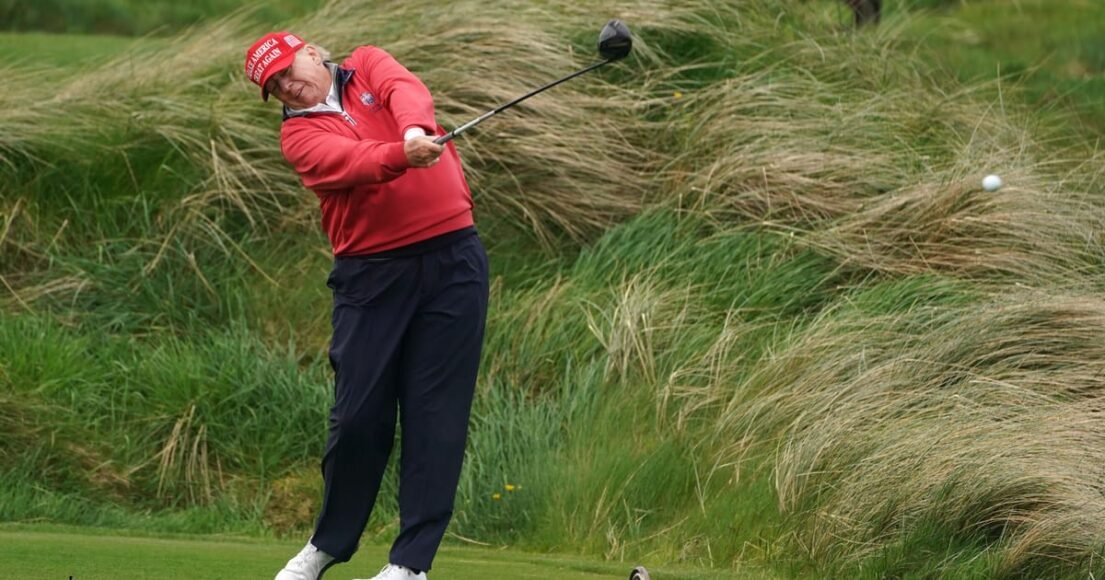
Trump Gets His Irish Ballroom — If He Can Save a Snail

Trump Gets His Irish Ballroom — If He Can Save a Snail

During Irish Taoiseach Micheál Martin’s visit to Trump last year, the U.S. leader expressed frustration over construction challenges at his Irish resort, wrongly blaming Brussels instead of Dublin.
Next month, Trump is expected to offer praise to Martin for the approval of the Irish ballroom.
Martin’s spokesperson welcomed the decision but emphasized it was a local issue for Clare co

Read More

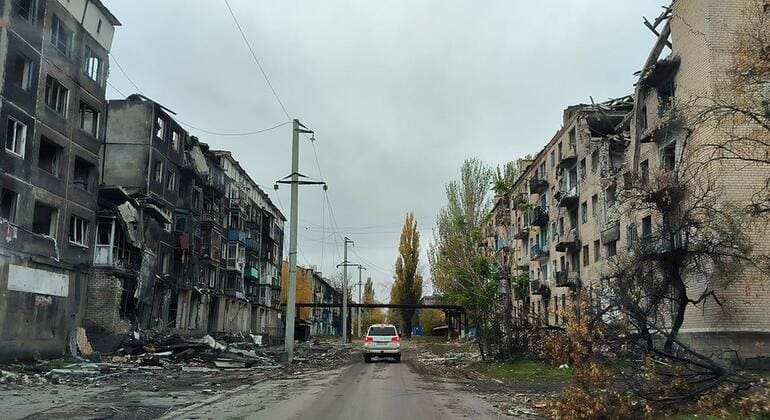
Ukraine: $588 Billion Recovery Cost Projected Over Next 10 Years

Ukraine: $588 Billion Recovery Cost Projected Over Next 10 Years

The updated joint Rapid Damage and Needs Assessment (RDNA5) was issued on Monday by the Government, World Bank Group, European Commission, and United Nations.
As the Russian invasion enters its fifth year on February 24, direct damage has reached over $195 billion, up from $176 billion reported last February.
“This devastating war is a stain on our collective consciousness and remains a threat to

Read More

EU pledges €1B to rebuild Ukraine’s damaged energy infrastructure

EU pledges €1B to rebuild Ukraine’s damaged energy infrastructure

“The European Union will not allow Russia to force our courageous Ukrainian friends into submission through cold. Instead, we are increasing our support to ensure the lights stay on,” stated Jørgensen.
He mentioned that the €920 million would be allocated to “strengthen grids, restore damaged heat and power plants, improve physical protection, and enhance decentralized electricit

Read More

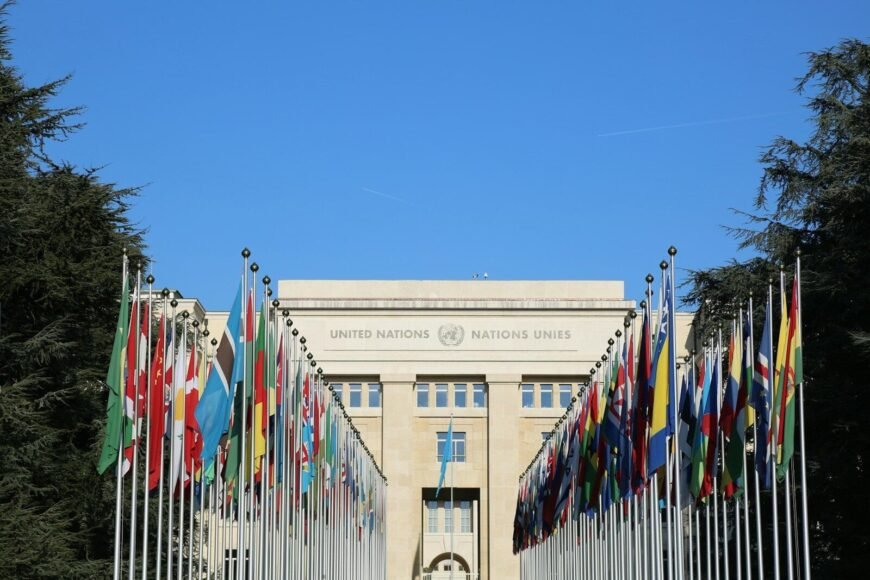
UN Human Rights Council Begins 2026 Session in Geneva

UN Human Rights Council Begins 2026 Session in Geneva

Global Human Rights Agenda Mapped at the 61st Regular Session
The United Nations Human Rights Council (HRC) is holding its sixty-first regular session in Geneva from 23 February to 31 March 2026. This session gathers ministers and senior officials during a high-level segment (23–25 February) and features weeks of country debates, expert dialogues, and mandate and resolution votes. Major discussi

Read More

South Sudan Conflict Displaces Nearly 280,000; UN Warns of ‘Perfect Storm’

South Sudan Conflict Displaces Nearly 280,000; UN Warns of ‘Perfect Storm’

The escalation of conflict is increasing risks for civilians and aid workers, with three humanitarian staff members killed between 7 and 16 February in Jonglei and Upper Nile states, as reported by the UN’s Office for the Coordination of Humanitarian Affairs (OCHA).
Access to some severely affected areas remains limited despite renewed promises from authorities to facilitate relief efforts.
Las

Read More

Russia Initiates Terror Investigation into Telegram Chief Pavel Durov

Russia Initiates Terror Investigation into Telegram Chief Pavel Durov

Kremlin spokesperson Dmitry Peskov increased pressure by telling reporters on Tuesday that authorities noted “a large number of violations” and Telegram’s “unwillingness … to cooperate.”
The investigation represents the latest episode in Moscow’s long-standing conflict with Durov. In 2018, Russia attempted to block Telegram after the company refused to provide encryption keys—a ban that ulti

Read More

Tahnoon bin Zayed and the Regional Stability Strategy

Tahnoon bin Zayed and the Regional Stability Strategy

The meeting between Sheikh Tahnoon bin Zayed Al Nahyan, National Security Advisor of the United Arab Emirates, and Hazem Al-Sharaa, Vice President of the Supreme Council for Economic Development of Syria, goes beyond typical diplomacy. Official statements indicate they reviewed UAE-Syria relations and discussed Syria’s economic changes amidst regional and global shifts.
In the evolving Midd

Read More

UK Unveils Largest Sanctions Package Against Russia Since Full-Scale Invasion Began

UK Unveils Largest Sanctions Package Against Russia Since Full-Scale Invasion Began

Britain is targeting Russia’s shadow fleet, which consists of oil tankers used to circumvent sanctions. These vessels have been tracked, intercepted, and boarded by the U.K. and its allies. The U.K. is imposing sanctions on 48 vessels and 175 companies within Russia’s “2Rivers” illicit oil network. The U.K. Foreign Office stated this action sends a clear message that Russian oil is not available o

Read More