


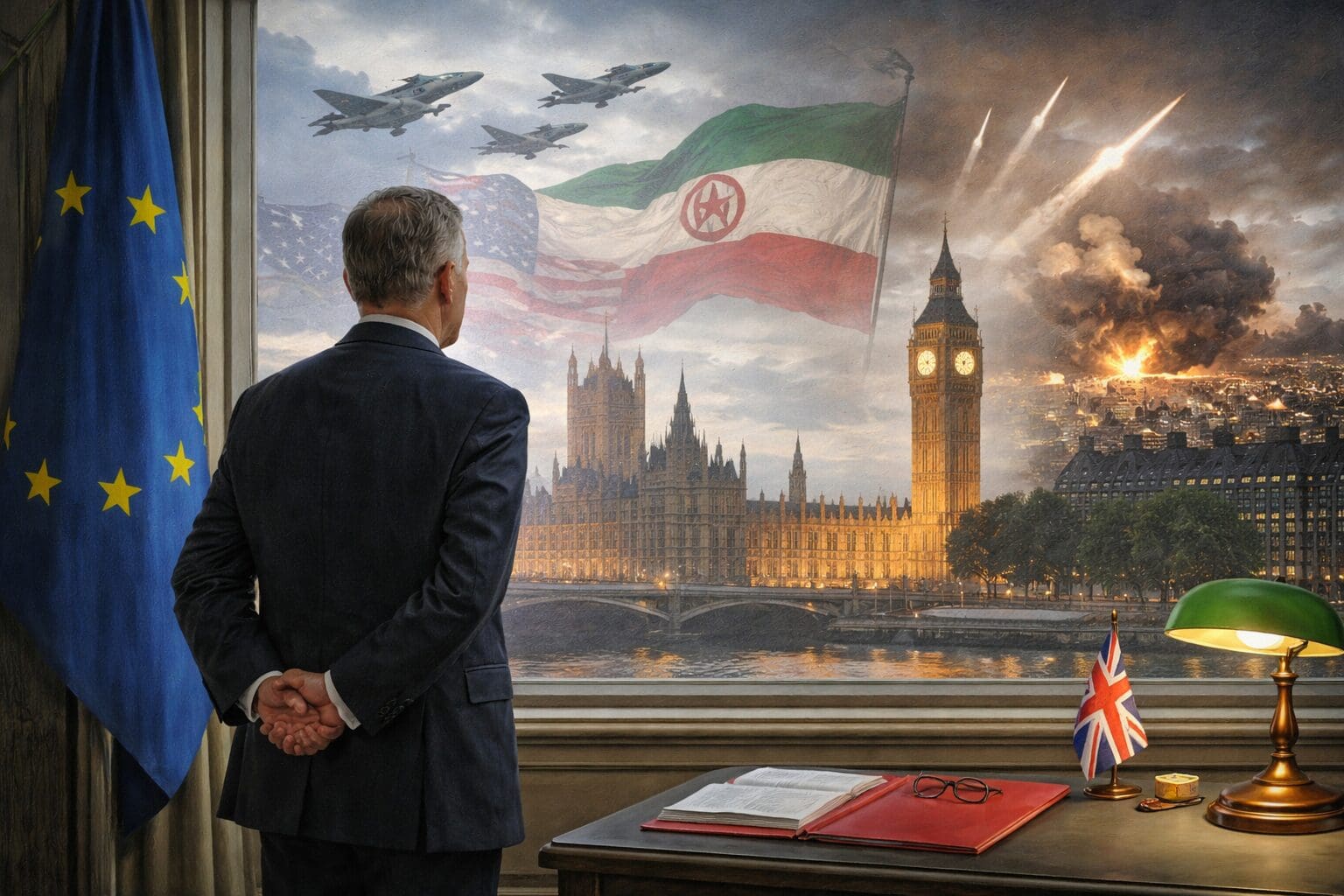
The intensifying conflict involving the United States and Israel against Iran has reached a pivotal moment, with serious consequences for global diplomacy and security. Recent provocations, such as Israel’s strike on Iran’s South Pars gas field, have increased tensions, drawing international attention to the possibility of further escalation. Amid these events, there are appeals for the UK to avoid deeper involvement in what is increasingly viewed as a conflict started by US President Donald Trump and Israeli Prime Minister Benjamin Netanyahu.
The crisis arises from a series of aggressive actions by the US and Israel aimed at countering what they see as Iran’s looming nuclear threat. The situation escalated after Israel’s recent military strike on an important Iranian gas field, seen as a deliberate provocation to provoke a strong response from Iran. This move has not only intensified military tensions but also strained diplomatic relations in the region.
US President Trump has gathered what is described as one of the largest aggressive forces in recent history, yet remains isolated in his efforts to garner international support. Despite claiming victory in the conflict, Trump’s calls for allied assistance indicate a need for validation and help in managing the fallout. Meanwhile, Israeli Prime Minister Netanyahu remains committed to his military strategy against Iran.
Amid these developments, the UK’s involvement has been questioned. Historically, the UK has been pulled into conflicts alongside its allies, often at significant political and human costs. Critics argue that Britain’s security interests are not directly threatened by this conflict and that involvement could lead to unintended consequences.
Despite these warnings, reports suggest senior British military planners have been sent to Washington to help plan the reopening of the Strait of Hormuz—a critical global oil shipment chokepoint—should diplomatic efforts fail. Additionally, British bases have been made available to US bombers for defensive purposes.
The term “strategic seduction” has been used to describe how countries like Britain can become entangled in foreign conflicts through gradual commitments and diplomatic pressures. This pattern mirrors past situations where Britain found itself deeply involved in conflicts such as those in Afghanistan and Iraq, often with limited strategic benefit and substantial human cost.
Trump’s rhetoric emphasizes a perceived debt owed by Britain for America’s role in NATO’s deterrence of Soviet Russia—a narrative used to justify current military alliances. However, this argument is increasingly seen as outdated and misaligned with today’s security needs. Critics point out that aerial bombardment and military aggression offer no lasting solution to modern terrorism or regional instability.
The situation presents a complex challenge for British foreign policy. Further engagement in this conflict risks repeating historical mistakes while potentially straining relations with other international partners who may view unilateral military actions unfavorably. Moreover, it raises questions about Britain’s role on the global stage—whether it will continue to follow allied powers into contentious conflicts or seek an independent path prioritizing diplomatic resolutions.
The decision facing British leadership is not merely about immediate military strategy but also involves broader geopolitical dynamics and Britain’s long-term strategic interests. As tensions continue to rise, it becomes crucial for Britain to weigh its options carefully, considering both historical lessons and future implications.
The ongoing crisis between the US-Israel alliance and Iran highlights the need for careful diplomatic engagement rather than hasty military action. For Britain, this moment serves as an opportunity to reassess its foreign policy priorities and commitments. By advocating for restraint and pursuing peaceful resolutions through international dialogue, Britain can contribute to de-escalating tensions while reaffirming its commitment to global stability and security.
As the situation develops, all eyes will be on Britain’s next steps—whether it will heed calls for caution or risk deeper involvement in a conflict not of its own making. The coming weeks will be crucial in determining Britain’s stance on international military engagements and its role within the broader geopolitical landscape.







Leave a Reply