


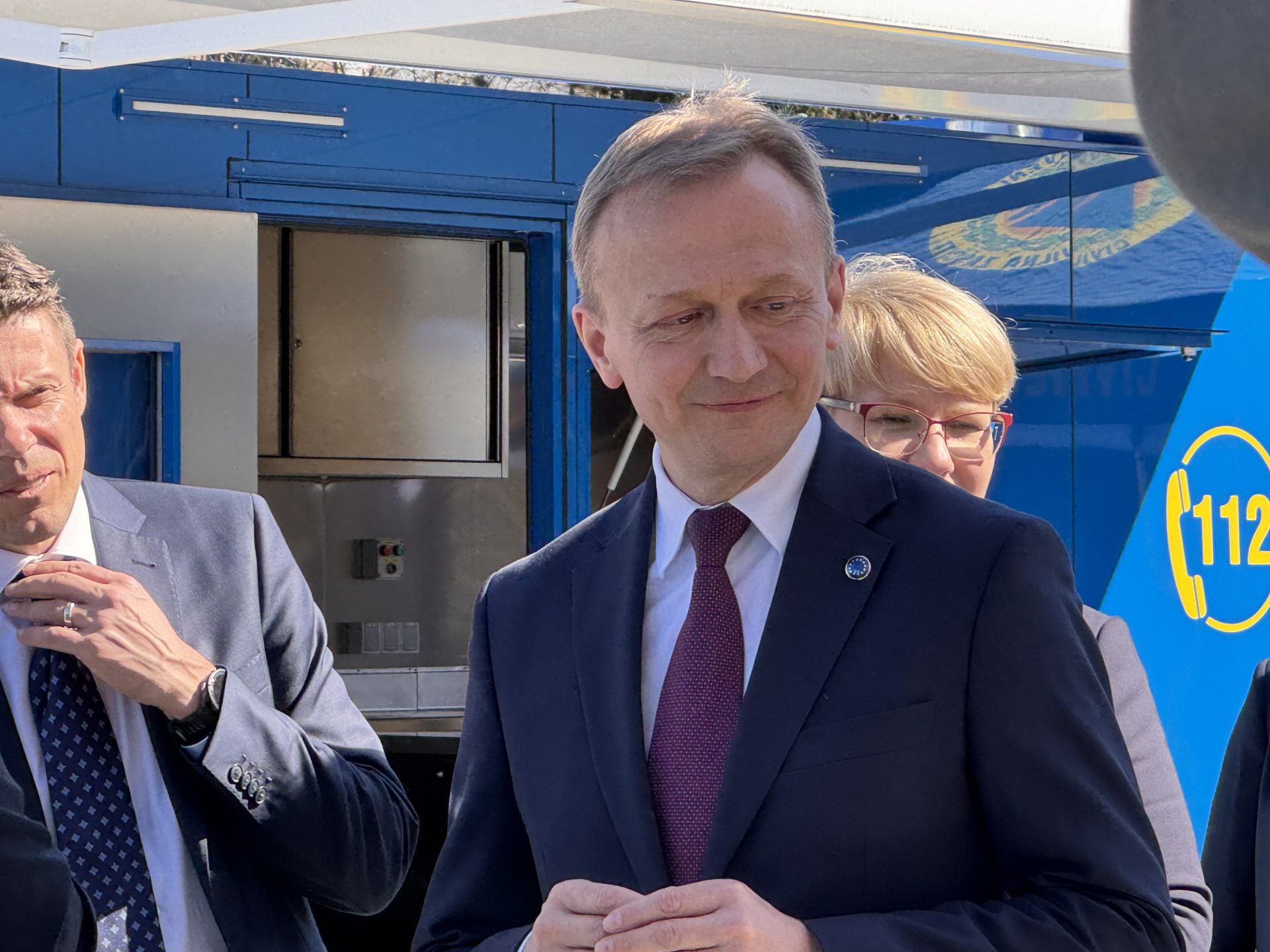
On Wednesday, the European Commission unveiled a set of sectoral proposals that complement its draft long-term EU budget for 2028–2034, nearly reaching €2 trillion. Budget Commissioner Piotr Serafin described this as the completion of the Commission’s initiatives.
This package includes several key programs: one for the single market and customs, a justice program, the Euratom research and training program, new tools for cooperation and nuclear safety, financial backing for the decommissioning of the Ignalina nuclear power plant in Lithuania, a decision regarding the association of countries and overseas territories such as Greenland, and the continuation of the Pericles V program to combat euro counterfeiting.
The most significant component is the single market and customs program, which has a budget of €6.2 billion—double that of the existing multiannual financial framework. This initiative aims to enhance consumer protection, minimize cross-border and administrative hurdles, and advance European statistics. Additionally, the justice program, with a budget of €800 million, will facilitate judicial cooperation, digitization within the justice system, and uphold court independence.
For the Euratom program, €6.7 billion is projected until 2032, accumulating to €9.8 billion over the entire budget period. These funds are designated for nuclear safety, radiological protection, waste management, and research developments in nuclear fusion, including the EU’s involvement in the ITER project.
Furthermore, nearly €1 billion has been allocated to support 13 countries and overseas territories, including Greenland, due to their strategic significance. The Pericles V program will persist in efforts against euro counterfeiting and related fraud.
The Commission highlights that this entire package enhances the proposal for the multiannual financial framework for 2028–2034, focusing on competitiveness, defense and security, and decarbonization. Brussels advocates for increased budget flexibility, program simplification, enhanced regional investment support, and new revenue sources for the EU.
The budget draft requires unanimous approval from member states and must be sanctioned by the European Parliament. (03.09.2025)






Leave a Reply