


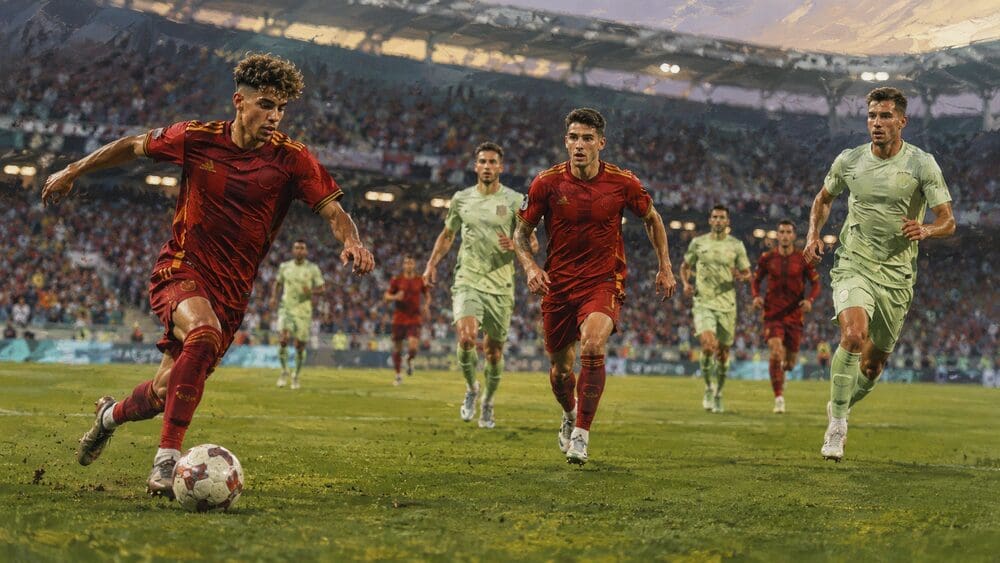
Yamal and Oyarzabal Propel Spain in World Cup as European Depth Shines in Atlanta
Spain’s commanding 4-0 victory over Saudi Arabia not only lifted spirits after their initial World Cup draw but also demonstrated the ability of a top European team to swiftly alter their pace, regain confidence, and utilize young attackers while maintaining the composure required for an extended tournament journey.
By Daniel Mercer, Sports Correspondent, The European Times
Under intense scrutiny in Atlanta, Spain’s goalless draw with Cabo Verde hadn’t derailed their tournament, but it did resurface a familiar question for possession-oriented teams: what if control doesn’t translate into penetration?
The response against Saudi Arabia was immediate. Lamine Yamal scored in the 10th minute, with Mikel Oyarzabal adding two more before half-time. A fourth goal after the break gave Spain the fluency they previously lacked, as noted in FIFA’s matchday round-up.
A Strategic Response Beyond the Scoreline
A 4-0 win often simplifies the story to recovery: Spain faltered, then rebounded. However, the real insight lay in how they managed this recovery. Luis de la Fuente’s team didn’t rely on a frantic finish; the crucial work was done with speed, positional clarity, and an attacking mindset that exploited Saudi Arabia’s vulnerabilities early on.
Yamal, drawing significant focus, represents the emerging generation yet already faces high expectations. His goal was a relief, but his larger contribution was altering the game’s tempo, forcing Saudi Arabia to retreat defensively.
Oyarzabal’s goals illustrated Spain’s need for adaptable forwards who can operate between traditional roles, seize early opportunities, and handle pressure without the drama often seen in tournament play. In knockout play, such reliability is as crucial as having a star player.
Europe’s Squad Model on Display
As one of 16 European teams in the expanded World Cup, Spain’s win fits within a larger narrative of the continent’s varied paths through the tournament, as shown by UEFA’s guide to European group-stage fixtures. Germany’s strong start and the Netherlands’ recovery after an initial draw reflect this diversity, while others face tense final group matches.
Spain’s success is part of this bigger picture, demonstrating the competitive infrastructure of Europe’s football powerhouses: academies producing skilled players, domestic leagues providing early exposure, and national teams willing to trust young talent.
While the system isn’t flawless, with issues like uneven opportunity and the commercialization of youth development, Spain’s performance highlighted the benefits of investing in technique, coaching, and competitive play. The outcome appeared sudden, but the foundation was long established.
Sustaining Control and Rotation for the Long Haul
Spain must now ensure they don’t mistake one emphatic win for ultimate success. Emotional overreactions are seldom rewarded in tournaments. The group must still be secured with Uruguay next, and Spain’s staff must balance maintaining rhythm with allowing recovery after key players were instrumental early on.
This balance may define the World Cup for European teams, as the expanded format introduces more paths forward, but also more travel, heat, tactical variations, and squad pressure rather than just starting elevens. Teams capable of altering their fronts without losing their identity hold a real advantage.
For Spain, their performance










Leave a Reply