


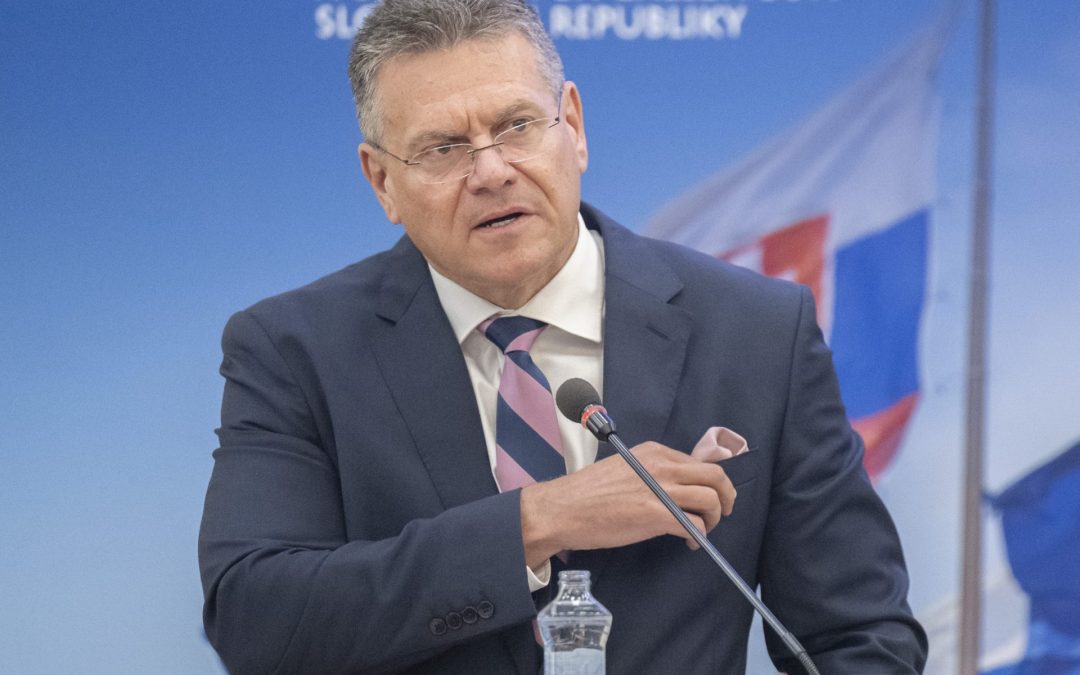
Brussels/Bratislava – The European Union’s upcoming customs system reform aims to streamline the operations of customs officials, reduce costs, and safeguard consumer interests. This was highlighted by Slovak Finance Minister Ladislav Kamenický (Smer-SD) and EU Commissioner for Trade and Economic Security Maroš Šefčovič during a Tuesday briefing following the EU finance ministers’ (Ecofin) meeting, as reported by TASR.
Kamenický mentioned that Ecofin covered a range of topics, including discussions with an International Monetary Fund (IMF) representative regarding the high energy prices in the EU that place it at a competitive disadvantage globally, along with the notable costs associated with workforce mobility in Europe.
He also expressed appreciation for the attendance of the British Finance Minister at Ecofin, suggesting a potential thaw in economic relations between Brussels and London after the tensions that have followed Brexit.
A key focus of the discussions was the proposal for a centralized customs system across the EU. “We, as Slovakia, support this initiative. It is crucial that goods lacking proper certification, such as potentially hazardous toys, do not enter the market. Additionally, many goods are imported without customs clearance or VAT, which represents a missed opportunity for budget revenue. We will advocate for fairness among EU entrepreneurs,” Kamenický elaborated.
Six EU commissioners, including Šefčovič, took part in the Ecofin meeting. Speaking on behalf of the European Commission, where he oversees trade policy, Šefčovič praised the incoming Polish presidency of the EU Council for its intent to expedite customs reforms and initiate negotiations with the European Parliament by the end of June 2025.
“The need for reform stems from the rapid growth of e-commerce. This year alone, we anticipate over four billion packages, primarily from China, arriving in the EU, which poses significant control challenges. There are numerous complaints regarding their content and quality. It is clear that this influx cannot be managed using traditional customs tools,” stated Šefčovič.
In response, the proposal includes establishing a European Customs Office along with a European Data Center to utilize modern information-sharing methods and improve risk assessment processes. This would allow customs officials to focus on targeted checks rather than inspecting every package.
Šefčovič noted that if discussions on this agenda begin next year, the new European customs authorities could be operational by 2026. He predicts that the reforms would not only ease the burden on customs officials but also save the EU around two billion euros annually. This is largely due to the consolidation of over 110 existing IT systems used by customs administrations into a single, unified system, enhancing the protection of the Union’s customs interests. (December 10)
“This year alone, we expect more than four billion packages, mainly from China, to arrive in the EU, which are difficult to control. There are major complaints about content, about quality. It is evident that this flood of packages cannot be addressed with the traditional tools that customs officers have at their disposal.” Maroš Šefčovič





Leave a Reply