


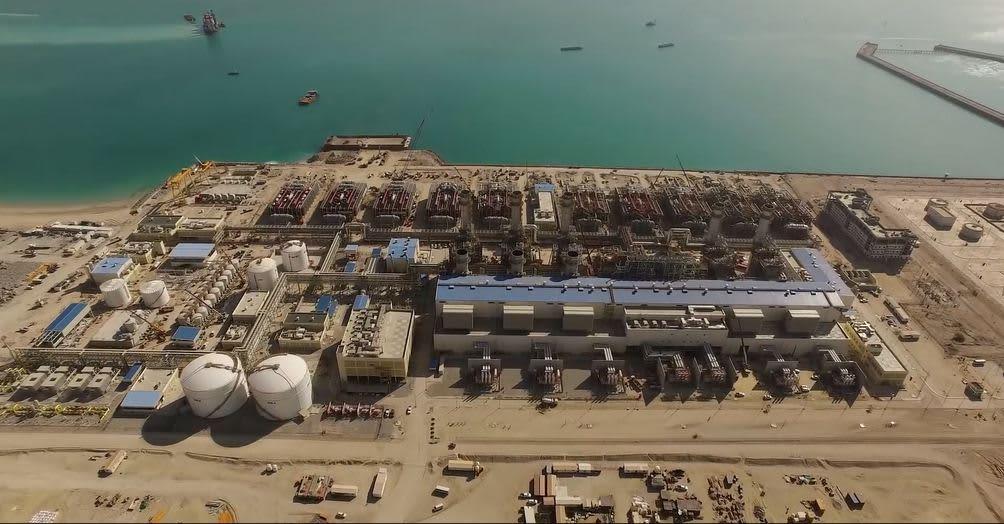
By Tuesday night, after four consecutive nights of strikes, Iranian missiles and drones continue to target power and desalination infrastructure along Kuwait’s southern coast. The primary target remains the Shuaiba complex, a dense stretch of turbines and water treatment units south of Kuwait City where crews have fought fires across multiple sectors as generating units went dark. Kuwait draws nine in ten liters of its drinking water directly from the Persian Gulf, All Categoriesmeaning a sustained campaign against Shuaiba targets the foundation of civilian survival in the state.
Markets evaluate the conflict primarily through oil metrics. Brent crude traded near $90 a barrel as idle tankers anchored off the coast and headlines concerning the Strait of Hormuz drove price adjustments. Oil represents a visible and anticipated vulnerability. Water security poses a far more severe systemic risk to the Gulf monarchies, yet Iranian forces have hit these coastal facilities over four straight nights.
This infrastructure lies beyond the protective scope of naval and air defense platforms. Warships escort tankers and missile batteries intercept incoming drones, but defense systems cannot relocate fixed industrial sites. Desalination plants operate as large, exposed facilities along the shoreline, situated within range of Iranian ballistic and cruise missile launch sites. Analysis from CSIS identifies these plants as open industrial targets located within 350 kilometers of Iran. A small group of high-capacity facilities supplies the majority of potable water along the coastline, creating a concentrated set of high-value targets.
Disrupting these plants eliminates basic urban continuity within days. Kuwait possesses no natural aquifers, rivers, or predictable rainfall patterns capable of substituting for industrial production. Qatar and Bahrain face similar levels of total dependence. The urban centers of the Gulf rely on coastal plants operating without interruption. Disruption on this scale leaves urban centers uninhabitable.
Targeting water infrastructure builds on previous precedents in the regional conflict. An Iranian strike killed an Indian worker at a Kuwaiti power and water facility in March, following an earlier strike on a Bahraini desalination plant. The operational pattern shifted this week through sustained, multi-night targeting of civilian facilities following American strikes against infrastructure inside Iran.
This sequence forms the central dynamic of the escalation. American forces initiated strikes on bridges, ports, and energy installations in Iran, following public warnings that Iranian power infrastructure would face destruction unless Tehran altered its posture in Hormuz. Striking Iran’s electrical grid disables the pumps and filtration membranes required for domestic water processing. Iranian leadership outlined its response: strikes on Iranian power grids would be met with attacks on Gulf desalination capacity. The four-day strike sequence against Kuwait demonstrates the execution of that policy.
Official statements from Tehran avoid explicit acknowledgment of targeting water infrastructure. Spokespersons for the Islamic Revolutionary Guard Corps (IRGC) listed military targets, including HIMARS launchers and American troop deployments positioned approximately one kilometer from the Shuaiba plant. Physical destruction of water processing units remains identical regardless of stated targeting intent. When munitions strike adjacent to primary desalination units, operational capacity drops regardless of military rationale.
This operational reality complicates Washington’s strategic calculations. Standard doctrine advocates maintaining escalation pressure without conceding targeting restrictions. However, Iranian strikes continue regardless, while threats against Iran’s grid directly incentivize counter-strikes on unprotectable Gulf water infrastructure. Public warnings aimed at Iranian infrastructure trigger retaliation against civilian utilities in Gulf states hosting American installations.
The 1973 oil embargo demonstrated the economic impact of supply disruption. Water infrastructure represents an even more sensitive vulnerability, lacking strategic reserves to cushion supply shocks. Historical norms largely protected water and power
Comments
9 responses to “Everyone Watches Oil While Iran Turns to Maritime Moves.”
-
Seems like while everyone’s busy watching the oil price do the tango, Iran’s gone and turned the Gulf into their own personal water park. Cheers to keeping the taps flowing, eh? 💦🚢
-
Isn’t it just brilliant how everyone’s obsessing over oil prices while Iran is busy giving the Gulf a summer holiday from water? Who needs hydration anyway when you can invest in overpriced crude, right? 😂💧
-
Isn’t it just delightful how Iran has turned the Gulf into a real-life game of Battleship? Who needs oil when you can simply sink your neighbours’ water supply? 😂
-
Just when you thought it was all about crude oil, Iran decides to spice things up with a little maritime mischief. Who needs a reliable water supply when you can play naval warfare roulette? 🛥️💦
-
Just what we needed, right? While the world’s busy watching oil prices, Iran’s apparently taken up a new hobby: target practice with our drinking water. 🍹💦
-
Just when you thought oil was the only game in town, Iran’s maritime moves steal the spotlight—who needs fresh water when you have a fancy desert oasis to sip your tea? ☕️💦
-
Looks like while the world is fixated on oil, Iran has decided to play a game of “who needs water anyway?” 🏖️ Just makes you wonder if they’ve been watching too many old pirate movies, eh? 💧⚓️
-
Isn’t it just brilliant how everyone’s wringing their hands over oil prices while Iran is busy playing a game of Battleship with Kuwait’s water supply? 🎯 I suppose we’ll just have to toast our dry martinis with our finest bottled water, eh? 🍸😂
-
Isn’t it delightful how while everyone’s obsessing over oil prices, Iran’s just casually rearranging maritime pieces like a game of chess? Who needs drinking water anyway when you can have a front-row seat to the Gulf’s latest drama? 😂💧

Last News

How Ukraine Can Endure Another Winter
In the podcast, Zoya Sheftalovich and Chief Foreign Affairs Correspondent Nick Vinocur explore the support Ukrainian President Volodymyr Zelenskyy aims to obtain from the Coalitio
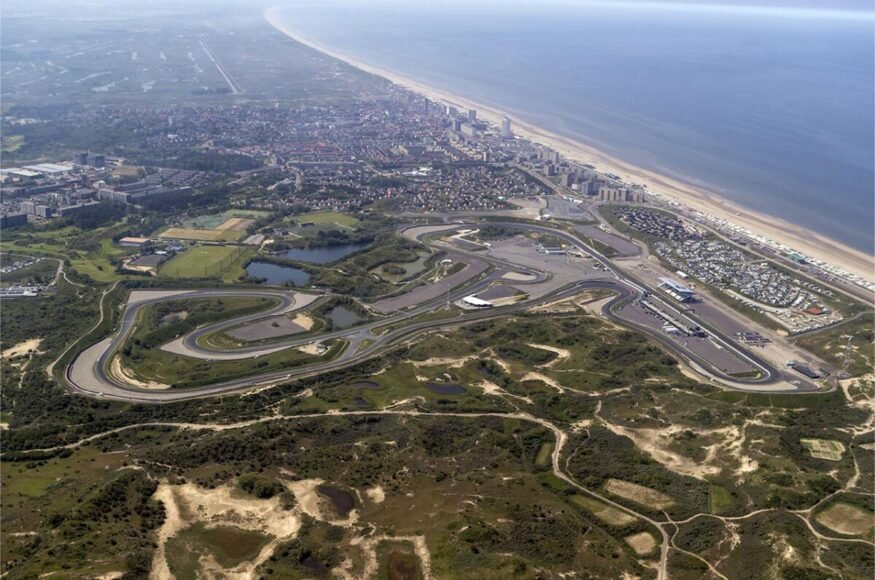
Max Verstappen Reflects on Disappointing Dutch Grand Prix Weekend in Zandvoort
Zandvoort, Netherlands, 23 August (Eurotoday) – Max Verstappen said his home Formula One weekend had been disappointing after an opening-lap accident ended his Dutch Grand Prix at Zandvoort. The Red Bull driver was unhurt, but the early retirement brought the Verstappen Dutch GP weekend to a premature close after he had struggled for pace across the event.
Verstappen started seventh and made it
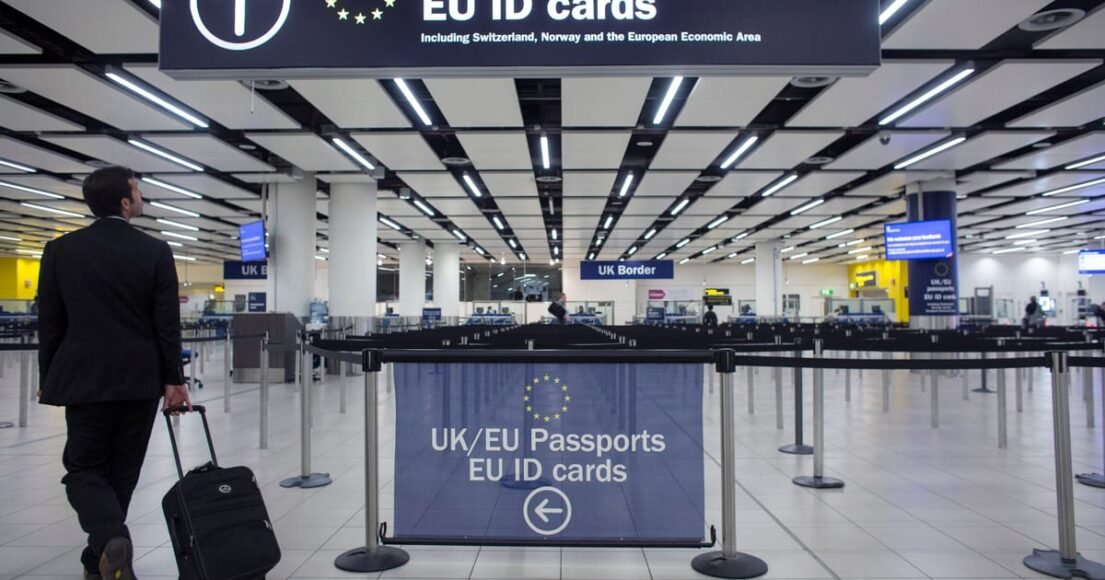
Britain assured EU citizens about its settled status system, then muddled identical twins.
Many such cases
Monique Hawkins, acting CEO of the3million, which advocates for the rights of EU citizens in the U.K., noted that issues wit

Lando Norris Claims Dutch Grand Prix Victory from Pole in Zandvoort
Zandvoort, Netherlands, 23 August (Eurotoday) – Lando Norris won the Dutch Grand Prix from pole position on Sunday, taking his second Formula One victory in succession as McLaren finished ahead of Mercedes drivers Kimi Antonelli and George Russell at Zandvoort.
Norris completed the 72-lap race 11.536 seconds ahead of championship leader Antonelli. Russell finished third, with Lewis Hamilton four
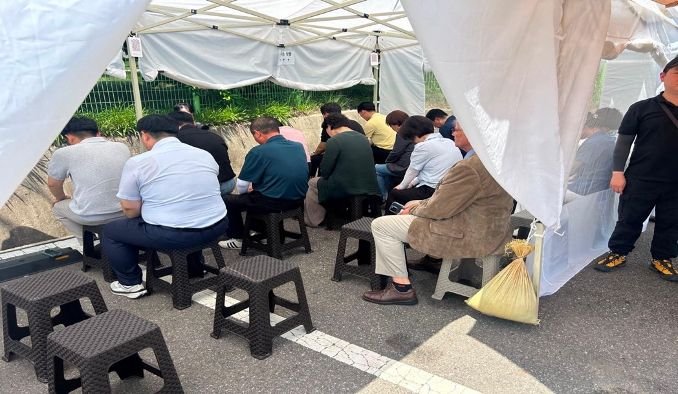
I Visited Chairman Lee Man-hee in Prison in Seoul
HRWF Report on Visiting 95-Year-Old Chairman Lee Man-hee of the Shincheonji Church of Jesus. He is in pre-trial detention during an extreme heatwave and questions whether Korean law’s supervised alternatives should be used.
Thursday, 6 August 2026 at 2:00 pm. The detention-centre visiting room is a little more than four metres square. In front of us, a wall of double glass perhaps ten centimetre

UK Assisted Dying Bill Returns: Labour Advocate Seeks Inspiration from Australia
Lando Norris Defeats Kimi Antonelli to Win 2026 Dutch GP – Zandvoort
Zandvoort, Netherlands, 23 August (Eurotoday Newspaper) – Lando Norris won the Dutch GP 2026 for McLaren on Sunday, finishing ahead of Mercedes pair Kimi Antonelli and George Russell after Max Verstappen’s home race ended on the opening lap. Norris started from pole, regained the lead after losing it following the restart and went on to take his second consecutive Formula One victory.
Norris cro

EU Scholars Petition for Alternative to Pre-Trial Detention for 95-Year-Old Chairman Lee
This initiative followed a press conference by Human Rights Without Frontiers (HRWF) on August 7 at the Seoul Foreign Correspondents’ Club. HRWF Associate Director Hans Noot read a petition addressed

Police Investigate Wedding Convoy on A66 Near Schlüchtern
Schlüchtern, Germany, 23 August (Eurotoday Newspaper) – Police in Hesse are investigating an A66 wedding convoy after motorists reported that several vehicles travelled slowly across both lanes of the motorway near Schlüchtern, temporarily affecting traffic heading towards Fulda.
The incident happened at around 2.45pm on Thursday, 20 August. Several motorists contacted police about the processio

Man Injured in Drug-Related Brussels Shooting Following Police Station Attack
Dilliès mentioned that his government is taking steps to combat the violence, such as appointing a Brussels commissioner for drugs starting in September, and limiting the use of e-scooters, which
Leave a Reply