


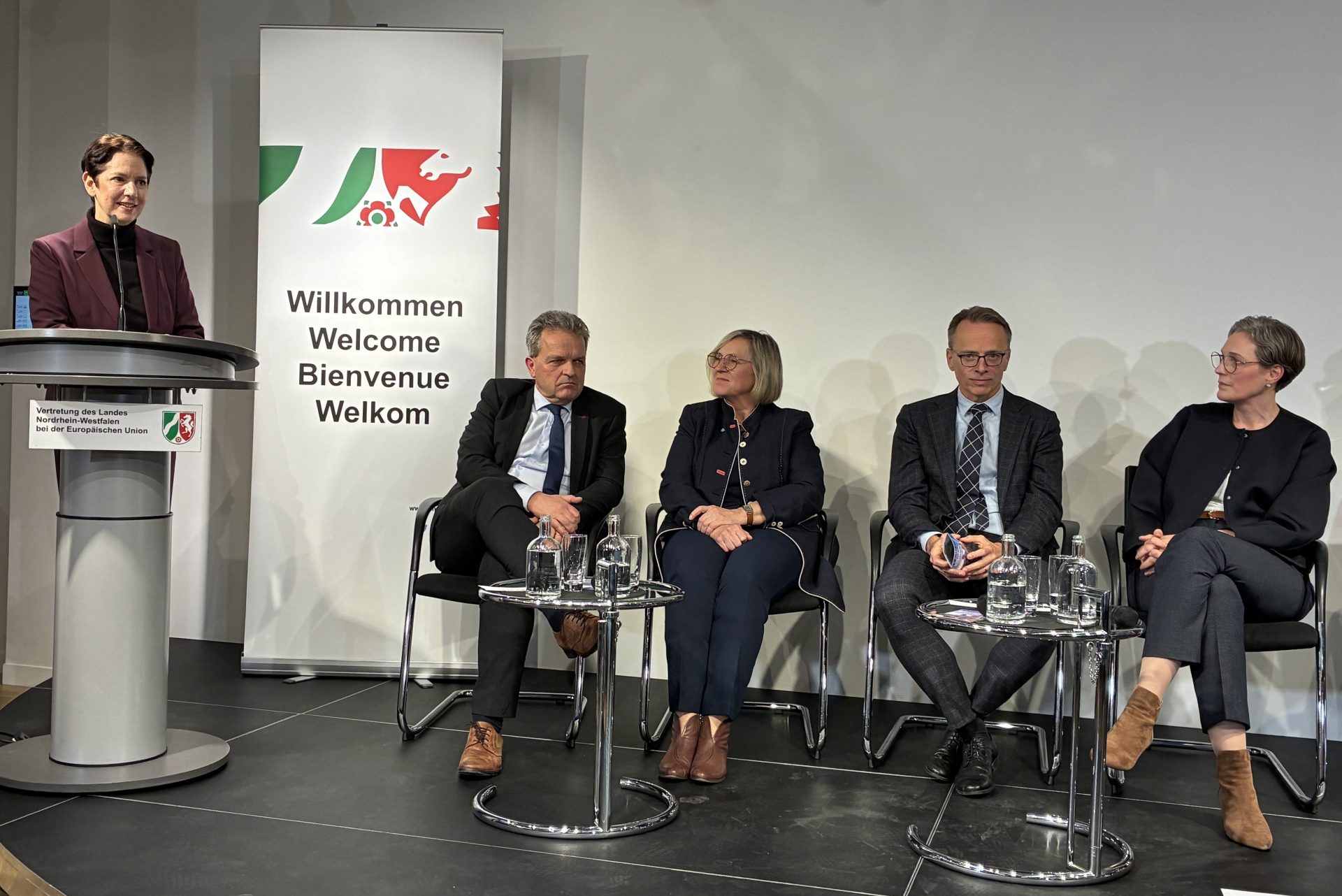
Brussels (enr) – A diverse group of political and social figures from North Rhine-Westphalia gathered in Brussels on Wednesday evening to advocate for the future of the EU funding program LEADER.
SEstablished in 1991, LEADER stands for “Linking actions for the development of the rural economy” (in French: Liaison Entre Actions de Développement de l’Économie Rurale). The program assists village communities and organizations in executing local projects. For instance, the Oldtimerfreunde from Hallenberg shared how they utilized EU funds to establish a carpentry and blacksmith’s workshop in their exhibition hall.
North Rhine-Westphalia’s Agriculture Minister Silke Gorißen (CDU) noted that LEADER is a crucial funding tool for rural development, with 2,700 regions across Europe participating, including 45 in North Rhine-Westphalia. Over the past decade, around 1,500 projects have received support there, showcasing significant voluntary dedication and enhancing quality of life in local communities.
Christina Steinbicker, spokesperson for the Landesarbeitsgemeinschaft der NRW-LEADER-Regionen, highlighted that participants in these projects feel empowered and recognized, counteracting anti-democratic tendencies in their areas.
However, ongoing negotiations in Brussels regarding the next Multiannual Financial Framework (MFF) for 2028 to 2034 have raised concerns that future funding for LEADER initiatives may be significantly reduced, as resources are redirected towards security efforts.
Agriculture Minister Rainer worries about funding cuts
German Federal Minister of Agriculture Alois Rainer (CSU) expressed awareness of widespread concerns about LEADER’s future and warned of potential “cannibalization of funds.” He praised the EU Commission’s recent proposal for a minimum quota for rural funding but emphasized the need for simplification in the funding process to foster innovative ideas: “We need less bureaucracy.”
There is a possibility that national contributions to LEADER projects could increase from 20% to 60% in economically robust regions, which would affect many areas of Germany. Bernd Söntgerath, head of division at the Bundesministerium für Landwirtschaft, Ernährung und Heimat, noted that this shift could jeopardize numerous projects due to financial constraints on federal and state budgets.
Martin Michalzik (CDU), former mayor of Wickede (Ruhr) and spokesperson for the 45 LEADER regions in North Rhine-Westphalia, stated that if co-financing requirements at the national level were to triple, it would be perceived by stakeholders as a termination of the program.
The key audience for these comments was Oliver Sitar, director in the Directorate-General for Agriculture and Rural Development in the EU Commission, who affirmed the significance of LEADER in Germany and reiterated the Commission’s support for the program.
Meanwhile, Member of the European Parliament Peter Liese (CDU) insisted that the current MFF proposal must undergo significant improvements before it is voted on in the European Parliament: “If it is not clear that rural areas will receive substantial support, I will not approve it – nor will many of my colleagues.” (4 December)







Leave a Reply