


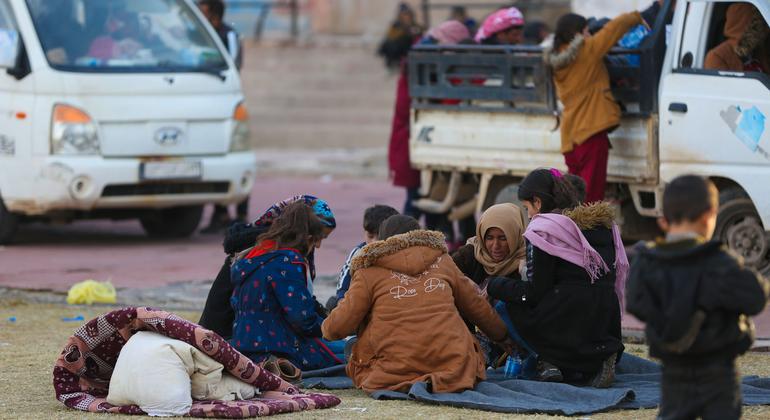
UN Reports Progress in Humanitarian Aid Delivery to Syria
The UN Office for the Coordination of Humanitarian Affairs (OCHA) has confirmed that cross-border aid operations from Türkiye into northwest Syria are proceeding without any disruptions. This comes as humanitarian agencies intensify efforts to address critical needs across the region.
Food Aid Reaches Northwest Syria
On Tuesday, 21 trucks from the UN World Food Programme (WFP) delivered 500 metric tonnes of food to Idlib through the Bab Al-Hawa border crossing. This shipment provides enough assistance to feed 175,000 people, marking a significant step in ensuring food security for vulnerable populations in the northwest.
Cholera Vaccination Campaign in Northeast Syria
In northeast Syria, a cholera vaccination campaign has been launched in Al-Hol camp in Al-Hasakeh, supported by the World Health Organization (WHO) and the UN Children’s Fund (UNICEF). The 10-day initiative, which began on Saturday, is part of ongoing efforts to prevent the spread of the disease.
Meanwhile, in southern Syria, the UN refugee agency (UNHCR), in collaboration with the Syrian Arab Red Crescent, is distributing essential non-food items to displaced families in need.
Resumption of Child Protection Services in Aleppo
Child protection services have resumed in Aleppo, with 26 fixed centers and 12 mobile teams now operational in both urban and rural areas. Additionally, WHO has delivered 2.5 tonnes of emergency supplies, including IV fluids and medical kits, to Aleppo University Hospital and Al Razi Hospital. The UN Development Programme (UNDP) has also contributed by supplying 6,000 liters of fuel to Zahi Azraq Hospital to support its operations.
Challenges Amidst Progress: Supply Shortages and Financial Constraints
Despite these advances, OCHA warned that humanitarian efforts across Syria face significant challenges due to supply shortages, financial liquidity issues, and ongoing insecurity.
For instance, nutrition supplies for pregnant and lactating women are critically low, leaving many cases untreated. In Hama, seven primary health centers reported stolen insulin supplies, while 18 primary health centers in Homs were unable to provide vaccination services due to damage, theft, and staff shortages.
Adding to the difficulties, vendors and field partners face restrictions on cash withdrawals, impacting their ability to operate effectively. Some vendors also report low stock levels caused by curfews, violence, theft, and other security-related issues.
Refugees Returning Home
In a noteworthy development, the UNHCR has reported that over 58,000 Syrian refugees have returned to their homeland from neighboring countries, including Lebanon, Jordan, and Türkiye, in the past three weeks. Since the start of the year, an estimated 419,200 Syrian refugees have returned, with the largest proportion—25 percent—resettling in Ar-Raqqa, followed by Aleppo and Dar’a.
Conclusion
While humanitarian efforts in Syria have made considerable progress, challenges such as supply shortages, financial issues, and insecurity continue to hinder broader operations. Nevertheless, recent achievements, including the resumption of child protection services, delivery of medical supplies, and the successful return of refugees, underscore the resilience and dedication of aid agencies working to support the Syrian people.








Leave a Reply