



A 2-0 Semi-Final Victory Over France Sends Spain to the World Cup Final
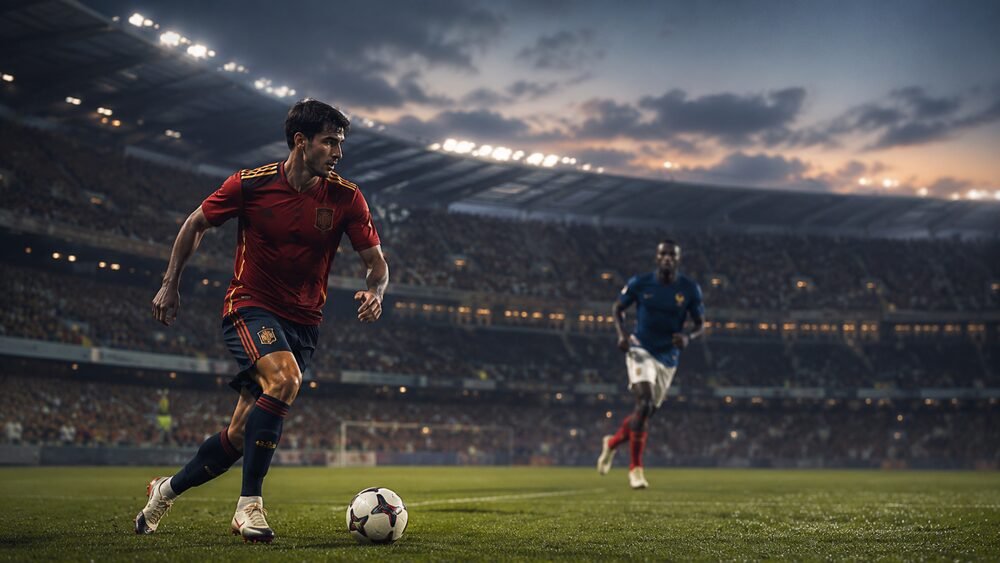
Spain is one match away from claiming a second men’s World Cup title after a composed 2-0 semi-final win against France in Dallas. Mikel Oyarzabal and Pedro Porro turned tactical dominance into a spot in the final. The victory carries not just sporting significance, but also a broader European message: Spain’s youth, patience, and collective structure show how to win football’s most intense nights.
By Daniel Mercer, Sports Correspondent, The European Times
Spain’s journey to the FIFA World Cup final was grounded in control rather than noise. Against a powerful French team with a history of tournament success, Luis de la Fuente’s squad maintained the match’s rhythm long enough to capitalize on crucial moments.
FIFA’s match report noted a 2-0 win for Spain, with Oyarzabal scoring a penalty and Porro adding a second goal. For France, it marked a sudden end to a campaign that again ranked them among the top contenders. For Spain, it affirmed that their journey is no longer just promising; it’s complete enough to reach the final match.
A Team Built on Balance
Spain’s team is often discussed through individual talents: the confidence of Lamine Yamal, Oyarzabal’s finishing, Porro’s runs, and a composed midfield driven by a national belief in ball control. However, the semi-final mattered because these elements worked together.
Spain didn’t need to make the match a spectacle; they needed to prevent France from creating chaos. This quieter skill can be decisive at this level. Spain’s top teams have rarely used possession as mere decoration but as a strategic tool on the pitch.
Porro’s goal was fitting, highlighting Spain’s broad attacking responsibility. This wasn’t a team relying on a single star to save the day but rather a squad where many players recognized space, took responsibility, and trusted the game plan.
France Exits with Questions, Not Collapse
France exits with disappointment but not disgrace. Their journey to the semi-final reinforced their status as one of Europe’s most reliable tournament teams, with a quarter-final win against Morocco demonstrating their ability to handle pressure.
This defeat, however, will raise questions about balance. France has enough attacking capability to challenge any team, yet Spain forced the match to focus on decision-making in tight spaces, limiting France’s speed-based threats.
This result alters the European narrative of the World Cup. France appeared as the continent’s strongest continuity contender, while Spain now emerges as the clearest symbol of renewal.
Europe’s Final Standard
UEFA’s tournament tracker outlines Spain’s path: defeating Austria, Portugal, Belgium, and now France. Their route to the final was demanding, not ceremonial, overcoming neighbors, rivals, and varied pressures.
This context is crucial in judging this team. Spain’s victory over Belgium showed their ability to maintain composure, as earlier reported by The European Times. The semi-final added a tougher layer: controlling a match against a French team poised for decisive moments.
Sunday’s final will bring a new challenge, whether against England or Argentina. Spain will not enter as a romantic underdog but as a team worthy of being assessed by the toughest standard in sports: whether a clear idea withstands the final tournament pressure.
Their achievement is already significant. Sixteen years after their 2010 triumph, Spain is once again close to the trophy. The country’s football culture has evolved since then, but the fundamental lesson remains: in the biggest matches, control is not caution—it is well-organized courage.








Leave a Reply