



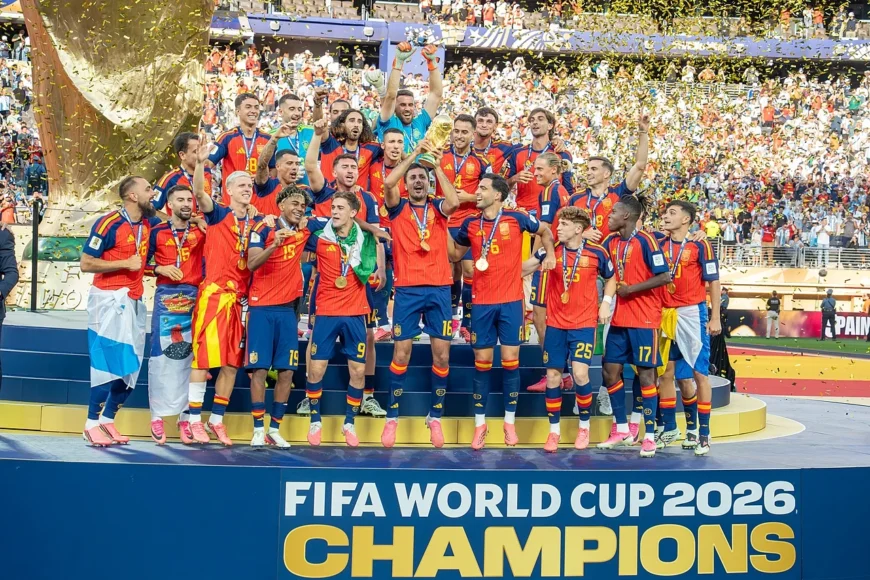
Ferran Torres’ extra-time goal secured Spain’s 1-0 victory over Argentina in the 2026 FIFA World Cup final, marking their second men’s title. The win highlighted Spain’s technical prowess and confirmed their football project as one of Europe’s strongest. Spain’s disciplined approach in New Jersey culminated in Torres’ decisive goal after persistent effort. The win prevented Argentina from consecutive titles and contrasted Messi’s last World Cup with Spain’s younger team dynamic.
Spain’s triumph was built on patience, consistently challenging Argentina’s ability to maintain defense without losing composure. Their journey included victories over Portugal, Belgium, and France, showcasing a team adept at tight games and patient possession.
Spain’s success underscores the importance of youth development and tactical continuity. Despite facing challenges against Argentina, their strategy relied on ball control and composure. The victory reinforces European football’s value beyond clubs, emphasizing renewal and identity preservation.
Spain’s win transcends football, offering a shared moment in public life and celebrating the sport’s communal aspects. Argentina’s history remains intact despite their loss, while Spain’s control and belief led them to victory. In an expanded World Cup, their traditional approach of maintaining possession and group faith secured the title.










Leave a Reply