


A new book argues that Europe must learn to “sell itself” more effectively to safeguard its long-term future.
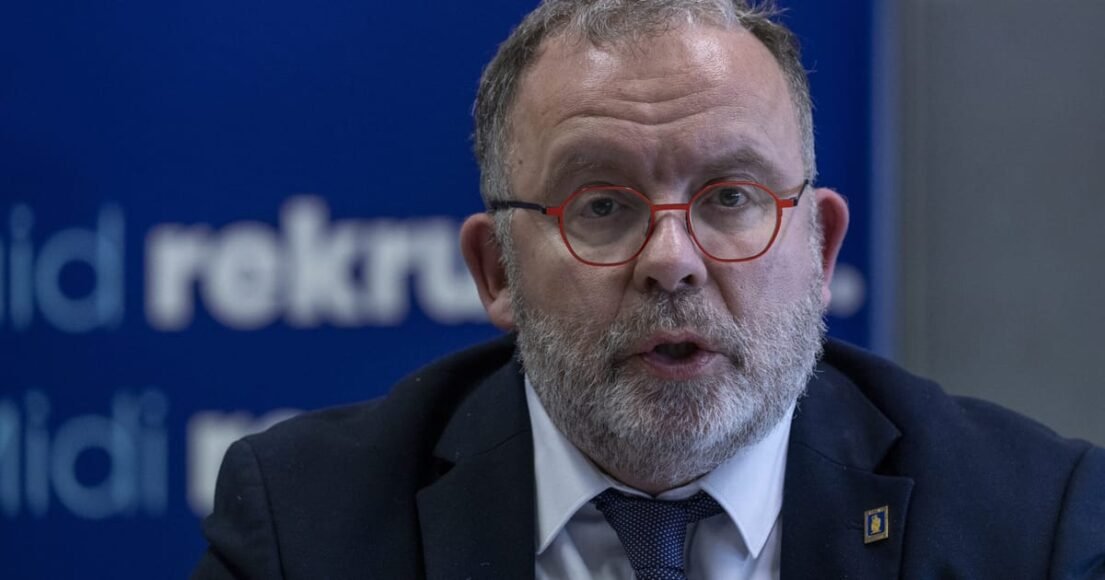
The book, Rebranding Europe, carries significant weight as it was authored by Stavros Papagianneas, a former communications official at the European Commission. Papagianneas is a senior communications strategist with 30 years of experience in the field, having worked as a communications officer at the Commission and as a press officer and spokesperson for diplomatic missions in Brussels.
Speaking at the book launch on Tuesday, Papagianneas emphasized that the EU needs to:
“speak the language of the street”
and simplify its message to citizens. He believes this approach is essential to overcoming the “democratic deficit” and “failing trust” in the EU.
While he stresses there is “no miracle cure” or “magic recipe” to improve the EU’s image, Papagianneas remains optimistic that the 27-member bloc can become “better understood.” His book, subtitled Fundamentals for Communicating the United States of Europe, is a follow-up to the first edition published in 2017 in response to Brexit.
The Greek-born author describes the book as a “bible” for EU communications, calling attention to its importance as a family business. A committed Europhile, he does not shy away from tackling essential challenges that he believes the EU must address to avoid “falling apart.”
One of the book’s core arguments is that communication will play a key role in ensuring the EU’s long-term future. Papagianneas explains:
“Though the first edition was triggered by Brexit and its consequences, I thought a second edition to be paramount after the corona crisis and the brutal invasion of Ukraine.”
Having faced “two tremendous crises,” the EU, he suggests, must now tailor its messaging for both external and internal stakeholders. One recommendation includes significantly increasing the EU’s communications budget, which he argues is currently too small relative to the overall budget and should be doubled.
Additionally, Papagianneas suggests that the Union needs to make its narrative more engaging for international, national, and local media, as well as for citizens themselves. During a news briefing for the book launch, he shared insights from interviews with journalists in Greece and Belgium, where media outlets report little about the EU due to a perceived lack of interest among readers.
The “EU blame game” is another communication issue to tackle, according to Papagianneas. He notes how political figures, such as Hungary’s Viktor Orbán, actively participate in EU decision-making processes while simultaneously blaming the EU for Europe’s problems. He also highlights the challenges posed by populism, which he says has risen sharply in recent years.
The book points out that in recent European elections, citizens demonstrated a “clear shift to the right,” with several significant wins for right-leaning parties. To counter this trend, Papagianneas calls for “clear, concrete, and jargon-free” messaging, leveraging tools like social media and artificial intelligence to enhance communication efforts.
Through its 270 pages, the book outlines how Europe can be rebranded, offering practical recommendations on how to make the EU’s value tangible in citizens’ daily lives. It argues that Europe must step up as a global leader in strengthening multilateral partnerships and defending democracy and human rights in an increasingly unstable world.
According to Papagianneas, Europe is grappling with its “most complex crisis” since World War II. “Once the world’s bastion of liberal, democratic values, Europe has to confront demons it thought it had laid to rest,” he writes. To inform the book, Papagianneas interviewed several key opinion leaders and global communications stakeholders, including Androulla Vassiliou, a former EU Commissioner.
At the book’s launch in Brussels, Laurentiu Plosceanu, Vice President in charge of communications at the European Economic and Social Committee (EESC), endorsed the book’s key messages. Plosceanu noted that despite concerns about populism and declining trust, there are reasons for optimism. For example, he highlighted the EU’s unexpected unity in response to Russia’s invasion of Ukraine, which he said defied Vladimir Putin’s expectations.
Plosceanu observed that crises like this offer both “opportunities and challenges” for the EU. He emphasized the importance of promoting successful EU initiatives, such as the Erasmus program, which fosters social mobility and collaboration.
He remarked:
“The European Union needs to be able to square the circle between reacting to external threats that concern all member states on one hand, and offering solutions adapted to national realities on the other hand. In terms of communication, it is important to explain the big challenges that we are all facing regardless of nationality and location.”
Another speaker at the event, Analia Tsoumani, a communications official at the EESC, echoed these sentiments. She underscored the role of local media in each member state but stressed the need for better support to amplify EU messaging.
Colin






Leave a Reply