


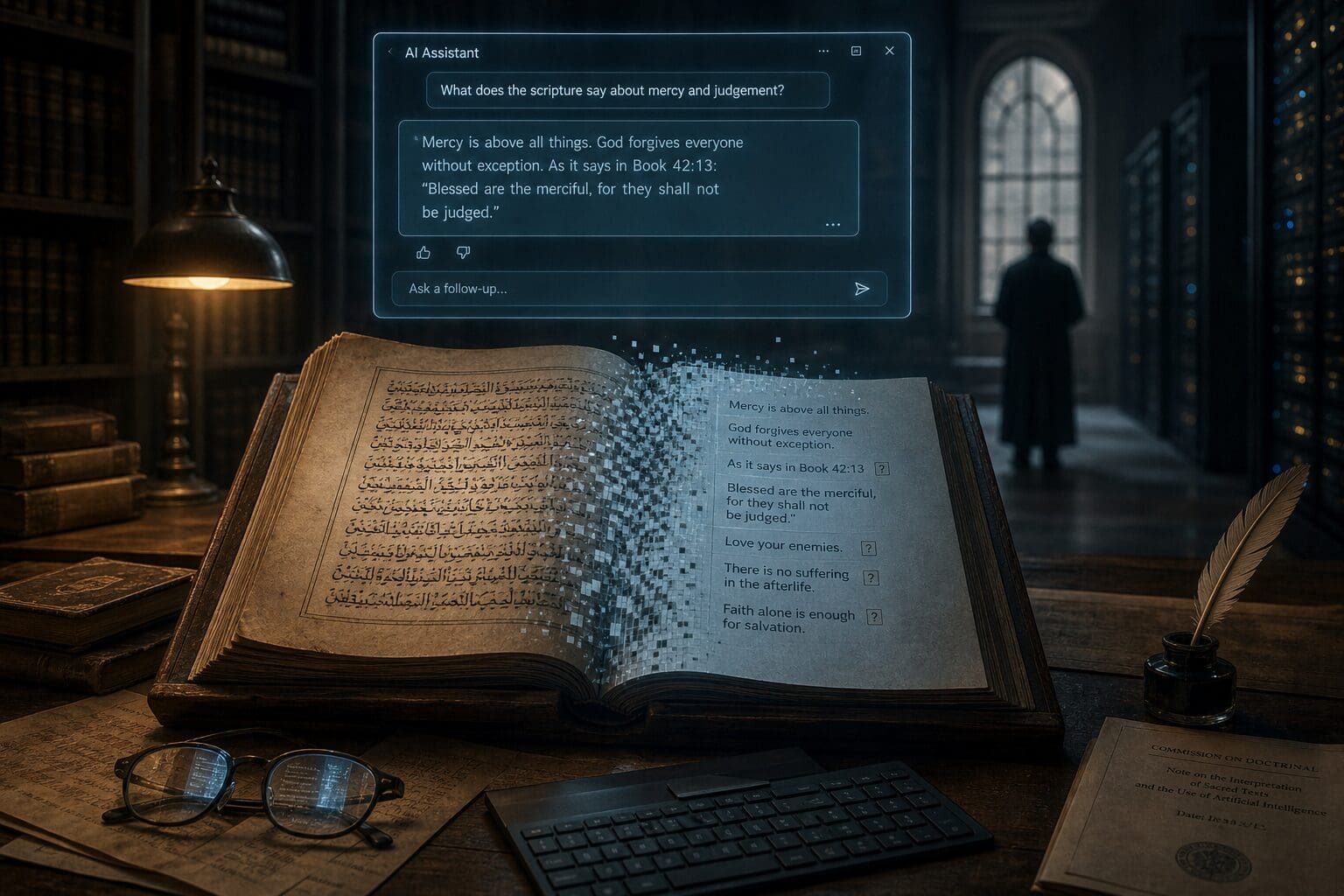
In January 2026, Egypt’s Dar al-Ifta al-Misriyyah, a leading Islamic advisory body, declared using AI for interpreting the Qur’an as impermissible (haram). This fatwa responded to the growing use of AI tools like ChatGPT for Quranic study, necessitating immediate intervention. Grand Mufti Nazir Ayyad explained that AI reliance risks conjecture (zann) without scholarly basis, threatening the text’s integrity.
Globally significant, this ruling highlights the risk of AI distorting sacred texts. The Catholic Church faced a similar issue with the “Father Justin” chatbot, which erred in sacramental guidance, showing the vulnerability of religious institutions to doctrinal errors. Pope Leo XIV criticized AI, and a multifaith task force was formed to assess AI’s portrayal of faith.
Bobby Gruenewald of YouVersion revealed AI-generated biblical quotes have error rates of 15%-60%, affirming AI’s theological unreliability. Across faiths, no major tradition finds AI-generated content reliable, indicating a structural problem.
A study in “AI and Ethics” revealed imbalances in AI models’ doctrinal comprehension, creating an illusion of reliability while omitting key theological content. This “doctrinal flattening” results in algorithmic discrimination against minority traditions, as AI attributes beliefs generically, erasing distinctive doctrinal identities.
International human rights laws like the Universal Declaration of Human Rights and ICCPR protect religious identity, but no binding standards govern religious AI applications globally. The Dar al-Ifta fatwa highlights AI limitations in comprehending religious texts.
AI systems, designed to predict probable content, lack semantic understanding and context, leading to “hallucination” — generating plausible but incorrect content. This threatens religious authority, as AI output may distort sacred texts and undermine trust.
The question now is whether the international community will act before these distortions normalize. UN frameworks like the Special Rapporteur on Freedom of Religion or Belief could address AI religious platform concerns. Yet, fragmented coexistence of AI-mediated and traditional authority persists, raising questions about algorithmic age religious authority.
AI systems operate without malice, merely executing their design. The danger lies in the gap between mechanical operations and the communities that entrust sacred texts to AI. The Cairo fatwa, Father Justin’s demotion, YouVersion’s disclosure, and the multifaith task force underscore that some boundaries lie beyond algorithmic drawing. Whether international law will define them remains uncertain.










Leave a Reply