


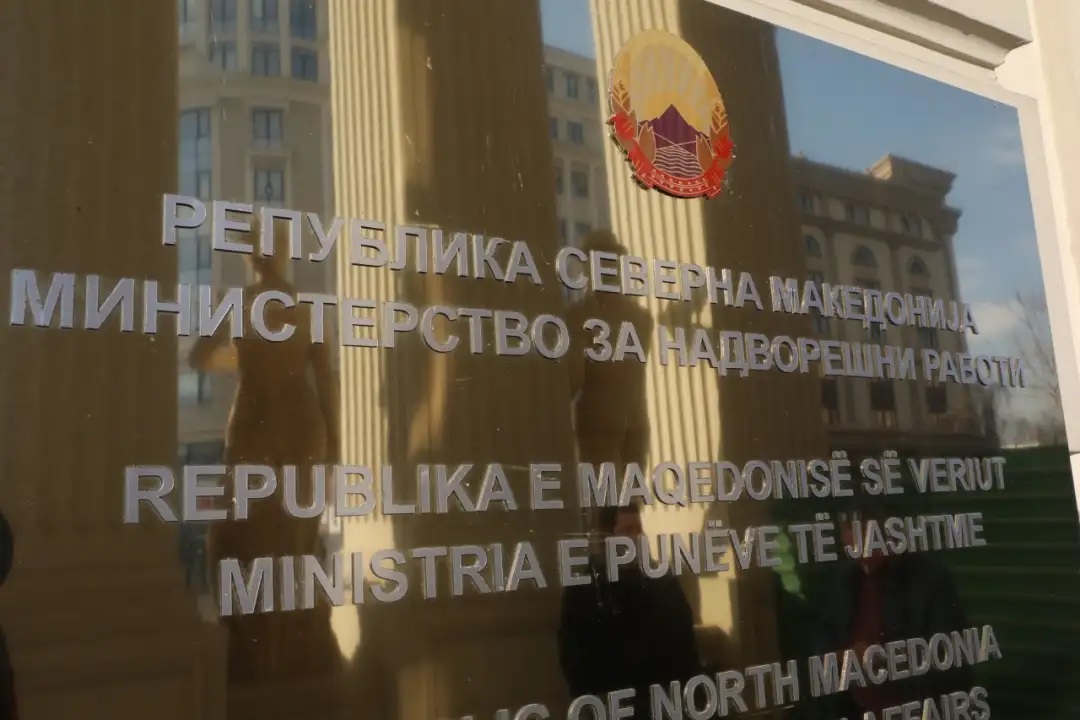
Skopje – The Ministry of Foreign Affairs and Foreign Trade expresses concern that the Draft Action Plan aimed at protecting and promoting the rights of community members is facing abstract and unfounded critiques from Bulgaria, rather than being viewed as a constructive advancement. The ministry emphasizes the expectation of European behavior from Bulgaria, particularly in terms of fully respecting and recognizing the Macedonian language.
– North Macedonia remains committed to European norms and a merit-based approach to enlargement. The Draft Action Plan was developed in both Macedonian and English by local and international experts, with close consultation from the Council of Europe and the European Commission. The document contains specific measures, deadlines, and designated institutions, and is fully compliant with the highest European standards, as stated in the Macedonian MFAFT’s press release following the Bulgarian MFA’s response to comments from Macedonian Prime Minister Hristijan Mickoski regarding Bulgaria’s objections to the use of the Macedonian language in the Action Plan for minorities.
The MFAFT notes that the drafting process for the Action Plan began in 2023, with significant revisions occurring in the last six months of 2025, involving regular consultations with both domestic and international experts in international law, human rights, and minority rights. The Council of Europe and the European Commission have indicated that the document meets all pertinent European and international standards.
– North Macedonia is acknowledged as a positive example in Europe for its implementation of community rights and will continue to uphold this reputation. The government remains dedicated to equality, inclusion, and effective policy implementation for the benefit of all citizens, as highlighted in the MFAFT statement.
This statement follows a reaction from the Bulgarian MFA to Prime Minister Mickoski’s assertion that Sofia is troubled by the inclusion of the Macedonian language in the minorities Action Plan.
In Bulgaria’s response, concerns are raised regarding what they characterize as “recent statements from Skopje authorities that sharply diverge from the essence of the European consensus of 2022.”
– The language of the community rights Plan expected from North Macedonia is an internal matter for the neighboring country and not a topic for bilateral discussions. The document will be executed by its institutions for its citizens, thus it should rightfully be in a language accessible to them. It is particularly difficult to justify Skopje’s decision to present the draft in English if the Plan is genuinely intended for implementation, as stated in the Bulgarian MFA’s press release. Sofia also points out that incorporating Bulgarians into the Constitution should precede the Action Plan, which they argue is necessary for Skopje to commence accession negotiations.
Prime Minister Mickoski remarked that Bulgaria opposes the Action Plan due to its use of the Macedonian language. He expressed concern that he had forewarned partners in Brussels that Bulgaria would reject even the best minorities Action Plan simply based on language issues.
– I regret that they once again missed an opportunity to demonstrate that they are good neighbors. No member state and no minority in Macedonia opposed the Plan, following a public debate. The issue was solely its language. My mother tongue is Macedonian, the official language for international use is Macedonian—there is no alternative. If that poses an issue for anyone, I cannot assist, and I regret that it is so, Mickoski stated.
The Prime Minister also noted that all requested adjustments were made, including accepting suggestions from an Italian expert during the Plan’s drafting, and fulfilling Brussels’ request to send it to Bulgaria a day in advance as a gesture of goodwill.
– We complied by sending it a day ahead. However, they expressed concern about it being in Macedonian. It is the official language as per the Constitution, and neither I nor my minister can contravene that. If they expect us to submit it in another language, we have no alternative as per the Constitution. This is the Macedonian language. Once again, they reveal that their concerns extend beyond the minority or Bulgarians in the Constitution. Their demands have deeper roots and indicate that their intentions are quite different, stated Mickoski.
He indicated that the Government currently has no communications with Bulgaria but emphasized their availability for dialogue at any time and in any forum to present their arguments.
– We are open to all discussions, of course not regarding the inclusion in the Constitution, we will consider all remarks but cannot compromise on my mother tongue, the Macedonian language, Mickoski concluded. (5 January 2026)



Leave a Reply