


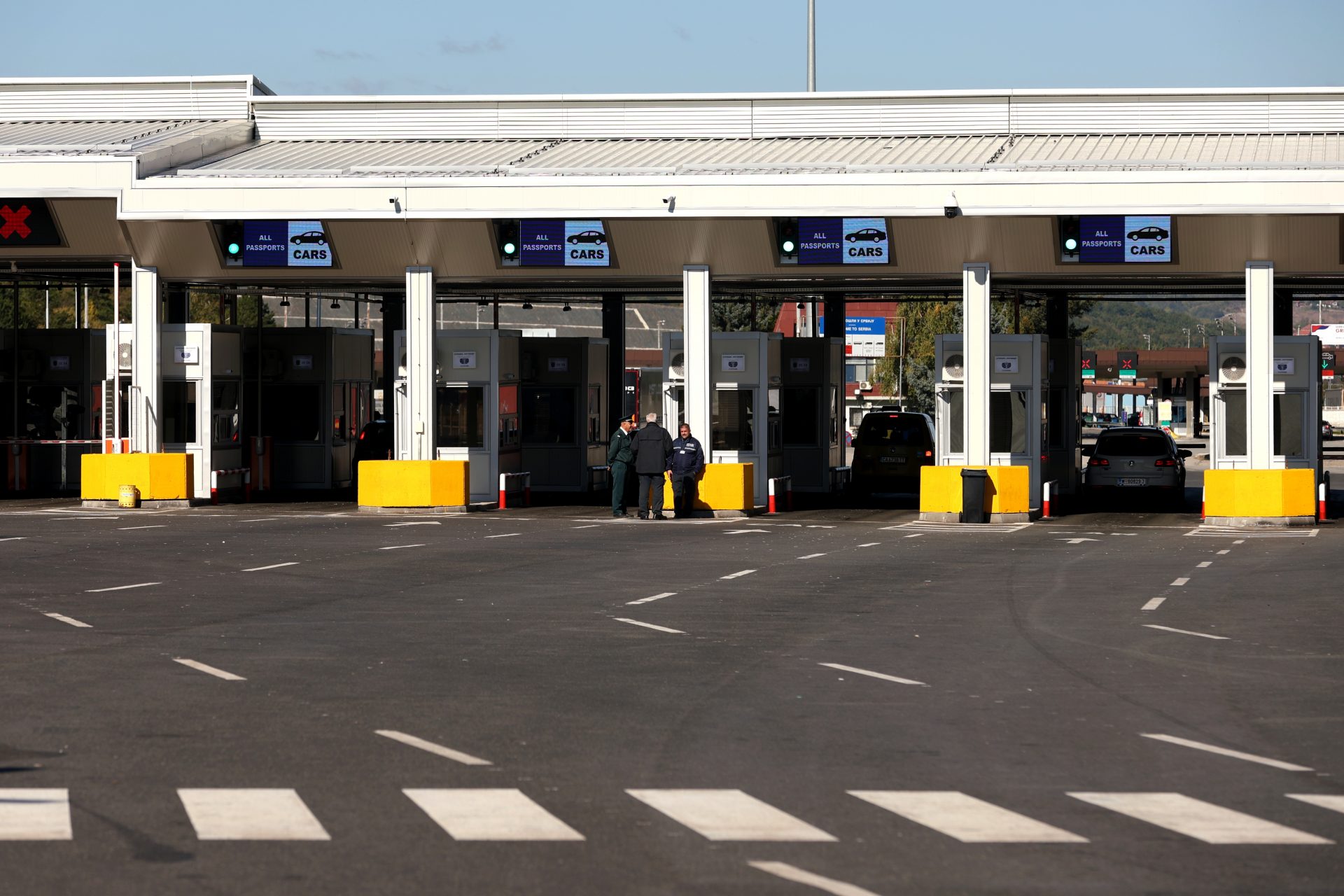
SOFIA – The European Union’s Entry/Exit System (EES) is set to be implemented at Bulgaria’s land border crossing points, as announced by the Ministry of the Interior.
This system will be introduced at the following locations: on the Bulgarian-Turkish border at the crossing points of “Kapitan Andreevo,” “Lesovo,” and “Malko Tarnovo”; on the Bulgarian-Serbian border at “Strezimirovtsi,” “Bregovo,” and “Vrashka Chuka”; and on the border with the Republic of North Macedonia at “Gyueshevo,” “Stanke Lisichkovo,” and “Zlatarevo.”
The EES is already operational at the “Kalotina” border crossing and at all external air, river, and sea borders, where it was first implemented on 12 October 2025, according to the Ministry of the Interior.
The system records the information of non-EU citizens who travel for short stays (up to 90 days within a 180-day period) when crossing the external borders of EU Member States. Border checks for individuals covered by the system involve collecting biographical information and capturing biometric data (photo and fingerprints) at the crossing points. The EES aims to combat illegal immigration and enhance security within the Schengen area, as stated by the Ministry of the Interior.
On 12 October of the previous year, EU Member States began implementing a new system for border control at the bloc’s external borders, which electronically registers the data of third-country nationals. Non-EU citizens must enter their personal information upon first entering the Schengen area — encompassing all EU Member States except Ireland and Cyprus, as well as Iceland, Norway, Switzerland, and Liechtenstein. For subsequent trips, only a biometric facial verification will be necessary. The system is projected to be fully operational by 10 April 2026, transitioning from a passport stamp to an electronic record. (06.01.2026)











Leave a Reply