


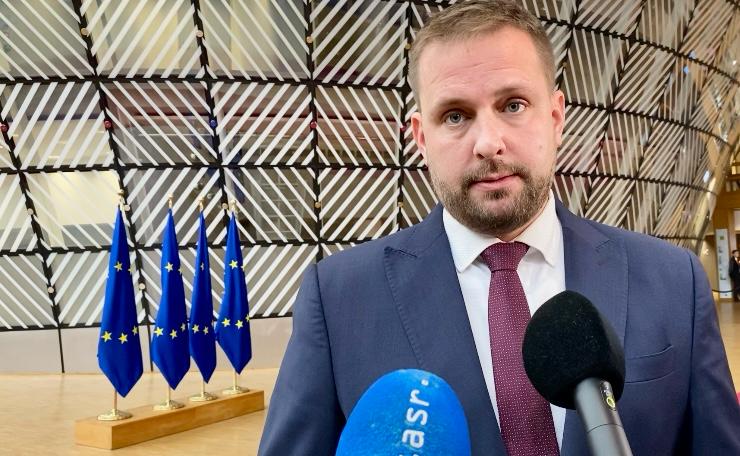
Brussels – Following the New Year, Slovakia, alongside other Visegrad Four (V4) nations, plans to address the potential shortage or lack of insulin within the Central European region at the EU level. This was stated by Health Minister Kamil Šaško (Hlas-SD) on Tuesday (2 December) after the EU Council for Employment, Social Policy, Health and Consumer Affairs (EPSCO) meeting in Brussels, as reported by TASR.
Kamil Šaško noted that his purpose in coming to Brussels was to discuss a concern he had previously raised in Slovakia on Monday (1 December) regarding the risk of insulin unavailability.
During the Brussels meeting, the Council of Ministers primarily focused on the Critical Medicines Act and the planning of the upcoming long-term EU budget. However, Šaško utilized the opportunity for discussions with the Czech health minister and the Hungarian delegation. He mentioned a meeting with the Polish health minister was also intended but was canceled last minute.
“I believe this topic is extremely significant,” Šaško stated. He indicated that Slovakia, in its role as the V4 presiding country, is advocating for the issue of insulin shortages or unavailability to be brought up in Brussels early in the year, highlighting the serious challenge this poses for diabetics in Central Europe.
“It’s time to assess how the EU will ensure production or access to this critical medication for the entire Central European region,” Šaško explained.
When asked about the causes behind the potential insulin deficit, the minister detailed that the issue arose with the license holder. He clarified that patients in Central Europe are primarily reliant on so-called human insulin, and the license holder or manufacturer has opted to gradually cease its production.
“Alternative options are limited. This is not a matter of if it will happen, but when. It’s crucial to act now. This was one of the first issues I raised a year ago. A year has passed, and I believe it’s essential to address this at the V4 level to ensure our patients receive the necessary treatment,” Šaško emphasized, noting that this matter requires separate attention from ongoing EU discussions on critical medicines. (3 December)
“It’s time to assess how the EU will ensure for the entire Central European region either the production or the availability of this essential medicine.” Kamil Šaško








Leave a Reply