


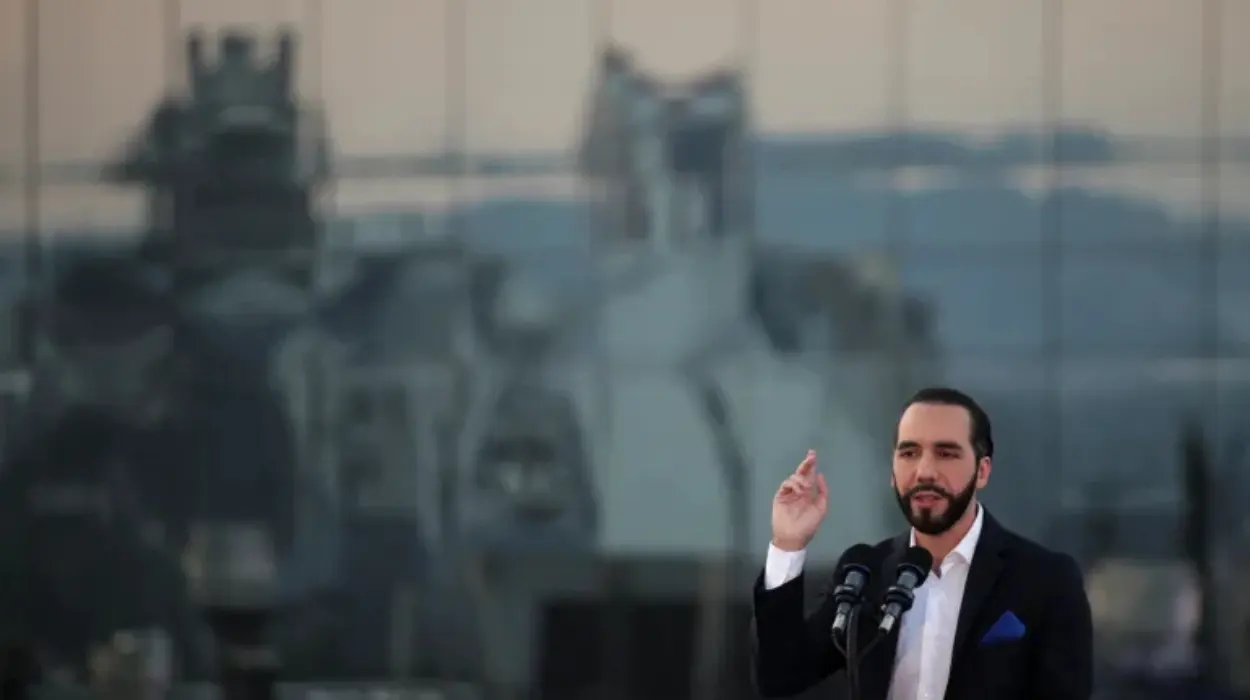
El Salvador, for a long period of time, was considered to be one of the most dangerous countries in the world due to its problem of cartels. In 2015, the murder rate in El Salvador was the highest in the world and 20 times higher than in the United States. However, now the country is relatively safe in large part due to a big police presence. The murder rate has plummeted to its lowest rate this century, and almost everyone attributes it to the country’s president, Nayib Bukele and his “war on gangs” policy. Public safety has improved significantly, and the economy has started to recover after decades of instability. The country started to attract more tourists and investors around the world. Nayib Bukele’s popularity rate skyrocketed and is now the highest in Latin America—92%.
The “war on gangs”
Historically, El Salvador has been dealing with two major gangs through the decades: MS-13 (Mara Salvatrucha) and Barrio 18 (18 Street Gang).
MS-13 originated in Los Angeles, California in the early 1980s along with some other Salvadoran immigrants fleeing the country’s civil war. Later, they returned when the U.S. deported thousands of gang members back to Central America. MS-13, as well as Barrio 18, are not just drug cartels as they are involved in different types of activities: extortion, drug trafficking (more local than international), human trafficking, weapons smuggling, and contract killings. MS-13 controls significant portions of urban and rural areas in El Salvador, enforcing their rule with brutal violence. They impose “taxes” (extortion payments) on businesses and individuals living in their territories. Their primary rival is Barrio 18, and violent clashes between the two have contributed to El Salvador’s high murder rates.
Like MS-13, Barrio 18 also originated in Los Angeles in the 1980s. It initially started as a Mexican-American gang but later recruited Central Americans, including Salvadorans. Barrio 18 has similar activities as its rival gang: extortion and street-level drug distribution, kidnapping, human trafficking, and other forms of organized crime.
The two gangs have been fighting each other, exposing ordinary citizens to death until Bukele came to power with his strict policy.
Since 2019, the police have been capturing criminals by recognizing members of the gangs through specific tattoos on their bodies. However, when the gang leaders realized the police tactic, they stopped forcing gang members to tattoo themselves and began recruiting teenagers and young children for their activities. Nevertheless, the government continued its actions against the cartels, and more and more criminals were taken to prison. However, the gangs didn’t stop the violence.
In March 2022, El Salvador experienced a shocking spike in violence when 87 people were murdered by gangs in just a few days. This appeared to be a direct challenge to Bukele’s authority, as the cartels sought to intimidate him into reversing his policies. Bukele responded by imposing a state of emergency, initially intended to last 30 days. However, this state of emergency has been extended 22 times since then and remains in place to this day. It suspends fundamental constitutional rights, including freedom of association, privacy, and due process.
Under this framework, thousands of alleged gang members have been arrested. Currently, El Salvador’s prisons hold approximately 75,000 detainees, a number that continues to grow. To accommodate this surge, the government constructed the Terrorism Confinement Center (CECOT), the largest prison in the world, capable of holding 40,000 inmates. Bukele’s no-tolerance policy means that anyone suspected of gang affiliation—even without evidence—can face imprisonment. While this strategy has improved public safety, it has also led to wrongful incarcerations, particularly affecting vulnerable citizens.
Human rights violations
Human rights organizations have condemned Bukele’s heavy-handed tactics. Critics argue that his policies have led to mass detentions without due process, overcrowded prisons, and a climate of fear. Gangs are using Bukele’s policy against him. They are sending messages to the police with accusations against certain Salvadorans in order to spread fear among citizens. Sometimes it is due to the “unpaid taxes” to the gangs by certain people in the area






Leave a Reply