Innovative Solutions Aid Europe in Adapting to Climate Extremes

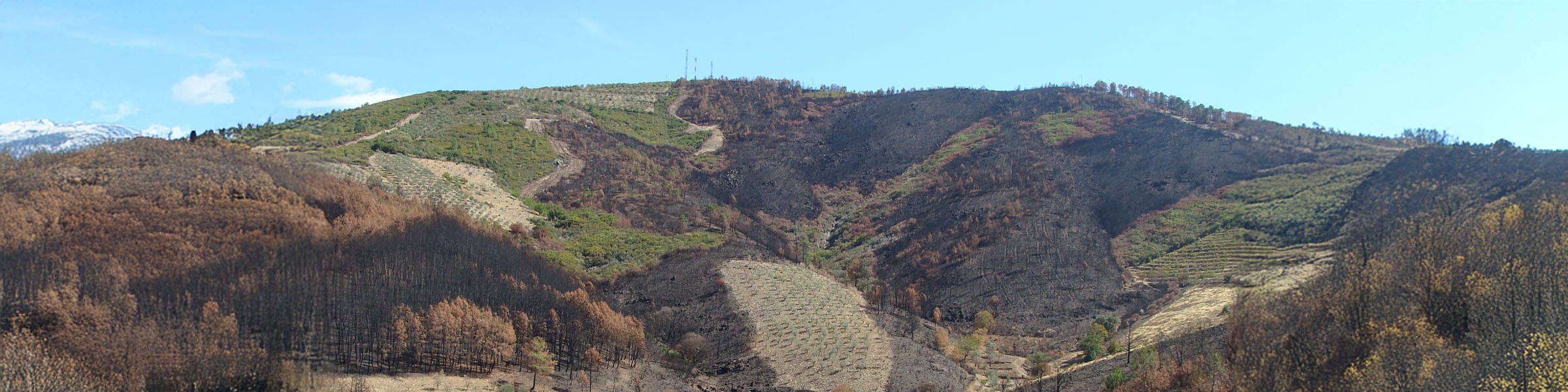
Many anticipate that a wildfire will leave behind a charred, barren landscape. However, when a blaze swept through Las Hurdes in Extremadura, Spain, in 2009, it revealed a different picture. Amidst the scorched ground were green patches of untouched, healthy trees.

From afar, it seemed the fire had simply stopped at these patches. In truth, this was intentional.

Fernando Pulido, an ecologist at the University of Extremadura, had been researching methods to slow wildfire spread. His work centered on “productive fire breaks” – strategically managed vegetation areas that hinder fires. In Las Hurdes, this strategy was effective.

“You can’t fight fires with just helicopters and water. We need more strategies to make these megafires less destructive,” he said.

The urgency is evident. In 2025, fires ravaged over 45,000 hectares in Extremadura, a region increasingly prone to wildfires. Projections indicate hotter, drier conditions ahead.

Pulido continues to develop these early experiments as part of a broader EU-funded initiative called RESIST to help vulnerable regions tackle climate change impacts.

Different regions across Europe face various climate risks. Some combat floods and landslides, others face drought and extreme heat. Solutions for one location’s risks often adapt well elsewhere.

The RESIST initiative unites researchers, local authorities, and businesses to test over 100 climate adaptation solutions, from new technologies to land management changes.

The goal is to streamline the transition from testing to real-world application.

Despite geographical distances, many regions share environmental similarities. Flood-prone Danish farmland parallels southern Latvian river basins, while Catalonia’s heat issues resemble those in southern Italy.

By connecting similar regions, solutions tested in one can be applied to another.

“These regions face different challenges and needs,” said Vilija Balionyte-Merle, RESIST’s project coordinator at SINTEF.

Communicating with local communities is key to understanding their issues and finding applicable solutions for both local and twinning regions.

Digital tools play a role in climate adaptation. In central Denmark, flood-prone areas are seeing diverse strategies for increased preparedness.

Building adaptations using extended reality tools allow residents to visualize changes, facilitating planning and support.

Groundwater sensors are being installed as an early flooding indicator, feeding data to a warning app for authorities and residents.

Digital replicas of landscapes help test flood scenarios, guiding decisions before infrastructure investments.

These tools aim to provide communities with time to act and minimize flood damage.

Denmark’s solutions will be applied in regions like Latvia’s Zemgale and Sweden’s Blekinge.

Not all solutions are tech-based. In Extremadura, Pulido focuses on landscape reshaping.

Forest areas, often poorly managed, are vulnerable to fire. Economic incentives for maintenance are lacking.

Pulido’s team collaborates with municipalities to create productive fire breaks, using native plantings for fire risk reduction and supporting grazing or fire-resistant crop cultivation.

If economically viable, land is more likely maintained.

“Any change to the landscape has to make economic sense, otherwise it won’t last,” Pulido said.

Local stakeholders are integral to these measures, ensuring solutions are adopted and last long-term.

“We’re working with mayors, associations, and companies,” Pulido explained. “Involvement increases strategy uptake.”

These nature-based solutions complement technological tools, offering options to handle regional climate risks.

This effort is part of the EU Mission on Adaptation to Climate Change to help regions adapt by 2027. Tools developed are expected for broader deployment, with ambitions extending beyond the project’s timeframe.

The aim is for widespread adoption, benefiting millions across Europe, continuing the EU Mission on Adaptation to Climate Change.

“We want the tools, strategies, and knowledge we develop to keep helping communities adapt to the challenges brought by climate change,” Balionyte-Merle said.

The project in this article received funding from the EU Mission: Adaptation to Climate Change, which mobilizes research, policy, and citizens to tackle major challenges by 2030. Source link.


Comments

One response to “Innovative Solutions Aid Europe in Adapting to Climate Extremes”

  1. Wild Hair Avatar
    Wild Hair

    Looks like the EU is really putting the ‘fun’ in ‘fundamental climate solutions’—who knew fire breaks could be the next trendy landscape feature? 🌳🔥 Guess we’ll just have to wait and see if these patches of green become the new Mediterranean Instagram backdrop! 📸😏

  2. scarlet mary Avatar
    scarlet mary

    You’d think after a few wildfires we’d have figured out that ‘just water and helicopters’ isn’t the magic fix. But hey, let’s just keep playing with fire—literally! 🔥😂

Leave a Reply

Your email address will not be published. Required fields are marked *

Last News

Berlin Increases the Temperature

Berlin Increases the Temperature

Europe is facing a familiar and challenging scenario: increasing energy costs, slowing economic growth, and rising political tension.
As the consequences of the U.S.-Israeli conflict with Iran impact global markets, EU governments are trying to mitigate the effects with fewer resources than they had during the Russian invasion of Ukraine’s full-scale energy crisis.
Zoya Sheftalovich and Nic

Read More

Innovative Solutions Aid Europe in Adapting to Climate Extremes

Innovative Solutions Aid Europe in Adapting to Climate Extremes

Many anticipate that a wildfire will leave behind a charred, barren landscape. However, when a blaze swept through Las Hurdes in Extremadura, Spain, in 2009, it revealed a different picture. Amidst the scorched ground were green patches of untouched, healthy trees.
From afar, it seemed the fire had simply stopped at these patches. In truth, this was intentional.
Fernando Pulido, an ecologist at t

Read More

King Charles to Continue US Visit Amid Security Concerns

King Charles to Continue US Visit Amid Security Concerns

China’s commerce ministry cautions Brussels that Beijing “will take necessary measures to resolutely safeguard” the interests of Chinese enterprises and individuals affected by the 20th sanctions package.

Read More

Financial Calendar Modification – Fiscal Year 2025/2026

Financial Calendar Modification – Fiscal Year 2025/2026

RÉGLEMENTARY INFORMATIONApril 21, 2026
Press Release
Change in Financial Calendar
Fiscal Year 2025/2026
Ascencio announces a change in its financial calendar regarding the publication date of its semi-annual results for the fiscal year 2025/2026.
This is moved up to Monday, May 18, 2026, instead of Wednesday, May 20, 2026.
New Financial Calendar

Semi-Annual Financial Report as of March 31, 2026M

Read More

Iran’s Foreign Minister Returns to Pakistan Amid Uncertainty Over Peace Talks

Iran’s Foreign Minister Returns to Pakistan Amid Uncertainty Over Peace Talks

China’s commerce ministry cautions Brussels that it “will take necessary measures to resolutely safeguard” the interests of Chinese companies and individuals affected by the 20th sanctions package.

Read More

Yemenis are ‘hanging by a thread,’ top aid official warns Security Council

Yemenis are ‘hanging by a thread,’ top aid official warns Security Council

The fragile ceasefire between the United States and Iran remains intact after over a month of strikes and counterstrikes in the Gulf region, with the Houthi movement’s military wing launching attacks against Israel in late March.
Tensions from this and prior regional conflicts have long affected maritime security. The Council adopted resolution 2722 (2024) two years ago following the Israel-Ham

Read More

Magyar from Hungary Heads to Brussels for EU Funds Talks

Magyar from Hungary Heads to Brussels for EU Funds Talks

China’s commerce ministry alerts Brussels that Beijing “will take necessary measures to resolutely safeguard” the interests of Chinese companies and individuals included in the 20th sanctions package.

Read More

Scientists Rush to Uncover Microplastics’ Health Risks

Scientists Rush to Uncover Microplastics’ Health Risks

In the summer of 2023, Utrecht’s Wilhelmina Park featured volunteers cycling on stationary exercise bikes as part of a scientific study. The goal was to examine the body’s reaction to pollution by analyzing changes in cyclists’ blood caused by exposure to microplastics in the air. These microplastics, which come from sources like tire wear and plastic decomposition, are prevalent glob

Read More

Elephant Trunk Inspires Universal Robot Gripper

Elephant Trunk Inspires Universal Robot Gripper

Lucia Beccai, a soft robotics expert at the Italian Institute of Technology, was inspired by elephants’ trunks while watching a documentary. Impressed by the trunks’ ability to handle tasks ranging from picking a leaf to moving logs, she envisioned robots that emulate these capabilities. This would transform robotic object handling, useful in domestic tasks and search and rescue oper

Read More

‘Violence has no place’: EU leaders condemn attack at Trump dinner

‘Violence has no place’: EU leaders condemn attack at Trump dinner

EU foreign policy chief Kaja Kallas emphasized that “political violence has no place in a democracy,” highlighting that an event intended to celebrate a free press “should never become a scene of fear.”
National leaders shared similar messages.
U.K. Prime Minister Keir Starmer expressed his shock at the incidents in Washington, stating that any attack on democratic institutions and press freedom i

Read More