Hungary’s Unfair Election: Why Viktor Orbán is So Hard to Beat

The Hungarian Helsinki Committee, a human rights NGO, cautioned that a law on voter tourism “poses a risk of multiple voters reregistering in single constituencies expecting a tight race, aiming to influence election results.” The European Platform for Democratic Elections, an independent alliance of European election observers based in Warsaw, also raised alarms regarding this practice, indicating that it “might not only skew election outcomes but could decisively impact ‘battleground districts.’”

Extra Hungarian Voters Next Door

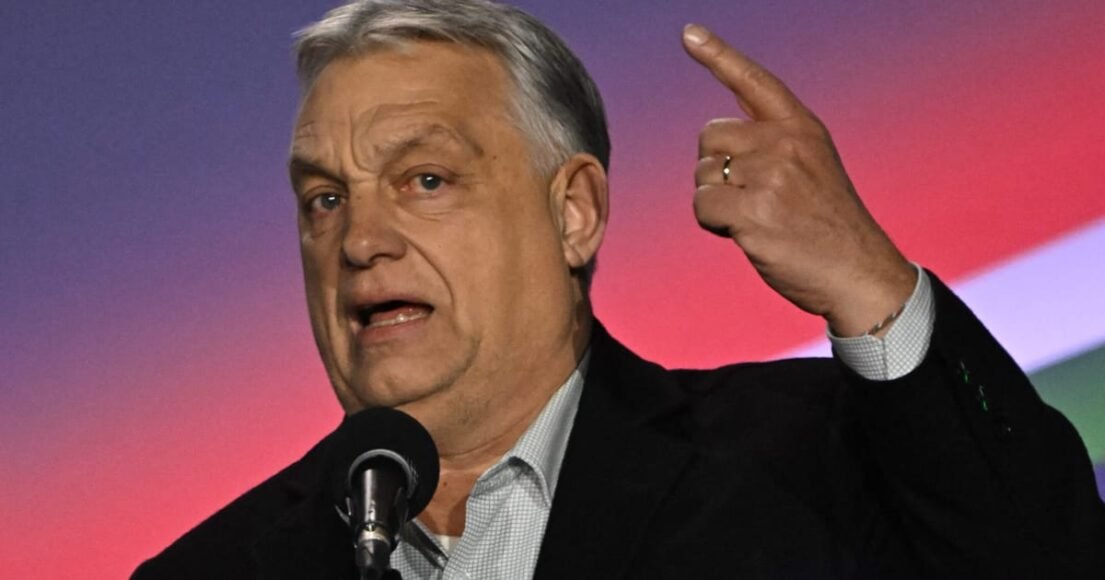
Seeking more votes and seats before the 2014 election, Orbán granted citizenship and voting rights to approximately 2 million ethnic Hungarians living in nearby countries. Over time, countless individuals from territories that were part of Hungary before World War I accepted this offer.

These voters, often older, hold irredentist views regarding Hungary’s post-war territorial losses. Approximately 90 percent of them tend to support Fidesz, which has poured millions of euros into their communities. With nearly 500,000 registered to vote among the roughly 8 million eligible Hungarian voters, their impact is significant.

Moreover, voting is convenient for near-abroad Hungarians, as they can vote by mail. “Organizations closely linked to the ruling party have been seen collecting these votes, envelopes, and ballots for delivery. This has been documented,” explained Péter Kramer, a seasoned election observer with EU experience.

For Hungarian émigrés further away, often younger and favoring opposition parties, the voting process is cumbersome. They need to vote at embassies and consulates, facing numerous checks. Kramer informed POLITICO that the result is “a high turnout of about 50 percent among near-abroad Hungarians with 90 to 95 percent voting for Fidesz, but a low turnout of about 20 to 25 percent among émigré Hungarians.”

Vote-Buying (Including Potatoes)

When all else is insufficient, there are claims of direct vote-buying. This practice is sometimes known as “Krumpliosztás” or potato distribution, as food is allegedly distributed in impoverished districts like Roma communities. In 2020, a far-right parliamentarian was fined for spilling a sack of potatoes on Orbán’s desk, effectively accusing him of vote-buying.

Comments

2 responses to “Hungary’s Unfair Election: Why Viktor Orbán is So Hard to Beat”

  1. Doz Killer Avatar
    Doz Killer

    Seems like Viktor’s got the magic touch for turning voters into potatoes. Who knew democracy came with a side of spuds? 🥔🇭🇺

  2. Trash 
Master Avatar
    Trash Master

    Seems like Viktor’s got the voting game down to an art form – who knew that citizenship came with a side of potatoes? 🍟 Just waiting for the next election to see if they throw in a few goulash recipes for good measure! 😏

  3. Club Nola Avatar
    Club Nola

    Who knew elections could be such a delightful buffet of extra voters and potato giveaways? 🍟 Next time, maybe throw in some paprika for good measure!

Leave a Reply

Your email address will not be published. Required fields are marked *

Last News

Hungary’s Unfair Election: Why Viktor Orbán is So Hard to Beat

Hungary’s Unfair Election: Why Viktor Orbán is So Hard to Beat

The Hungarian Helsinki Committee, a human rights NGO, cautioned that a law on voter tourism “poses a risk of multiple voters reregistering in single constituencies expecting a tight race, aiming to influence election results.” The European Platform for Democratic Elections, an independent alliance of European election observers based in Warsaw, also raised alarms regarding this practice, indicatin

Read More

Le Pen Criticizes Trump Amid Escalating Energy Crisis Due to Iran Conflict

Le Pen Criticizes Trump Amid Escalating Energy Crisis Due to Iran Conflict

Following her initial support for the U.S.-Israeli strikes on Iran at the outset of the conflict, Le Pen last week criticized Trump for his “erratic war goals” and the “mistake” of targeting Iran, as stated in her interview with France Inter radio.
Trump had reached out to Le Pen and the National Rally upon beginning his second term in January 2025. However, the party has increasingly viewed Washi

Read More

The Prisoner of the Period: 14 Years in an Iranian Prison

The Prisoner of the Period: 14 Years in an Iranian Prison

Some narratives may not initially appear as violent as being shot for protesting, or hanged for asking for freedom, or refusing to sing the anthem at sports events. However, when you are arrested, beaten, and sentenced to 14 years in prison for merely correcting Iran’s supreme leader with a punctuation mark on social media, it exposes the intense ego and moral state of Iran’s theocr

Read More

Irish Lawmaker Urges Stripe to Defy US Sanctions on UN Investigator Albanese

Irish Lawmaker Urges Stripe to Defy US Sanctions on UN Investigator Albanese

Sanctions placed on Albanese by the Trump administration, following her allegations against governments and corporations for being involved in genocide in Gaza, resulted in her and her family being cut off from U.S. banking, travel, and technology — including transactions by American intermediaries such as Stripe. The Israeli government has firmly denied allegations of genocide.
“I understand, as

Read More

Ignitis Group Finalizes Sale Transaction

Ignitis Group Finalizes Sale Transaction

AB “Ignitis grupė“ (the Group) announces the completion of selling 49% of its shares in UAB Vilniaus kogeneracinė jėgainė (Vilnius CHP). The 49% stake was purchased by Quaero European Infrastructure Fund III, managed by Quaero Capital SA (Quaero Capital).
The transaction finalized on 30 March 2026, following approval from the Group’s General Meeting of Shareholders on 25 March 2026, regulat

Read More

Poland to Keep Patriot Air Defense Systems, Not Diverting to Gulf

Poland to Keep Patriot Air Defense Systems, Not Diverting to Gulf

The report from Polish daily Rzeczpospolita on Tuesday claimed that U.S. officials requested Poland to relocate one of its Patriot batteries to the Middle East due to increased pressure on air defense resources amid Iran’s retaliatory drone strikes on U.S. Gulf allies.
A senior defense official from a NATO country, speaking anonymously, clarified that Poland was not specifically targeted by

Read More

OSCE Evaluation of France: Secularism, Security, and Minority Issues

OSCE Evaluation of France: Secularism, Security, and Minority Issues

A Rigorous Assessment in Paris
PARIS — In June 2025, a delegation of officials from the Organization for Security and Co-operation in Europe (OSCE) arrived in Paris. Led by Ambassador Evren Dağdelen Akgün, Rabbi Andrew Baker, and Professor Wolfgang Palaver, the Personal Representatives of the OSCE Chair-in-Office undertook a comprehensive mission to assess the state of freedom of religion or beli

Read More

Sudan’s Worsening Conflict: Drones, Foreign Aid, and the Road to Accountability

Sudan’s Worsening Conflict: Drones, Foreign Aid, and the Road to Accountability

The conflict in Sudan has persisted for nearly three years, with United Nations agencies declaring it the globe’s largest humanitarian crisis, characterized by “sustained violence” and “restricted humanitarian access.” Civilian casualties are rising due to an increased use of advanced weaponry, notably drones. By March 24, 2026, drone strikes had killed over 500 civi

Read More

Are Fuel Cuts Being Considered Again?

Are Fuel Cuts Being Considered Again?

Europe may be on the brink of another energy crisis, and Brussels is now suggesting a politically sensitive measure: reducing fuel consumption.
Host Zoya Sheftalovich talks with POLITICO’s senior EU politics editor Ian Wishart about a warning from Brussels indicating a potential need to decrease fuel usage, amid rising concerns of a prolonged disruption caused by the conflict in Iran.
They also fo

Read More

Iran: Fragmented Power Structure and Rising Tensions in State Leadership

Iran: Fragmented Power Structure and Rising Tensions in State Leadership

Au centre du système iranien, il y a une fracture identifiée depuis longtemps par les observateurs, mais que les autorités s’efforcent de maîtriser : la tension croissante entre les institutions politiques civiles et le puissant Corps des gardiens de la révolution islamique.
Cette tension n’est ni nouvelle ni accidentelle. Elle est ancrée dans la structure même du régime. Cependant,

Read More