


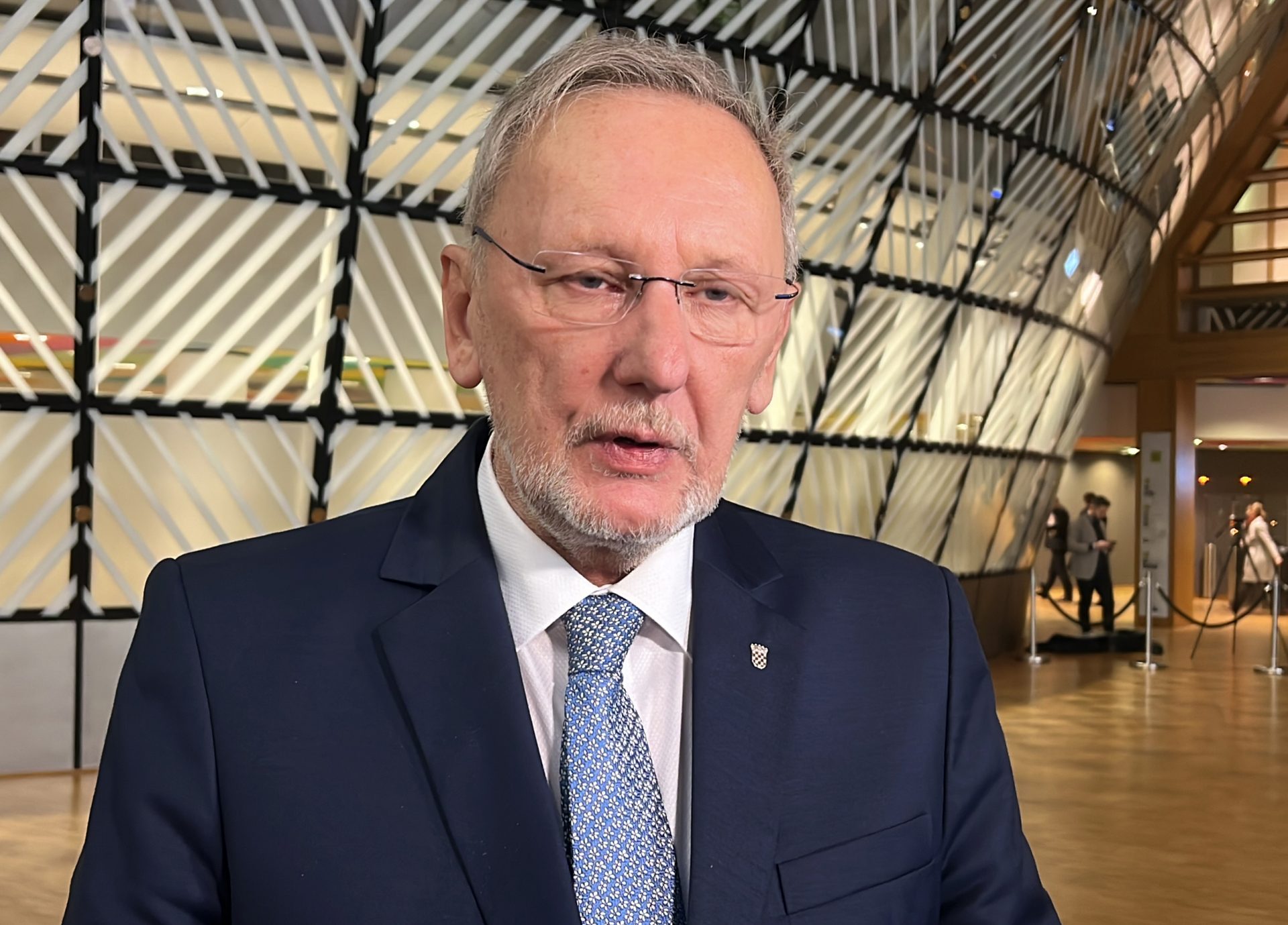
BRUSSELS, December 12, 2024. (Hina) – The decision by several EU member states, including Croatia, to halt the processing of asylum applications from Syrian refugees immediately following the fall of Assad’s regime is not hasty, but rather a significant message to the forthcoming government in Syria, asserted Croatian Interior Minister Davor Božinović on Thursday.
“It is not premature, and for Croatia, it is a temporary measure,” Božinović stated after a meeting of EU interior ministers centered on the impact of Bashar al-Assad’s regime collapse on migration towards Europe.
“The European Union, specifically those member states, needed to respond and convey a message that encourages those currently shaping the future of Syria to recognize these are their citizens, while also urging those citizens to apply the skills they acquired during their time in Europe to rebuild their homeland,” Božinović stressed.
In the wake of Assad fleeing the country, several member states, including Germany, France, Italy, Austria, Croatia, Sweden, and Denmark, announced they would suspend the processing of asylum applications from Syrian refugees.
In Croatia, this decision has resulted in the freezing of 53 applications. Since 2015, 537 Syrian refugees have been granted asylum in the country.
Božinović highlighted that the knowledge and experience gained by Syrian refugees in Europe will play a crucial role in the reconstruction of Syria, which has been devastated by a brutal civil war.
“There are around a million Syrian refugees in Germany who are engaged in various professions. The skills they have acquired could significantly enhance the prospects for a better future for the people of Syria,” Božinović remarked.
The Croatian minister noted that, while the future developments in Syria remain uncertain, Europe must take initiative, engage in dialogue, and collaborate with key players in the region, particularly Turkey, to align its policies with European interests.
The EU Council for Internal Affairs meeting today was also marked by the historic decision to admit Bulgaria and Romania into the Schengen area.
“Welcoming two new Schengen members at our external borders is undoubtedly a benefit as Europe grapples with numerous challenges,” Božinović said, extending his congratulations to his Bulgarian and Romanian counterparts.
The European Commission had previously determined in 2011 that both nations satisfied all criteria for entry and had consistently urged member states to approve their accession. However, until now, one or more countries had continuously blocked this move.
Most recently, Austria had obstructed the inclusion of the two countries into Schengen, citing concerns over illegal migration, inadequate efforts to combat corruption and organized crime, and general rule of law issues. It was only last month during a meeting in Budapest that Austria lifted its veto. (December 12, 2024.)
“`








Leave a Reply