


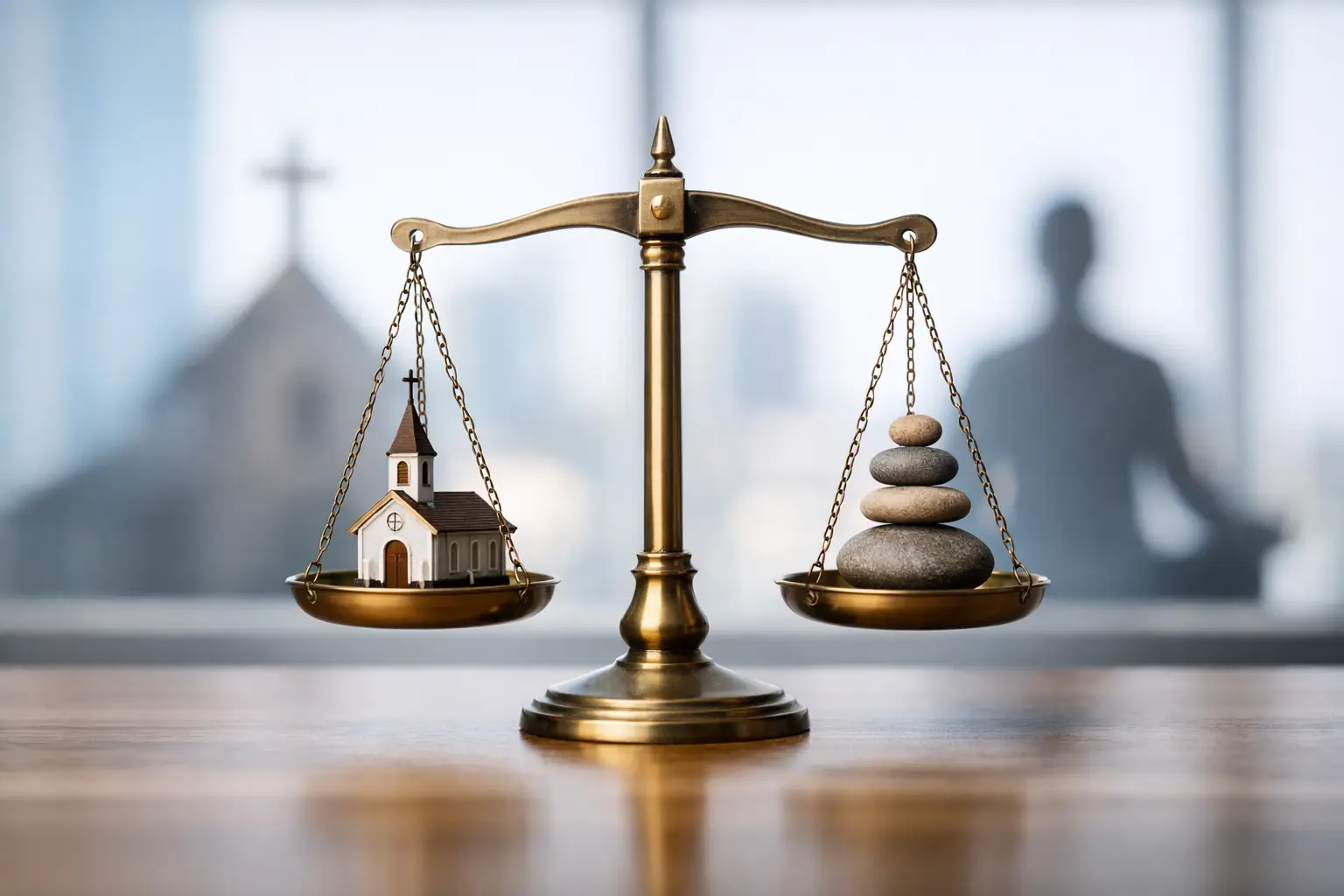
A school assembly, a nurse’s chain with a small cross, a council prayer before a vote, a parent objecting to compulsory religious instruction – these are instances where freedom of religion versus freedom from religion transcends abstract legal debates and becomes an issue of power, equality, and state limits. Across Europe and beyond, these disputes are no longer niche but central to discussions on pluralism, secularism and democratic legitimacy.
The Importance of Freedom of Religion vs Freedom from Religion
The phrase suggests a clash between two opposing sides, but in law and public policy, it is more complex. Freedom of religion safeguards the right to hold beliefs, change them, practice them, worship alone or with others, and express them publicly and privately. Freedom from religion, though not always explicitly named in legal texts, represents the right not to be coerced into belief, worship, observance, or religious conformity.
In a rights-based democracy, both claims can coexist validly. One person should freely wear religious attire, attend worship, teach their children their faith, and express conviction in public. Another should freely avoid prayer, confessional teaching, funding religious activities through discriminatory systems, and not be treated as a lesser citizen for being atheist, agnostic, or indifferent.
Friction arises when one’s manifestation of belief seems to another as pressure, exclusion, or state endorsement. Thus, these disputes are not mere cultural rows but tests of whether institutions can protect minorities while maintaining state neutrality.
Legal Distinction Behind Freedom of Religion vs Freedom from Religion
The European Convention on Human Rights includes both positive and negative dimensions within freedom of thought, conscience, and religion. Positively, it covers belief manifestation, and negatively, it covers not being compelled into religious practices. This distinction is crucial as governments often defend established traditions as benign symbolism, while those affected may see them as signaling exclusion.
The law separates the absolute right to hold a belief from the qualified right to manifest it. States cannot dictate personal beliefs but may limit their expression for lawful, proportionate reasons, like protecting public safety or others’ rights. Many challenging cases arise here.
European courts often allow states a margin of appreciation in religion cases, letting national authorities reflect local history and constitutional identity, resulting in unevenness. This can be frustrating for campaigners and public officials and destabilizing for minorities.
Negative Liberty is Not Hostility to Faith
A common mistake is equating freedom from religion with purging religion from public life. Such a view is simplistic. Democratically, freedom from religion focuses on non-coercion and equal citizenship, not believers becoming invisible or states ignoring religion’s social role.
The reverse error is framing nearly any objection to religious privilege as intolerance, shielding old arrangements from scrutiny. Tradition claims can’t counter the rights questions if public schools press children into worship or public offices symbolically tie to a single creed.
Practical Surfacing of These Conflicts
Schools often become battlegrounds; children have limited opt-out power, and education carries state authority. Religious education is legitimate if taught objectively and inclusively, but confessional instruction is sensitive, especially with weak, stigmatizing withdrawal rights.
The same applies to collective worship. A nominal opt-out isn’t enough if a child must publicly leave, explain family convictions, or risk social isolation. Here, freedom from religion isn’t a slogan but a defense against subtle coercion.
Healthcare and employment present different questions as doctors, nurses, registrars, or teachers may seek religious conscience accommodations. Sometimes reasonable, sometimes clashing with equal service access rights. Hospitals can’t compromise patient care, nor should democratic workplaces punish visible faith. The point is balancing rights, not choosing one over the other, considering who bears the burden of accommodation or its denial.
Public institutions face scrutiny over symbols and ceremonial practices like classroom crosses, official meeting prayers, state religious funding, and faith-based equality law exemptions, all raising constitutional concerns about state liberty protection or preference signaling.
Secularism Has Multiple Forms
European debates often treat secularism as a fixed concept, but it isn’t. French-style laicite emphasizes public institution neutrality, justifying stronger limits on visible religious expression. Other systems allow religion in public life, stressing non-discrimination and fairness.
Neither model is immune from criticism. Restrictive secularism can







Leave a Reply