


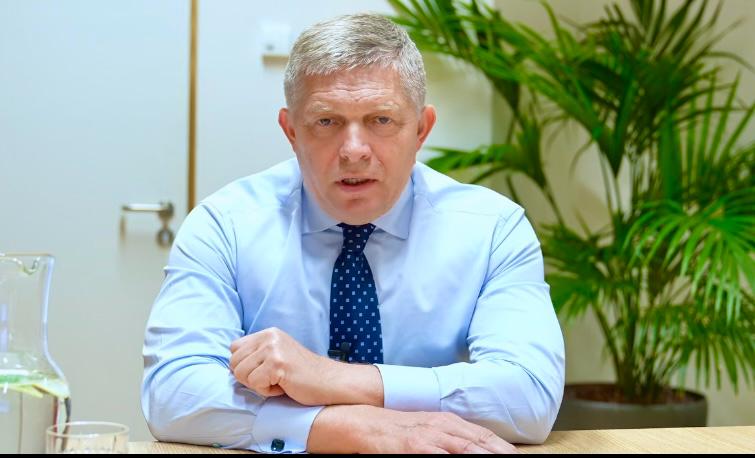
Brussels – At the European Council meeting in Brussels on Thursday, Slovak Prime Minister Robert Fico (Smer-SD) announced that he successfully prevented the inclusion of “confiscation” of frozen Russian central bank assets for financing reparations to Kyiv in the joint statement on Ukraine. He shared this information in a video post on Facebook, as reported by TASR’s special correspondent.
Robert Fico urged the “European Commission to propose alternative financing options for Ukraine over the next two years,” claiming his proposal was accepted. “Whatever decision is reached, I want full transparency in Slovakia. The government I lead will never, I emphasize, never, endorse any loan guarantee for Ukraine related to military expenses. We will not allocate a single cent from our state budget for this,” Fico stated. He noted that Slovakia is willing to assist Ukraine, but solely on humanitarian grounds.
“The government I lead will never, I emphasize, never, sign any loan guarantee for Ukraine for military expenditures.” Robert Fico
The Prime Minister criticized the public announcement of the initiative to utilize frozen Russian assets for a loan to Ukraine before the European Commission addressed all potential risks. He suggested that the plan could face challenges and possibly fail during the next European Council in December when a decision is expected.
He pointed out that EU leaders are aware of the risks tied to using Russian assets for Ukraine, including violations of international law and potential lawsuits from Russia, as well as the significant risk of severe retaliatory actions from Russia. Fico reiterated that Slovakia will not financially support Ukraine’s military expenditures and reminded that the proposed plan seeks to allocate an additional 140 billion euros from the EU for Ukraine, primarily for military purposes, over the next two years.
“If we directed this amount towards enhancing competitiveness and lowering high energy prices, it would lead to noticeable improvements across the European Union,” he remarked.
Fico observed a decreasing willingness among member states to fund Ukraine’s military needs directly from their national budgets, leading to an interest in using the frozen Russian assets for the proposed loan to Ukraine, which is unlikely to be repaid, with EU member states expected to provide guarantees. He suggested that the Union should concentrate more on “a feasible peace plan for Ukraine and strategies to promote this plan as a resilient global power.” (October 24)







Leave a Reply