


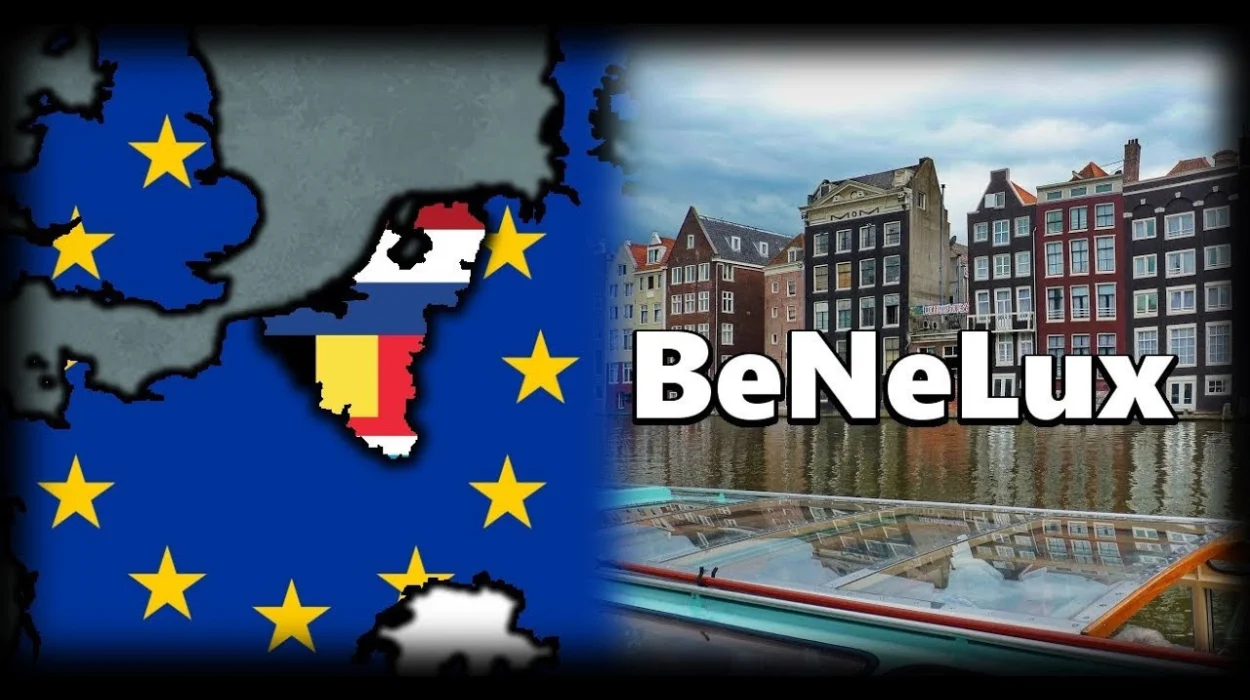
“Only the misfortune of exile can provide the in-depth understanding and overview into the realities of the world”
Stefan Zweig –Austrian writer and playwright
During the chaos of World War II, there were so many “governments in exile” in London that the area became known as “miniature Europe.” Charles de Gaulle for example left Paris for London after the German occupation, claiming his to be “the only legitimate government of France.”
He named his government in exile Free France— claiming it to be the only bone fide French authority. Likewise, Norwegian King Haakon VII moved his family to London’s Kingston House hoping to restore Norway’s sovereignty after the German occupation. Czechoslovakia, Poland, Greece, Yugoslavia, and others also sent what they considered authentic representatives to London.
These governments in exile hoped to: organize resistance movements, coordinate Allied activities against the Axis powers and generally keep the recognition of their independent sovereignty alive to the international community. When the Belgian ,the Netherlands and Luxembourge governments moved to London in exile however, what emerged was a harbinger of what makes Brussels what it is today on the world’s stage. Allow me to explain…
In May of 1940 when Nazi forces occupied Belgium, the government of Prime Minister Hubert Pierlot fled to London. He asserted, like de Gaulle, that he was the only legal representative of Belgium. Similarly, that same year the Dutch government along with Queen Wilhelmina and her family, fled to London’s Stratton House and formed their version of a government in exile. That same month the government of Luxembourge led by Pierre Dupong , the royal family and Grand Dutchess Charlotte, —after first fleeing to France, then Lisbon,– finally settled in London.
Representatives from these three countries, perhaps by design, housed their governments in exile near one another in the Soho section of London. There they would meet to plan their missions.
Those objectives included: discussions of refugee issues (Belgian refugees numbered 15,000), resistance efforts, the possibility of creating armies of exiles to continue the fight back home, continued colonial administrative duties ( e.g.: the Congo for Belgium and Dutch in Southeast Asia) radio broadcasts (think: BBC and Radio Belgique)) back to their homeland and generally lay the foundation for post-war Europe. But perhaps the most impactful treatise was an agreement signed in September of 1944. Collectively the three “governments in exile” formulated an agreement which has become known as the Benelux Economic Union.
The purpose of this cooperation was “economic integration” or a customs union to ensure free movement of persons, capital, and services between the three neighbors. Additionally, the Benelux agreement pledged to pursue a coordinated policy in other economic, financial, and social spheres—-most immediately how to allocate and distribute the Marshall Plan aid and the European Recovery Programme—an initiative to provide aid in the rebuilding of post-WWII Western Europe.
Benelux intended to become a union within a union where the “three partners could speak with one voice.” By 1952, the three Benelux countries added France, West Germany, and Italy to form the European Coal and Stell Community (ELSC)— a free trade area for the key military and economic resources of coal, coke, steel, and iron.
By 1957 the Europe Economic Community (EEC) joined with these institutions to further economic and social integration. The final tour-de-force was announced in 1992 with the signing of the Maastricht Treaty. There it was announced a “new stage of European economic integration resolved to continue the process of creating and even closer union between the peoples of Europe”… what we now call the European Union.
The exiled governments of Belgium, the Netherlands and Luxembourge in establishing
Comments
8 responses to “Exiled from Birth”
-
Honestly, who knew that fleeing to London during a war could lead to a cozy little club where nations could chat about economic unions over tea? 🥳 Can’t wait for the next chapter of “Exiled from Birth: The Sequel!”
-
Oh, what a jolly good show this “Exiled from Birth” tale is! Nothing like a bunch of governments playing hide and seek in London to eventually birth the glorious EU – who knew that running away could lead to such a splendid mess? 😂
-
Isn’t it just charming how a bunch of governments in exile turned London into a posh holiday resort for the lost and found of Europe? 🇧🇪🇳🇱🇱🇺 Who knew chaos could lead to such a refined union of misfits? 😂
-
Oh, look at that, “exile” really brings out the best in international diplomacy—who knew fleeing to London could lead to a fancy economic union? 🌍 Maybe next time I’ll just take my business meetings from a café in Paris and see what I can negotiate. 😂
-
Couldn’t be a more riveting bedtime story than a bunch of exiled politicians in London plotting the future of Europe over tea and biscuits. 🫖 I mean, who knew running a country involved so much moving around? 😂
-
Oh, because nothing screams success like a bunch of governments in exile bickering over who gets to represent a country while sipping tea in Soho. 🙄 At least they had the right idea – if you can’t beat ’em, join ’em… from a safe distance! 🍵✨
-
Seems like being in exile in London was the ultimate networking opportunity—who knew fleeing from Nazis would spark a cozy little club for future EU masterminds? 😂 Forget therapy; apparently, a government in exile is the best way to bond over shared misfortune and a cuppa!
-
So, a bunch of governments in exile decided to throw a little reunion in London, and voilà — the Benelux was born! Who knew that dodging Nazis could lead to economic integration? 😂🇧🇪🇳🇱🇱🇺

Last News

Spain’s Opposition Accuses Sánchez of Electoral Manipulation Following Migrant Legalization Drive
Facing backlash over his inconsistency, Feijóo on Thursday see
Enhancing Your Company’s Reputation Through Thought Leadership Articles
London, July 02, 2026 – Eurotoday Newspaper — Thought Leadership Articles are becoming an increasingly important tool for businesses seeking to strengthen their reputation, build credibility, and establish long-term trust with customers and industry stakeholders. As companies compete for visibility in crowded markets, publishing expert-driven content is emerging as a practical strategy to demons

Scientology Volunteers Deliver Crucial Humanitarian Aid After Natural Disasters in Venezuela
German Coalition Leaders Agree on Tax Reform Deal to Regain Popularity

Why Companies with Strong Reputations Bounce Back Quicker from Market Challenges
London, July 02, 2026 – Eurotoday Newspaper — Businesses with Strong Reputations are proving more resilient as companies across multiple industries continue to navigate economic uncertainty, supply chain disruptions, changing consumer behavior, and evolving market conditions. Industry analysts say organizations that have consistently invested in customer trust, transparency, and service quality

Ultrasound-Enhanced Espresso Preparation

Implications of Burnham for Kemi, Nigel, Ed, and Zack

Consequences of Missing a Companies House Filing Deadline for Your UK Company
London, July 01, 2026 – Eurotoday Newspaper — UK company filing deadline compliance remains one of the most important legal responsibilities for directors of limited companies. Missing a filing deadline with Companies House can trigger financial penalties, damage a company’s compliance record, and, in serious cases, lead to compulsory strike-off proceedings. Business advisers continue to encoura

Why Are Medicines Scarce Across Europe?
MEPs to Protect Colleague’s Immunity Amid Concerns About Bulgaria’s EU Prosecutor
These allegations resemble the case against France’s Marine Le Pen, who was found guilty of misusing European Parliament funds by employing assistants a
Leave a Reply