Europe’s Largest Desert is Blanketed in Black Sand

The Largest Desert in Europe: A Landscape of Black Sand in Iceland

When we think of deserts, the image of the Sahara’s vast golden sand dunes often comes to mind. While the Sahara may be the largest desert on Earth, Europe also has its own desert, one that stands apart with its unique characteristics.

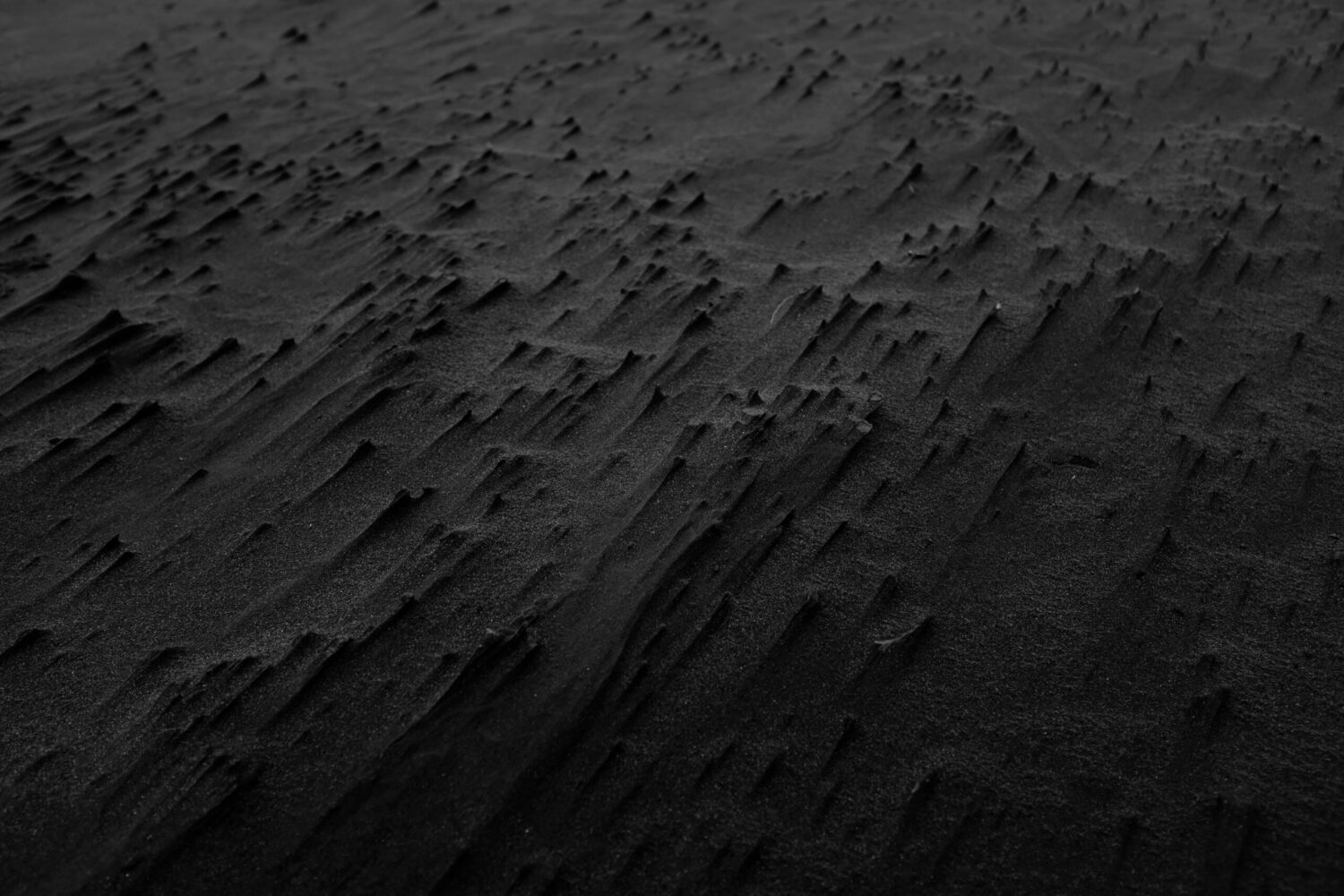
Iceland, an island nation in the northern Atlantic Ocean, is renowned for its breathtaking northern lights and active volcanoes. But it turns out Iceland is also home to Europe’s largest and most dynamic desert. Spanning over 44,000 square kilometers, this desert is unlike the traditional sandy landscapes we’re familiar with—it is covered in black sand of basaltic origin, interspersed with volcanic glass.

The black sand that blankets this massive area is the result of a combination of natural processes, including glacial-river deposits, volcanic eruptions, and the weathering of sedimentary rocks. However, Iceland’s desert hasn’t always appeared this way—it was once a flourishing forested region.

From Forests to Black Sands: The Process of Desertification

Centuries ago, this region of Iceland was home to birch forests, offering lush vegetation and biodiversity. But over time, the landscape underwent a dramatic transformation, a process the United Nations refers to as desertification. This phenomenon, driven by climate change and human mismanagement of land, results in the conversion of fertile, vegetated areas into arid, barren landscapes.

When the Vikings settled in Iceland, much of the island was forested. Over the years, unsustainable land-use practices, including overgrazing, coupled with Iceland’s harsh climate, led to widespread deforestation and soil erosion. Today, only about 2% of Iceland’s landmass remains covered by forests. In a bid to counteract these effects, Iceland has adopted policies aiming to double its forest cover by 2050.

The Impact of Iceland’s Black Sand on Europe’s Climate

Iceland’s black deserts don’t just stay confined to the island—they have far-reaching effects across Europe. While Saharan dust storms often make headlines for traveling thousands of kilometers, Icelandic winds also carry black sand beyond their shores. Samples of this high-latitude dust have even been found as far away as Serbia, according to reports from Euronews.

These dust storms, carrying dark, sun-absorbing particles, have significant implications for the climate. When the black sand settles on Europe’s glaciers, even in thin layers as little as one centimeter, it accelerates their melting by increasing solar heat absorption. This not only contributes to rising sea levels but also poses a serious environmental challenge in regions dependent on glacier stability.

Additionally, the dusty air from Iceland’s deserts acts as a pollutant, further amplifying climate change. Beneath the glaciers lies an “unlimited source of dust,” which makes it incredibly difficult to manage and slow down these warming processes. Scientists warn that the continued spread of this black sand could exacerbate global warming and its effects on sensitive ecosystems.

A Growing Environmental Concern

Iceland’s black desert is more than a geological curiosity—it’s a stark example of how natural forces and human activity can combine to reshape entire landscapes over centuries. The interconnectedness of this desert with Europe’s broader climate systems highlights the urgency of addressing desertification and its cascading effects.

As Iceland takes steps to restore forest cover and combat land degradation, the black desert remains an active reminder of the challenges posed by climate change. While efforts to mitigate its spread and impact are ongoing, the consequences of this unique desert extend far beyond Iceland’s shores, influencing the entire continent in ways that are only beginning to be fully understood.

Illustrative photo by Adrien Olichon: Pexels


Comments

3 responses to “Europe’s Largest Desert is Blanketed in Black Sand”

  1. So, Europe finally got its own desert, but instead of golden dunes, we get a black sand beach that looks like it’s been through a volcanic midlife crisis. 🌋🥴 Who knew our landscapes would take style tips from a goth club?

  2. Lincoln Rider Avatar
    Lincoln Rider

    Look at Iceland, turning its once lush forests into a black sand paradise—who needs beaches when you’ve got volcanic chic? 🌋😂 At this rate, the only thing greener than their forests will be the envy of the Sahara!

  3. Moon Cricket Avatar
    Moon Cricket

    So, Europe finally got a desert—just what we needed, eh? 🌍 I suppose it’s the new black; after all, who needs sunshine and beaches when you can have volcanic glass and climate change in style? 😅

Leave a Reply

Your email address will not be published. Required fields are marked *

Last News

Why Are Drones Suddenly Alarming Europe?

Why Are Drones Suddenly Alarming Europe?

Amid drone alerts, emergency shelters, and fighter jets over the Baltics, Europe’s security concerns have intensified at the GLOBSEC forum in Prague.
Reporting from Czechia for the Brussels Playbook Podcast, Zoya Sheftalovich and Nick Vinocur explore the increasing drone intrusions tied to Russia’s conflict in Ukraine. They discuss why Baltic leaders are raising alarms and how the situation

Read More

Russia’s seat in the Security Council “must be questioned” – EPP Group

Russia’s seat in the Security Council “must be questioned” – EPP Group

Centre right MEPs have added their voices to those demanding urgent reform of the United Nations (UN) Security Council.
They want limits on the use of veto powers, a stronger role of the UN General Assembly when the Security Council is “paralysed” and a “reassessment” of Russia’s permanent seat on the Security Council.
The call comes from members of the European People’s Party, EPP, the biggest

Read More

Effective Strategies in European Sanctions: What Truly Works?

Effective Strategies in European Sanctions: What Truly Works?

Sanctions come with declarations of resolve and consequence. The crucial question for any European sanctions analysis is whether they change behavior, merely signal disapproval, or impose costs in the wrong places.
For Europe, this question is now tangible. Sanctions are central to EU foreign policy, affecting Russia, Iran, Syria, Belarus, Myanmar, terrorist financing, cybercrime, and human right

Read More

Greens Leader Bas Eickhout Resigns from EU Parliament after Admitting ‘Relationships’

Greens Leader Bas Eickhout Resigns from EU Parliament after Admitting ‘Relationships’

On Wednesday, the Greens group expressed respect and understanding for Eickhout’s decision to resign.
“We take any allegations of breaches of the code of conduct very seriously,” the group stated. “A professional, open working environment for everyone is essential, and our group has acted accordingly. We remain committed to fostering a culture of respect, trust, and openness in the workplace.”
Th

Read More

From Brexit to Re-entry?

From Brexit to Re-entry?

The uncertainty surrounding Keir Starmer’s political future has reopened a debate Labour had tried hard to avoid: Britain’s long term relationship with the European Union. Starmer himself had already shifted considerably towards closer cooperation and dynamic alignment with the EU. Some potential future Labour leaders are now going further still, openly speculating on the possibility of rejoinin

Read More

Shio III to Start Ministry with Amnesty Request for Political Prisoners

Shio III to Start Ministry with Amnesty Request for Political Prisoners

By Iya Barateli, journalist, publicist, analyst
The Georgian Orthodox Church has appointed a new patriarch following the passing of Ilia II in March. Shio III, the vicar of the late patriarch, assumes the role without intending to shift the Church’s stance on foreign policy, such as the recognition of the Orthodox Church of Ukraine’s autocephaly or the conflict between the Russian Ort

Read More

Europe’s Sin Tax Debate Needs More Evidence

Europe’s Sin Tax Debate Needs More Evidence

Across Europe, governments and EU institutions are expanding taxes and regulations aimed at shaping personal behaviour. Excise policy has quietly become one of the most active fronts in Europe’s broader debate about public health, state intervention and fiscal pressures.
Many of our life choices harm both ourselves and those around us. The role of the state should primarily be to minimise the la

Read More

French authorities probe Israeli firm’s alleged interference in local elections

French authorities probe Israeli firm’s alleged interference in local elections

Following reports from Reuters, Haaretz, and Libération, France Unbowed lawmaker François Piquemal, who made it to the Toulouse mayoral runoff but was defeated in the second round, has been identified as a target.
These allegations arise after Slovenian law enforcement earlier this year accused an Israeli private intelligence firm of aiding in leaking recordings intended to sway the Slovenian elec

Read More

Pope Leo XIV Establishes AI Working Group and Drafts First Encyclical on Artificial Intelligence

Pope Leo XIV Establishes AI Working Group and Drafts First Encyclical on Artificial Intelligence

Pope Leo XIV has initiated an internal working group focused on artificial intelligence, as announced by the Holy See on May 16. This formation aligns with the upcoming release of the Pope’s first encyclical, titled Magnifica Humanitas (Magnificent Humanity), signed on May 15 and set for public unveiling on May 25.
The Encyclical: A Symbolic Date
The Pope chose to sign his encyclical on the 135th

Read More

Are You a Bach Enthusiast?

Are You a Bach Enthusiast?

If the answer is “yes,” try not to miss a series of four “Bach ad Meridiem” concerts on Saturdays, June 13, 20, 27, and July 4, at the Cathedral of St. Michael and St. Gudula in Brussels city centre.
For the third consecutive year, the Ars in Cathedrali association presents this series of organ concerts dedicated exclusively to Johann Sebastian Bach.
From noon to 12.45pm, the German composer wil

Read More