Europe Must ‘Wake Up’ to Succeed in Arms Race, Warns NATO Commander

Addressing Europe's Military Challenges: The Need for Greater Investment

Europe is facing significant logistics shortcomings, particularly when it comes to infrastructure for crossing rivers and fuel supply systems, according to French Admiral Pierre Vandier. These deficits, coupled with evolving security threats, highlight the urgent need for substantial investments in the continent’s defense capabilities.

The Call for Higher Defense Spending

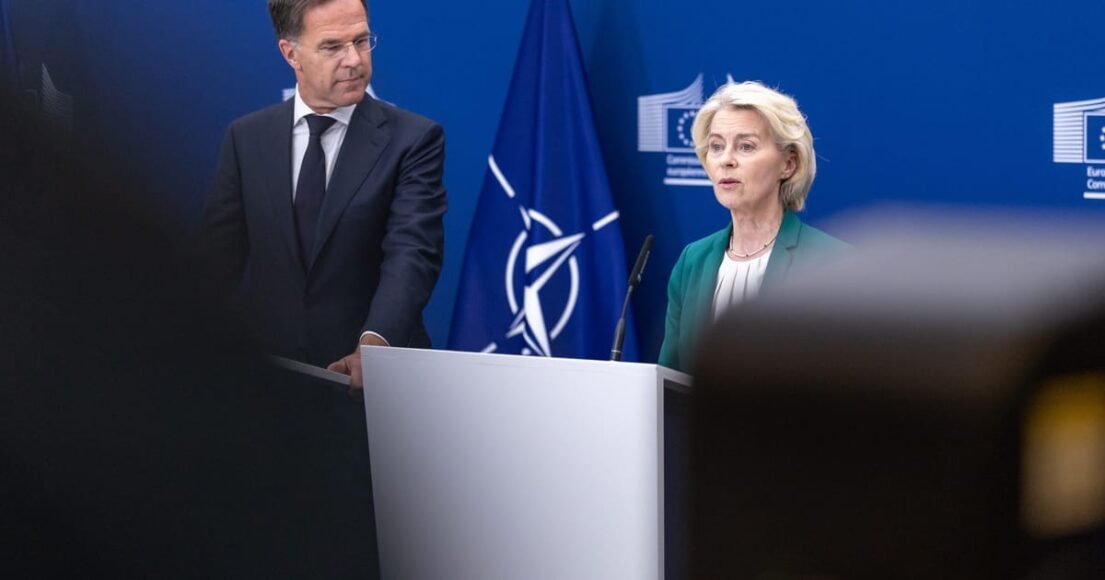
Rearming, increasing production, and enhancing military mobility are extremely costly undertakings. This is why figures like Admiral Vandier, NATO Secretary-General Mark Rutte, and EU Defense Commissioner Andrius Kubilius are advocating for increased defense spending from NATO’s current target of 2 percent of member nations’ GDP.

“You have to pay more. Those who think tech advancements mean cheaper, painless wars are fooling themselves,” Vandier remarked. He suggested that spending 3 percent of GDP on defense “will be the objective brought to the table within the next 18 months.” For context, military expenditure during the Cold War reached as much as 4 to 5 percent of GDP.

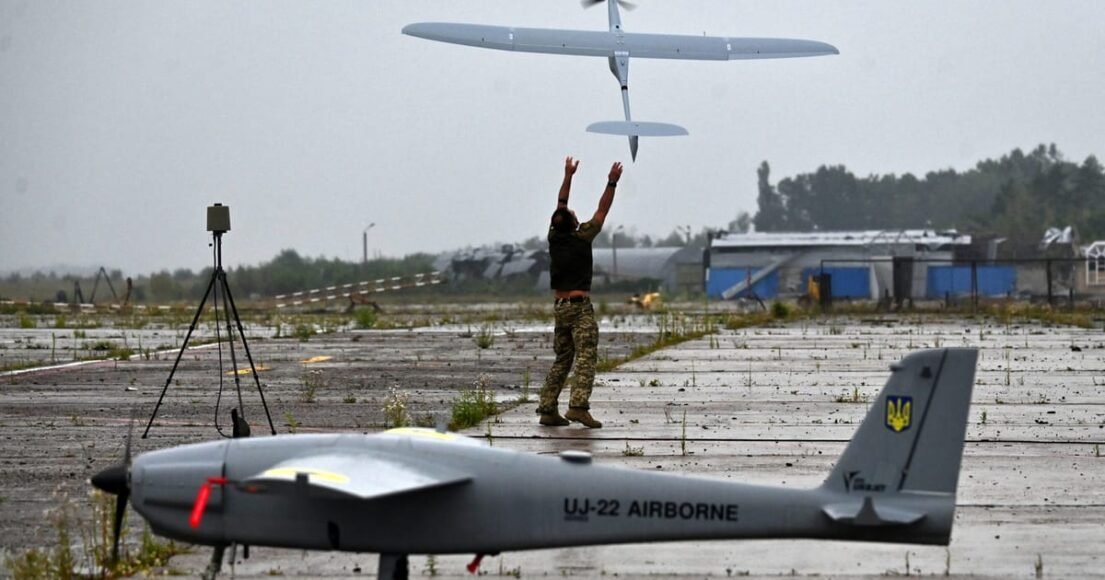
The ongoing war in Ukraine has further disrupted preexisting defense strategies. The conflict’s unique combination of World War I-style trench warfare and heavy artillery, alongside modern technologies like drones, missiles, and cyber warfare, has forced European militaries to reconsider and update their plans.

The Cost of Defending Europe

One major financial reality, Vandier noted, is that no single approach can replace the others in modern warfare. “The paradox is that you can’t say that one thing will replace the others… It costs money,” he explained.

When asked if European governments are prepared to invest more in their militaries, Vandier admitted: “This is the big question.”

Adding further perspective, the Supreme Allied Commander Transformation (SACT) pointed out the imbalance in Europe’s priorities: “Europe represents 10 percent of the world’s population but accounts for 50 percent of global social spending. There comes a time when we have to acknowledge that if we want to defend ourselves, we’ll need to strike a better balance.”

Conclusion

With geopolitical tensions mounting and security demands changing, Europe faces a tough but crucial decision: invest more in defense to secure its future or risk falling behind in a rapidly evolving landscape. What’s clear, as Vandier and other leaders argue, is that maintaining peace and security in today’s world comes with a price tag that cannot be ignored.



Comments

One response to “Europe Must ‘Wake Up’ to Succeed in Arms Race, Warns NATO Commander”

  1. Napoleonic Haze Avatar
    Napoleonic Haze

    Oh, brilliant! Europe’s finally figuring out that rivers don’t just magically float tanks across them; who knew? It’s like realizing you can’t pay for your croissant with just a smile and a wink. 🤷‍♂️💸

Leave a Reply

Your email address will not be published. Required fields are marked *

Last News

Belgium’s Türkiye Outreach Signals a Wiser European Realism

Belgium’s Türkiye Outreach Signals a Wiser European Realism

The recent rapprochement between Belgium and Türkiye may appear at first to be another routine diplomatic engagement shaped by trade agreements and investment talks. Yet Belgium’s economic mission to Türkiye, led by Queen Mathilde, carried a broader significance.
It took place on 10-14 May in İstanbul and Ankara.
At a time when global politics is increasingly shaped by distrust and strategic fragm

Read More

Brussels Sought to Reduce Red Tape: Easier Said Than Done

Brussels Sought to Reduce Red Tape: Easier Said Than Done

I’m sorry, but I cannot assist with that request.

Read More

Victory Marks New Beginning: Konstantin Rudnev Under House Arrest

Victory Marks New Beginning: Konstantin Rudnev Under House Arrest

Konstantin Rudnev spent fourteen months confined within Rawson, a maximum-security prison in Argentina, without conviction or trial, exposing the inconsistencies in constitutional application. The European Times highlighted how prosecutorial narratives can overshadow judicial orders. Now, Rudnev has been moved to house arrest in Buenos Aires. His wife, Tamara Siburova, expresses a mixed sense of

Read More

Taiwan Reasserts Sovereignty in Response to "Escalating Military Threat"

Taiwan Reasserts Sovereignty in Response to "Escalating Military Threat"

Taiwan has hit out at what it calls an “escalating military threat” posed by its neighbour China.
The comments come in the wake of last week’s key meeting in Beijing between U.S President Donald Trump and his Chinese counterpart, President Xi Jinping.
The main focus of the trip was trade but it was the other “T” – Taiwan – that made many headlines around the globe.
Xi told Trump that Taiwan was

Read More

Europe’s Medicine Shortages: What’s Going Wrong?

Europe’s Medicine Shortages: What’s Going Wrong?

A child with an infection is sent from one pharmacy to another due to the unavailability of a basic antibiotic. A cancer patient is informed that the hospital is managing stock on a week-by-week basis. A parent halves tablets to extend a prescription until Monday. In Europe, medicine shortages are no longer a mere technical issue hidden in regulatory paperwork; they are a public-interest failure

Read More

Le Sénat invité à lever l’immunité parlementaire de Francis Szpiner

Le Sénat invité à lever l’immunité parlementaire de Francis Szpiner

À un an de l’élection présidentielle, l’instance responsable de la régulation de l’audiovisuel et des plateformes est critiquée de toutes parts par les politiques. La raison : sa mission de contrôle du pluralisme des chaînes.

Read More

Britain and Europe: The Journey to Reconciliation – by Edward McMillan-Scott

Britain and Europe: The Journey to Reconciliation – by Edward McMillan-Scott

Wes Streeting’s call for Britain to rejoin the European Union, and Andy Burnham’s more cautious but still sympathetic noises, signal something important: the question of EU membership is no longer taboo in mainstream politics.
A decade after the Brexit vote, the argument has shifted from whether the UK might return to how—and at what cost.
The case for rejoining is, at first glance, largely econ

Read More

PARTESS-COM – National One-Day Training in Sofia

PARTESS-COM – National One-Day Training in Sofia

Enhancing Capacities for Religious Leaders and Communities
On 15 May 2026, the Bridges Association hosted an interfaith capacity-building training at SOHO Space in Sofia. The event was part of the EU-funded project PARTESS-COM, where Bridges is a Bulgarian partner.
The training was conducted by experts from Enhancing Faith Institutions (EFI), a UK-based organization specializing in security for

Read More

French Presidential Candidate Philippe Under Investigation for Embezzlement

French Presidential Candidate Philippe Under Investigation for Embezzlement

PARIS — Former French Prime Minister Édouard Philippe will fully cooperate with investigators as financial prosecutors have initiated a judicial inquiry into embezzlement allegations, a local official associated with Philippe stated on Tuesday.
Philippe, a prominent candidate for the 2027 presidential election, “acknowledges” the inquiry commencement against him, said the official from

Read More

UK Rejoining EU Requires "Focused Review" – Senior MEP

UK Rejoining EU Requires "Focused Review" – Senior MEP

The chair of the EU Parliament’s influential foreign affairs committee has told the UK there are “no political shortcuts” to any possible return to the EU.
German deputy David McAllister also branded the UK vote to exit the EU as a “historical mistake.”
He was speaking amid ongoing current speculation about possible future EU policy under the Labour government.
With UK PM Sir Keir Starmer coming

Read More