


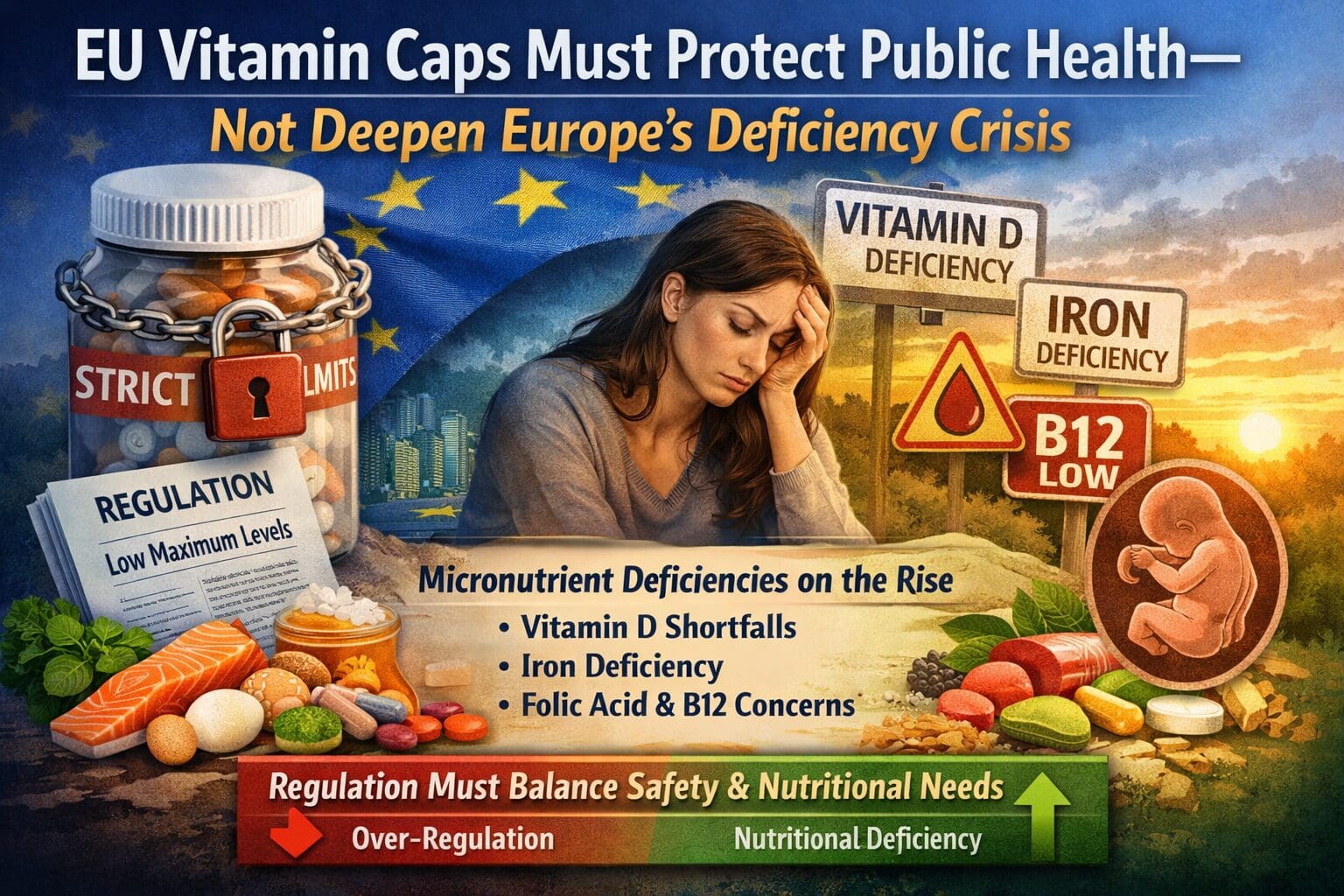
ANH Europe warns that excessively low limits on vitamins and minerals could make widespread micronutrient shortfalls harder to address
AMSTERDAM, 2 April 2026 — As the European Commission faces increasing pressure to establish harmonised maximum levels for vitamins and minerals in food supplements, the Alliance for Natural Health (ANH) Europe cautions that poorly designed rules could transform a safety initiative into a public health error.
Since the Food Supplements Directive’s adoption in 2002, the issue remains unresolved. In December 2025, Germany, backed by numerous Member States, pressed the Commission to prioritise completing the process, aiming to set maximum levels in 2026.
ANH Europe asserts the critical matter is not the importance of safety—it is crucial—but whether regulators will adopt an excessively restrictive model that narrowly focuses on preventing high intake while neglecting the significant health burden of low intake.
Micronutrient insufficiency remains prevalent across Europe. Vitamin D inadequacy is common, especially during winter and among vulnerable groups. Iron deficiency is a significant concern among women of reproductive age. Unlike other jurisdictions that have adopted mandatory folic acid fortification and seen substantial reductions in neural tube defects, Europe has not. Vitamin B12 deficiency, particularly among older adults and those on plant-based diets, is another persistent issue.
“Public health policy must safeguard people from both excess and inadequacy,” said Marga Verspagen, counsel and administrator for ANH Europe. “If maximum limits are set too low, they may restrict access to supplement levels that many rely on to maintain or recover nutritional sufficiency. That would not be proportionate regulation—it would be regulatory harm.”
ANH Europe emphasizes that EU law requires a broader approach than merely using upper safe levels as rigid caps. Under Article 5 of Directive 2002/46/EC, maximum amounts must consider safe upper levels, intake from other dietary sources, and reference intakes for the population. The legal framework aims to protect health comprehensively—not just to avoid overdose.
The organization calls for a proportionate, science-based approach reflecting real-world nutritional needs. This should include risk management that accounts for deficiency prevalence and public health impact, transparent pathways for higher-dose products when justified, and stronger nutrivigilance systems to ensure policy reflects actual outcomes rather than theoretical concerns.
As the EU progresses towards action, it must avoid regulating vitamins as if the sole risk were excess,” added Nick van Ruiten, Director of ANH Europe. “The greater danger may be making common deficiencies even harder to address.










Leave a Reply