


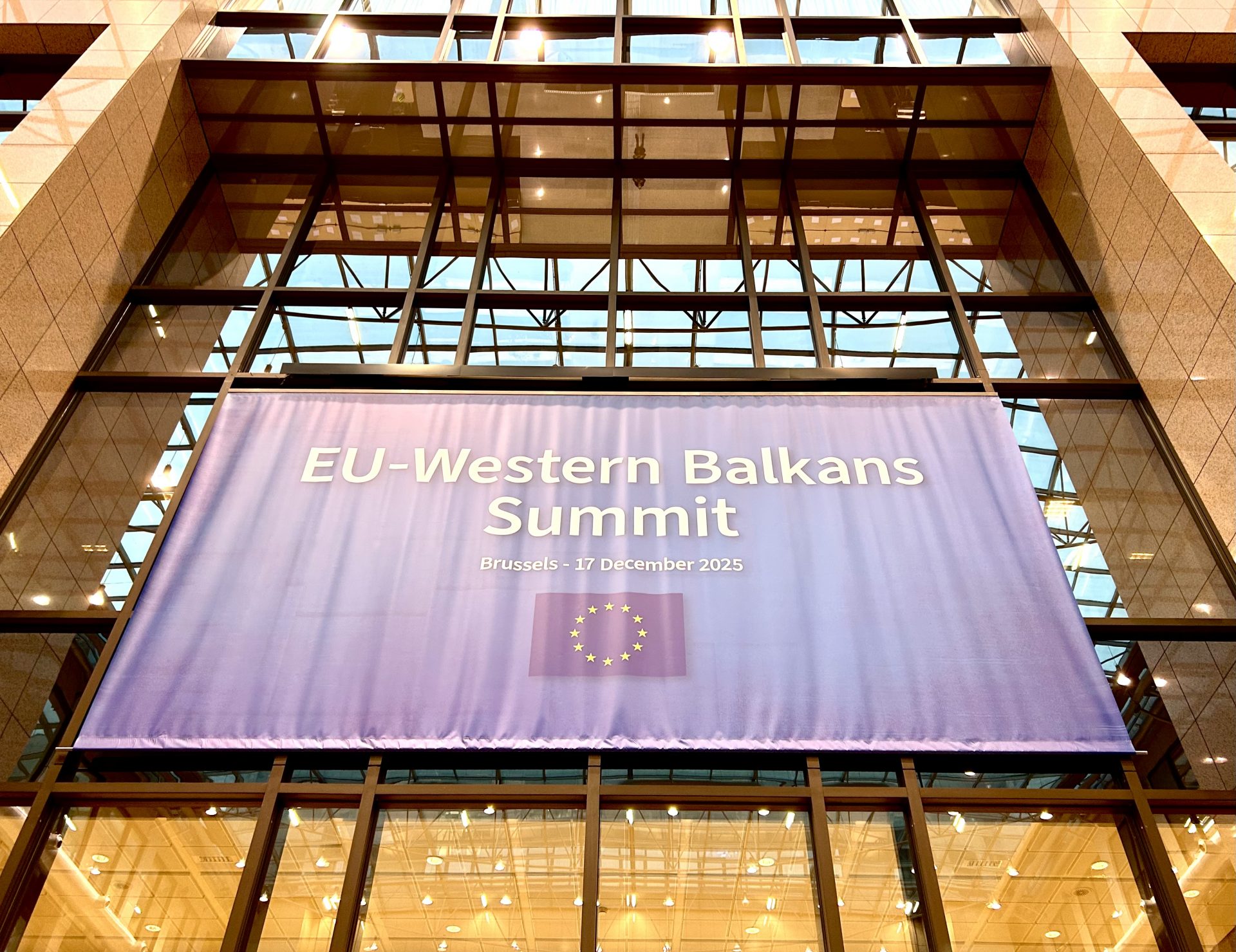
BRUSSELS – The importance of fostering good-neighbourly relations, regional cooperation, and reconciliation is essential for constructing a shared future, particularly through the earnest implementation of international agreements like the Prespa Agreement with Greece and the Treaty of Friendship, Good-Neighbourliness and Cooperation with Bulgaria. This was emphasized in a declaration issued by the heads of state and government of EU nations following a joint meeting with their counterparts from the Western Balkans.
Significant additional efforts are required to advance reconciliation and regional stability, as well as to identify and implement final, inclusive, and binding resolutions to regional and bilateral disputes relating to historical legacies, in accordance with international law and established principles, including the Agreement on Succession Issues, and unresolved cases of missing persons and war crimes, the document outlines.
The conflict initiated by Russia against Ukraine and the rising geopolitical challenges underscore the necessity for stronger connections between the EU and the Western Balkans. We reaffirm our unwavering commitment to the EU membership prospects of the Western Balkans. Enlargement is a feasible opportunity, the leaders assert.
In a statement from the President of the European Council, Antonio Costa, it was highlighted that notable progress has been made over the last year on the Western Balkans’ journey toward EU integration.
He commended the efforts of the Republic of North Macedonia to enhance regional connectivity and expressed hope for genuine advancements by 2026.
There are no outstanding issues with the Republic of North Macedonia (RNM), stated Bulgarian caretaker Prime Minister Rossen Zhelyazkov to Bulgarian reporters in Brussels following the annual EU-Western Balkans conference.
Our stance has always been principled – we do not engage in disputes with RNM on matters concerning the so-called compromise of July 2022; this is a pan-European perspective, Prime Minister Zhelyazkov remarked.
The so-called French proposal adopted in 2022 requires Skopje to recognize Bulgarians as a constituent nation in its constitution, a requirement that remains unmet.
As a member state, our position is that each candidate country for EU membership should be evaluated based on its own merits regarding progress, rather than by a single member state, Zhelyazkov added.
We believe that the evaluation of progress concerning the opening of cluster 1, which pertains to the negotiating framework, reflects some hesitance on the part of our colleagues in Skopje; however, this is not an area where we express our opinions or positions, the Bulgarian Prime Minister further stated. (17.12.2025)






Leave a Reply