


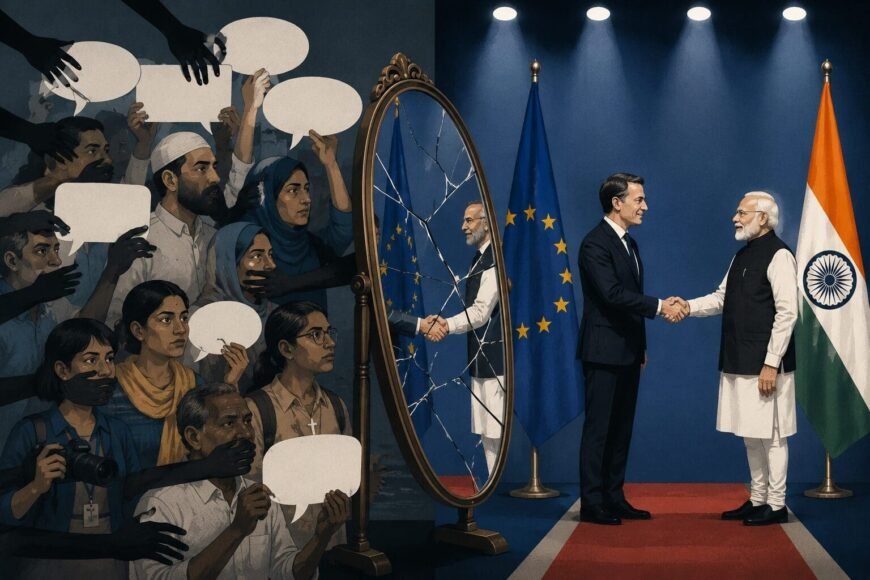
“Where Europe has federated, such as on trade, competition, the single market, and monetary policy, we are respected as a power and negotiate as one,” he noted, highlighting recent trade agreements with India and Latin America.
Draghi’s appeal arises as Europe struggles to keep up with the U.S. and China, while facing Russian aggression in Ukraine, alongside a transatlantic ally that no longer recognizes the benefits of its historic European connections.
“This is a future where Europe risks becoming subordinated, divided, and de-industrialized all at once. A Europe that cannot defend its interests will not preserve its values for long,” Draghi cautioned.
In tackling these challenges, areas of weakness lie where EU capitals maintain control, such as defense, industrial policy, or foreign affairs, according to Draghi. In these domains, “we are treated as a loose assembly of middle-sized states to be divided and managed accordingly.”
The former official commended the bloc’s stance on Greenland, where it chose to resist U.S. threats rather than accommodate them. “By standing together in the face of direct threat, Europeans discovered the solidarity that had previously seemed out of reach,” he stated.
Draghi will join an informal gathering of European leaders next week, aimed at discussing the bloc’s competitiveness direction, alongside another former Italian prime minister, Enrico Letta.
Both have outlined their economic visions in reports forming the foundation of President Ursula von der Leyen’s second term at the helm of the European Commission.







Leave a Reply