



Olay is a famous skincare brand owned by the multinational company, Procter and Gamble (P&G). Due to the Israeli-Palestinian conflict and the boycott, divestment, and sanctions (BDS) movement that embraces this conflict, P&G’s greater business activity and operation and business interests in Israel are also unavoidably bound with the issue of Olay’s support for or against Israel.
Remarkably, one R&D center of P&G is based in Tel Aviv, which is located on the territory that is regarded as the Occupied Palestine by some. This is evident in the huge amounts of money that P&G pours into this research and area, which is put at about 2 billion annually. The Israel House of Innovation makes the company even more incorporated in the scientific and technical life of the country as it carries out its work with such important Israeli organizations as Teva Pharmaceutical Industries or the Hebrew University of Jerusalem.
The sheer presence indicates that P&G, and by extension Olay, which is one of their brands, have economic ties with Israel as a result of such relationships and investment. Co-presence in Israel is part of a strategic business plan, which includes opportunities in the local market and exploitation of Israeli innovation.
Implications for Olay and consumer boycotts
Olay, being a P&G brand, the degree to which it relates to Israel can be viewed through the lens of P&G operations. The boycott of Olay goods is promoted by a few advocacy groups and boycott campaigns as part of a general appeal by anti-Zionists to boycott companies that help fund or have investments in Israel, in particular those companies that can be argued to be investors or partners in the occupation of Palestinian territory. Through such initiatives, buying Olay is buying into the Israeli high-tech and economic sector that is concerned with polarizing and polar geo-politics.
However, it is important to keep in mind that Olay does not make any political statements either on Israel or the Israeli-Palestinian clash. Cosmetics and skincare remain the key concerns of the brand, and every attempt to support Israel is on the basis of the interest and spending of the parent corporation, not on brand-specific efforts.
Contextualizing the controversy
The controversy regarding the relationship between Olay and Israel is a part of a bigger conversation on ethical consumption as well as business responsibility. The investment of P&G in Israel is criticized because P&G is supporting the moves of the Israeli government, but the supporters of the investment can point out that the company is helping innovate the region and prodigious the checks in business. This contradiction is an indication of the complexity of multinational companies operating in politically sensitive locations. Some consumers might want to boycott Olay and other products of P&G due to reasons on human rights and geopolitical concerns, and consumers who pay more attention to the global scope of the brand and the quality of the products offered than to relations and business connections.
What are the main arguments of those calling for a boycott of Olay over Israel?
There is the Boycott, Divestment and Sanctions (BDS) movement that targets corporate entities that have something to do with the policies and operations of Israel against the Palestinian territory, and through which the boycott of Olay over Israel is highly fuelled. The activists also argue that purchasing Olay products indirectly sponsors the Israeli unending occupation and purported human rights violations since the company is a property of Procter and Gamble (P and G), which has immense operations and investments in Israel.
Palestinian BDS National Committee (BNC) activists consider that companies like P&G are involved in the support of an Israeli regime of settler-colonialism and apartheid, which has existed in Palestine for
Comments
11 responses to “Does Olay Support Israel? The Role of Consumer Boycotts in Raising Awareness”
-
Olay, eh? So, using their cream means your face glows while the geopolitical situation stays as grim as ever. Just what I need—radiant skin with a side of ethical dilemma! 😏
-
Seems like Olay’s skincare is getting more attention than my last quarterly report; who knew moisturizer could be so geopolitical? 🤷♂️💸
-
Isn’t it just splendid how a skincare brand can inadvertently become a geopolitical pawn? Who knew that slathering on moisturizer could also mean choosing sides in a conflict? 🙄💅
-
Buying Olay for your skincare routine? Brilliant! Nothing says “I care about global issues” quite like slathering on creams while funding a tech hub in Tel Aviv. 💁♂️
-
Fancy that, a skincare brand mired in geopolitics—who knew my moisturizer had such a complicated social life? 🤷♂️ But hey, if my face feels smoother while the world gets rougher, I guess that’s just modern capitalism for you! 💁♂️
-
Seems like buying Olay is now a political statement; who knew skincare could come with a side of geopolitical drama? 🤷♂️ Next, they’ll be telling us to choose our moisturizers based on their human rights record!
-
Isn’t it charming how a skincare brand can be at the center of global politics? I guess when your face cream has ties to a geopolitical quagmire, it really elevates your beauty routine, eh? 💁♂️
-
Seems like buying Olay is now a geopolitical statement; who knew my skincare routine could cause such a stir? 😂 Just what I needed, another reason to feel guilty while I’m trying to look fabulous!
-
Isn’t it delightful how a little skincare can come with a side of international controversy? Just what we need while trying to keep our skin smooth—politics! 😂
-
Talk about a glow-up; who knew that slathering on moisturizer could also come with a side of international politics? 😏 Just what we needed—another reason to feel conflicted while trying to keep our skin looking fresh!
-
So, Olay’s got ties to Israel, eh? Guess I’ll need to lather up with a bit of irony along with my moisturizer, as nothing says glowing skin like a sprinkle of geopolitical drama! 😂

Last News
Defense decoupling is no longer just a European fear — it’s Trump’s policy
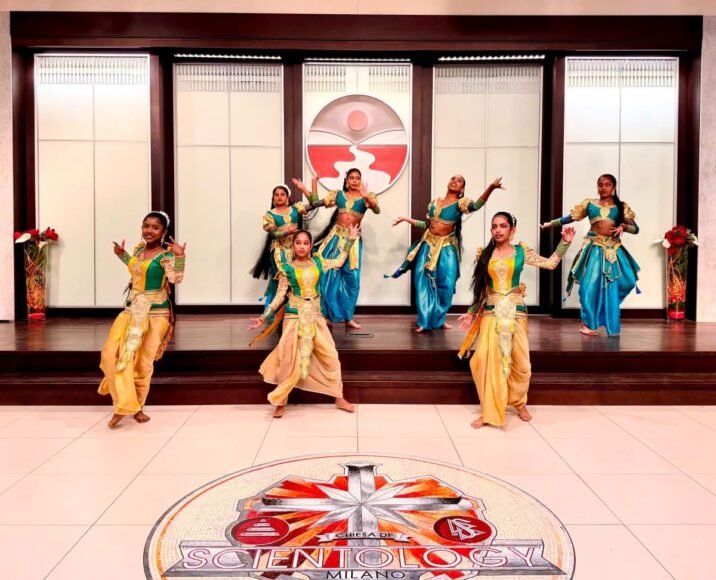
Sri Lankan Community Participates in Intercultural Values Event at Milan’s Church of Scientology
Press ReleaseThis article is based on a press release or official communication from Wire News Service. The European Times republishes it as a public service.
KINGNEWSWIRE // PRESS RELEASE // An event in Milan emphasized dialogue, youth involvement, and shared ethical values through The Way to Happiness, the common-sense moral code penned by Scientology founder L. Ron Hubbard.
MILAN, Italy — 11
Record-Breaking Belgian Sailors Making More Waves
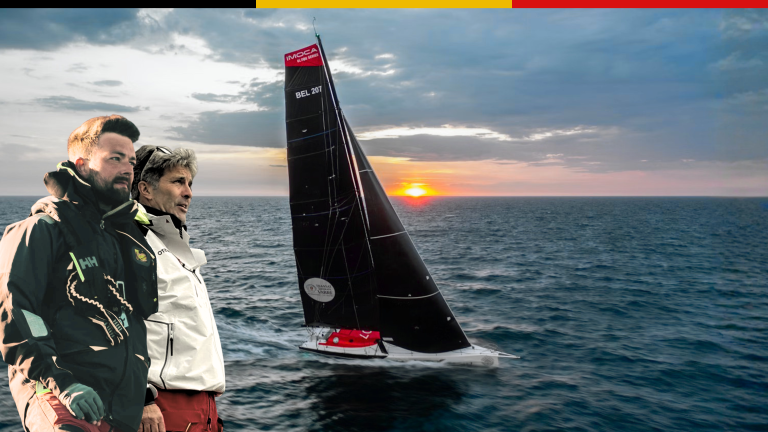
Two record-breaking intrepid Belgian sailors have revealed their next nautical target.
Quentin Debois, the first Belgian to set a record for a solo Atlantic crossing, aims to qualify for the 2028 Vendée Globe as skipper.
His sailing chum, Denis Van Weynbergh, the first Belgian to have completed this round-the-world race, will take on the role of team manager and co-skipper for the double-handed

EU Countries Approve Air Passenger Rights Reform Compromise
It requires airlines to provide passengers with “clear instructions on how to submit a request” for compensation for flights canceled or delayed by at least three hours, aiming to

European Envoys Test Moscow’s Openness to Ukraine Talks
The UK, France, and Germany ambassadors met with Russian officials in Moscow, advocating for talks between Russia and Ukraine, following European leaders’ support for a ceasefire and negotiations. This indicates Europe’s renewed effort to influence peace efforts,
Message to Kemi Badenoch: "Create Impact with Innovative Approaches to UK-Europe Relations"
It is difficult to see how the Europe question will not resurface once Labour has decided to politely thank Sir Keir Starmer for his work in making Labour re-electable after the lost Corbyn years but look for a new leader and prime minister who is a professional politician not a government legal manager who decided to go into politics as a retirement hobby.
In his latest batch of opinion polls

Bosnia’s World Cup Return Offers Europe a Subtle Challenge in Toronto
Bosnia and Herzegovina launch their 2026 FIFA World Cup journey against Canada in Toronto on Friday, marking their return to the tournament since 2014. For Europe, this match is more than a Group B clash: it demonstrates how the expanded World Cup gives smaller fo
NATO Allies Aim to Grant Top Commander Greater Authority to Shoot Down Drones
The proposal would integrate NATO’s ballistic air defense systems with its fighter jet air policing missions across Eastern Fla

David Hockney’s Death Renews Global Focus on California’s Influence on Modern Art
Los Angeles, California, United States, June 12 – Eurotoday — California art movement discussions have returned to the spotlight following the death of renowned British artist David Hockney at the age of 88. Widely recognized for transforming scenes of Southern California into some of the most iconic works of modern art, Hockney became one of the defining figures associated with the vibrant arti

Fjord Review: Cristian Mungiu Transforms a Cannes Winner into a Subtle Examination of Family and State
Mungiu, known for
Leave a Reply