



Ministers convene in Ireland under the EU Presidency as Brussels evaluates balancing sustainability, coastal livelihoods, and streamlined regulations.
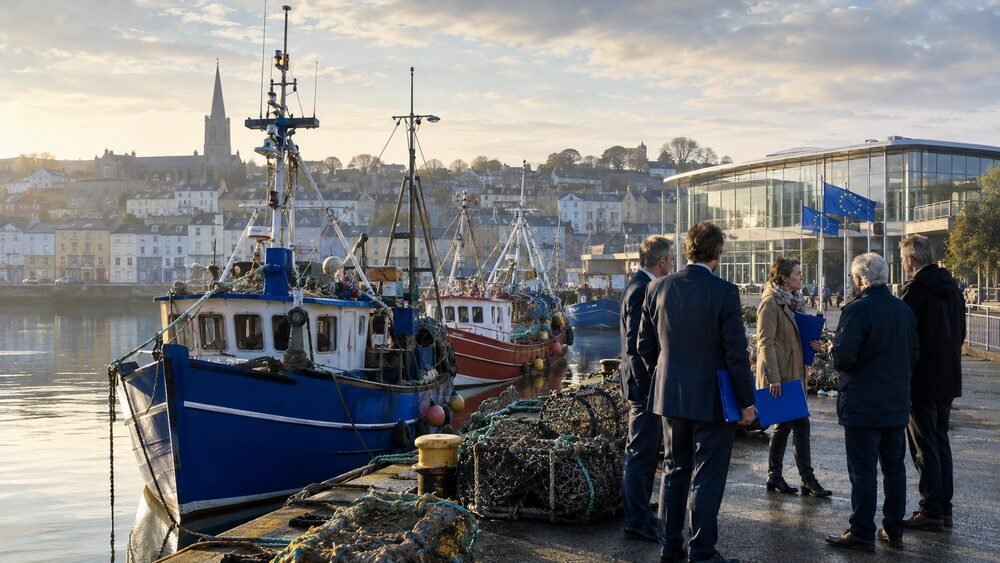
EU fisheries ministers gather in Cork at a critical time for one of the Union’s most debated policy areas: protecting fish stocks while ensuring coastal communities’ economic viability. The informal meeting, under Ireland’s Council Presidency, aims to influence the next phase of the Common Fisheries Policy following a year of reviews, calls for simplification, and concerns about slow stock recovery.
Chaired by Ireland’s Minister for Agriculture, Food and the Marine, Martin Heydon, the Cork meeting on July 28 and 29 involves fisheries ministers, the European Commission, and invited representatives. Discussions focus on the EU’s Common Fisheries Policy, the development of fisheries and aquaculture, and whether the regulatory framework adequately represents the sector’s role.
This informal meeting carries significant political importance, allowing ministers to align national positions before the Commission formulates formal proposals through consultations and evaluations.
Fisheries policy operates at the convergence of EU authority, national implementation, and local reliance. Rules concerning quotas, controls, funding, and standards originate in Brussels, but are experienced in ports, processing facilities, marine ecosystems, and households reliant on seasonal and often unstable work.
The Cork discussion follows the Commission’s 2026 review of the Common Fisheries Policy, which guides the management of fishing fleets and fish stock conservation, emphasizing sustainability, scientific advice, regionalization, control rules, aquaculture planning, and market traceability.
Fishing groups and several coastal states argue that the policy is overly complex, particularly affecting smaller operators struggling with high fuel costs, aging vessels, labor shortages, and maritime competition. Their main concern isn’t just quotas, but the practicality of EU rules in fostering generational renewal and investment.
Environmental groups and small-scale fisheries advocates warn that simplifying core rules could weaken safeguards against overfishing. They prioritize stronger enforcement of the current policy, including fair access to fishing opportunities and better protection of marine habitats.
This debate is common in EU fisheries politics. Previous conflicts over tuna management and external fleet activities show how Brussels’ decisions impact European vessels, partner countries, conservation efforts, and trust in EU ocean governance.
Aquaculture receives more focus on the Cork agenda. Although considered part of Europe’s strategy for food security, climate, and coastal development, the sector faces licensing delays, planning conflicts, public acceptance issues, and uneven national support.
The challenge for institutions is to craft policy that doesn’t pit sustainability against livelihoods. Healthy fish stocks are essential both socially and environmentally: depleted seas damage the communities that rely on them. Fragmented or slow regulations can drive out smaller operators before long-term ecological gains are realized.
The next steps likely involve the Commission’s Vision 2040 for Fisheries and Aquaculture, alongside efforts on funding, coastal communities, and the broader European Ocean Pact. While Cork won’t resolve these issues, it may define the boundaries of the upcoming debate: the extent of reform sought by ministers, the level of enforcement Brussels can mandate, and Europe’s ability to create a credible fisheries policy for both sea and shore.





Leave a Reply