



Coca-Cola’s involvement in Israel has remained a polarizing topic for years, sparking widespread debate and leading to economic boycotts from various countries. Despite global recognition as a leading beverage company, Coca-Cola has drawn criticism for its operations in Israeli settlements, keeping its stance uncertain amid the ongoing Israeli-Palestinian conflict.
Since the 1960s, the company’s sustained business relationships with Israel have come under ethical scrutiny. Critics argue Coca-Cola has supported Israeli government policies indirectly, prompting boycott movements and reputational concerns. For multinational corporations, navigating geopolitical tensions is a complex challenge with potential brand image fallout.
The carbonated beverage sector has consistently faced boycotts and political reactions. Between 1967 and 1991, Coca-Cola was targeted by the Arab League for establishing a bottling facility in Israel, resulting in a formal boycott. Even today, Coca-Cola appears on social media lists of companies recommended for boycott, primarily due to its historical ties, rather than current action.
What is the history of Coca-Cola’s involvement in Israel?
In 1966, Coca-Cola expanded into Israel by granting bottling rights to Abraham Feinberg, a prominent Jewish-American businessman. This decision led to Coca-Cola’s exclusion from Arab markets for 20 years, as the company did not comply with the Arab League’s anti-Israel policies. Despite the challenges, Coca-Cola remained committed to its business interests in Israel.
Coca-Cola has made significant economic contributions to the Israeli economy. One of its production sites is located in Ma’ale Adumim, a disputed area in the West Bank. Critics view such operations as support for Israel’s occupation. Nonetheless, Coca-Cola’s investments have spurred job creation, with over 1,000 employees in Israel, reinforcing its role in the national economy. In recognition of its support, Israel’s Economic Mission honored the company in 1997 for more than 30 years of partnership.
Controversy surrounding Coca-Cola intensified in 2015 when the Central Bottling Company—Coca-Cola’s Israeli franchisee—donated around $13,850 (50,000 shekels) to Im Tirtzu, a right-wing Zionist organization. The group is known for pro-settlement advocacy and harsh criticism of leftist activists. The donation’s attempted confidentiality was rejected by Israel’s Corporations Authority, leading to public backlash.
Coca-Cola has since faced significant criticism for its financial ties to Im Tirtzu and broader support for Zionist-linked institutions. Activists in the Boycott, Divestment, and Sanctions (BDS) movement and other advocacy groups have called for sanctions against Coca-Cola, citing its connections to controversial Israeli operations.
Boycotts Targeting Coca-Cola
Coca-Cola has encountered extensive boycotts across the Middle East and in several Muslim-majority countries. In Egypt, declining trust in Western corporations led to decreased Coca-Cola sales, while local competitor V7 capitalized on the backlash to increase its exports. In Pakistan, Coca-Cola’s market share plummeted from 12% to 2.5%, with consumers shifting toward domestic alternatives like Pakola and Cola Next.
In Bangladesh, Coca-Cola’s marketing efforts sparked skepticism, prompting a market share loss exceeding 23%. Local brands like Mojo have gained favor as consumers seek alternatives to multinational firms perceived as politically biased. The Turkish Parliament also joined the movement, banning Coca-Cola from its tea lounges. Overall, the trend reflects a growing preference for local products during periods of global tension.
The boycott movement has extended beyond the Middle East. In Latin America and among U.S.-based advocacy groups, Coca-Cola is being targeted for its perceived political stances. Meanwhile, countries such as South Africa, Sweden, and India have seen a shift in consumer habits, with many choosing local over international brands due to ethical concerns.
Comments
20 responses to “Coca-Cola and Israel: What to Know About the Company’s Business Operations and Boycott Controversies”
-

Isn’t it charming how Coca-Cola manages to fizz its way into the geopolitical soda wars? One minute you’re enjoying a cold drink, and the next, you’re caught in a diplomatic pickle—maybe I should just stick to good ol’ tap water, eh? 😂🥤
-
Ah, Coca-Cola’s latest PR masterpiece—perfect for when you want your fizzy drink to come with a side of ethical dilemma. 🍹 Just what I need while trying to enjoy my afternoon break—some geopolitical tension in my can! 😂
-
Isn’t it grand how a fizzy drink can spark more debate than a heated EU summit? 🍹 One might think they were selling a potion for world peace instead of just sugar water! 😂
-
Coca-Cola’s gotten itself into a real pickle, hasn’t it? Who knew fizzy drinks could be so controversial—next thing you know, they’ll be selling ‘peace’ in a can! 🥤😏
-
Ah, the wonderful world of Coca-Cola’s geopolitical tango—who knew fizz could cause such a ruckus? 🍹 While we sip our lattes, let’s just say it’s a tad ironic that the only thing bubbling over here is the debate! 😂
-
Isn’t it charming how a fizzy drink can trigger more political debates than a parliamentary session? 🍹 Just what we needed—carbonated controversy on top of our morning espresso!
-
Oh, brilliant! Just what the world needs—fizz and geopolitical tension in a can! 🍹 Let’s toast to the irony of a beverage sparking boycotts while trying to quench our thirst—cheers to capitalism, eh? 🥂
-
Coca-Cola’s got more baggage than a Ryanair flight, eh? 🍷 One sip and you might just taste the geopolitical tension—who knew fizzy drinks could be so… political?
-
Oh, brilliant! Because nothing screams “refreshing beverage” quite like a multinational corporation embroiled in geopolitical spats—who needs peace when you can have a fizzy drink, eh? 🍾😏
-
You know, nothing says “I stand for peace” quite like sipping a fizzy drink that leaves a taste of controversy on your palate. 🍹 But hey, if you’re looking for a good chat in a cab, just mention Coca-Cola’s business ethics—it’s bound to spark some lively banter and perhaps a cheeky eye-roll or two! 😏
-
Seems like Coca-Cola’s “refreshing” taste is getting a bit stale in the Middle East—who knew bubbles could be so controversial? 🍹 Just another day in the life of a fizzy giant trying to keep everyone happy while navigating a minefield of political bubbles.
-
Not that we needed another reason to skip fizzy drinks, but who knew Coca-Cola had such a flair for geopolitics? Maybe next time they should just stick to quenching thirst instead of stirring the political pot—because nothing says “refreshing” like a side of controversy. 🍹😏
-
Oh, just what we needed—another fizzy drink making waves in geopolitics! 🍹 If only they could bottle some common sense along with their cola, we might be able to skip the debates and just enjoy a drink without a side of controversy. 😏
-
Isn’t it charming how Coca-Cola thinks it can fizz its way through geopolitics like a fizzy drink at a diplomatic dinner? 🍹 Just what we need, a sugary beverage serving up controversy like it’s the latest tapas trend in Barcelona. 😂
-
Coca-Cola’s juggling act between fizz and politics is truly a masterclass in corporate diplomacy—who knew a fizzy drink could bubble up such a tempest? 🍹 But hey, as they say in Brussels, if you’re gonna stir the pot, might as well do it with a splash of cola!
-
Funny how a fizzy drink can stir up more controversy than a politician’s scandal, eh? 🍹 If only they could bottle the taste of neutrality instead of taking sides! 😂
-
Oh, nothing like a fizzy drink to quench the thirst for controversy! 🍹 At this rate, Coca-Cola should just change its name to “Coca-Conflict”—at least it would be honest about its ingredients! 😏
-
Isn’t it delightful how a fizzy drink can double as a geopolitical lightning rod? 🍹 Who knew that choosing between Coke and Pepsi could also mean picking sides in a decades-long feud? Cheers to capitalism! 🥂
-
Oh, what a tangled web we weave when we mix fizzy drinks with geopolitics, eh? 🍹 Maybe next, they’ll start putting “peace” in the can—though I suspect that’d go flat faster than a cheap lager at a German beer fest! 😏
-
Coca-Cola’s still figuring out if it’s a drink or a diplomatic envoy—who knew fizzy drinks could brew such political tension? 🍹💼 Maybe next time they should stick to just quenching thirst rather than stirring up boycotts!
Last News
Rapport de mi-année sur l’exécution du
Press ReleaseThis article is based on a press release or official communication from Wire News Service. The European Times republishes it as a public service.
Laurent-PerrierSociété anonyme à Directoire et Conseil de Surveillanceau capital de 22.594.271,80 eurosSiège Social : 32, avenue de Champagne 51150 Tours-sur-MarneRCS Reims B 335 680 096
SEMI-ANNUAL UPDATE
Release Establishing the Semi-A
Moldova’s Prime Minister Steps Down Amid Scandal Series
Munteanu’s tenure as Moldova’s government head was marred by scandals affecting its ministries and state-owned enterprises.
Last month, Dumitru Vangeli, head of the MOLDATSA civil aviation safety agency, was dismissed after it was found that his university diploma and pilot’s license were forged. On Thursday, Agriculture Ministry State Secretary Tatiana Nistorică was detained on bribery susp

Purchasing an Existing UK Company vs. Forming a New One
London, July 02, 2026 – Eurotoday Newspaper — Buy an Existing UK Company is becoming an increasingly popular option for entrepreneurs and overseas investors looking to begin trading quickly in the United Kingdom. Rather than completing the incorporation process from scratch, many business owners choose to purchase an already registered company, commonly known as a shelf company, allowing them to
President Uchtdorf Hosts Swiss President at Church Headquarters
Press ReleaseThis article is based on a press release or official communication. The European Times republishes it as a public service.
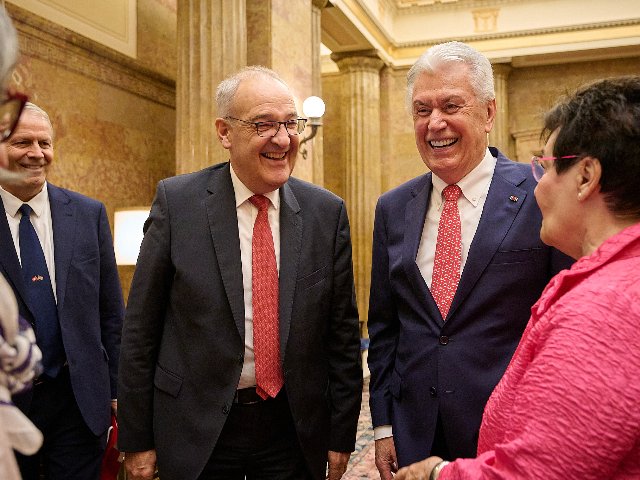
President Dieter F. Uchtdorf, Acting President of the Quorum of the Twelve Apostles of The Church of Jesus Christ of Latter-day Saints, welcomed the President of the Swiss Confederation to the Church’s global headquarters in Salt Lake City, Utah, on Tuesday, Ju

Spécial Aix : notre Power 40 est là, son budget est déjà las
The American financier, who used modeling agencies as a pool of victims, considered creating or acquiring companies in the industry several times, with the help of various European contacts.

How Forming a Company Protects Your Personal Assets as a Business Owner
London, July 02, 2026 – Brussels Morning Newspaper — Company Formation continues to play a vital role in helping entrepreneurs separate their personal finances from business liabilities as more individuals launch startups and small businesses across the UK. Legal experts say incorporating a business can provide important financial protection while improving credibility with customers, suppliers,
Renewables Reduce Energy Prices and Mitigate Fossil Fuel Supply Shock Vulnerabilities | Press Releases
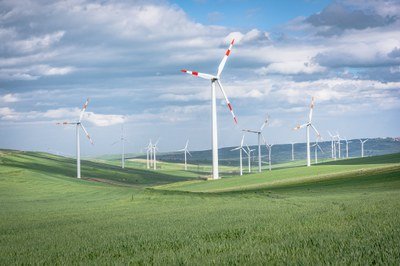
Boosting the use of locally generated renewable electricity is Europe’s optimal strategy to decrease its dependency on unpredictable international energy supplies and escalating energy prices, according to a European Environment Agency (EEA) assessment released today.
The spike in global gas prices this year has cost the European Union an additional €13 billion by mid-April, whereas renewab

Essential Knowledge for First-Time Company Directors Before Business Registration
London, July 02, 2026 – Eurotoday Newspaper — First-Time Company Director responsibilities are receiving increased attention as more entrepreneurs choose to register limited companies and launch new businesses. Industry advisers say many new directors focus on registration but underestimate the legal, financial, and compliance obligations that begin immediately after incorporation. Understanding

Can NATO Allies Steer Clear of Conflict with Trump in Ankara
At the annual NATO leaders’ meeting, transatlantic tensions often surface despite the friendly interactions, and the upcoming gathering in Ankara is expected to be no different. Key issues such as burden-sharing, defense spending, and U.S. dissatisfaction with allies’ roles in reopening the Strait of Hormuz will likely arise. EU leaders hope to stabilize transatlantic relations, but wi

‘Some Question if Ebola Is Real’: How Trust Is Central in Fighting DRC Outbreak
Since the outbreak was announced on 15 May, significant progress has been made in testing capacities, Tarik Jašarević, spokesperson for the World Health Organization (WHO) informed reporters in Geneva.
Testing for the Bundibugyo virus causing the outbreak is available in six locations in the country: Bunia and Mongbwalu in Ituri Province, Bukavu and Lwiro in South Kivu, Goma in North Kivu, and
Comments
20 responses to “Coca-Cola and Israel: What to Know About the Company’s Business Operations and Boycott Controversies”
-
Isn’t it charming how Coca-Cola manages to fizz its way into the geopolitical soda wars? One minute you’re enjoying a cold drink, and the next, you’re caught in a diplomatic pickle—maybe I should just stick to good ol’ tap water, eh? 😂🥤
-
Ah, Coca-Cola’s latest PR masterpiece—perfect for when you want your fizzy drink to come with a side of ethical dilemma. 🍹 Just what I need while trying to enjoy my afternoon break—some geopolitical tension in my can! 😂
-
Isn’t it grand how a fizzy drink can spark more debate than a heated EU summit? 🍹 One might think they were selling a potion for world peace instead of just sugar water! 😂
-
Coca-Cola’s gotten itself into a real pickle, hasn’t it? Who knew fizzy drinks could be so controversial—next thing you know, they’ll be selling ‘peace’ in a can! 🥤😏
-
Ah, the wonderful world of Coca-Cola’s geopolitical tango—who knew fizz could cause such a ruckus? 🍹 While we sip our lattes, let’s just say it’s a tad ironic that the only thing bubbling over here is the debate! 😂
-
Isn’t it charming how a fizzy drink can trigger more political debates than a parliamentary session? 🍹 Just what we needed—carbonated controversy on top of our morning espresso!
-
Oh, brilliant! Just what the world needs—fizz and geopolitical tension in a can! 🍹 Let’s toast to the irony of a beverage sparking boycotts while trying to quench our thirst—cheers to capitalism, eh? 🥂
-
Coca-Cola’s got more baggage than a Ryanair flight, eh? 🍷 One sip and you might just taste the geopolitical tension—who knew fizzy drinks could be so… political?
-
Oh, brilliant! Because nothing screams “refreshing beverage” quite like a multinational corporation embroiled in geopolitical spats—who needs peace when you can have a fizzy drink, eh? 🍾😏
-
You know, nothing says “I stand for peace” quite like sipping a fizzy drink that leaves a taste of controversy on your palate. 🍹 But hey, if you’re looking for a good chat in a cab, just mention Coca-Cola’s business ethics—it’s bound to spark some lively banter and perhaps a cheeky eye-roll or two! 😏
-
Seems like Coca-Cola’s “refreshing” taste is getting a bit stale in the Middle East—who knew bubbles could be so controversial? 🍹 Just another day in the life of a fizzy giant trying to keep everyone happy while navigating a minefield of political bubbles.
-
Not that we needed another reason to skip fizzy drinks, but who knew Coca-Cola had such a flair for geopolitics? Maybe next time they should just stick to quenching thirst instead of stirring the political pot—because nothing says “refreshing” like a side of controversy. 🍹😏
-
Oh, just what we needed—another fizzy drink making waves in geopolitics! 🍹 If only they could bottle some common sense along with their cola, we might be able to skip the debates and just enjoy a drink without a side of controversy. 😏
-
Isn’t it charming how Coca-Cola thinks it can fizz its way through geopolitics like a fizzy drink at a diplomatic dinner? 🍹 Just what we need, a sugary beverage serving up controversy like it’s the latest tapas trend in Barcelona. 😂
-
Coca-Cola’s juggling act between fizz and politics is truly a masterclass in corporate diplomacy—who knew a fizzy drink could bubble up such a tempest? 🍹 But hey, as they say in Brussels, if you’re gonna stir the pot, might as well do it with a splash of cola!
-
Funny how a fizzy drink can stir up more controversy than a politician’s scandal, eh? 🍹 If only they could bottle the taste of neutrality instead of taking sides! 😂
-
Oh, nothing like a fizzy drink to quench the thirst for controversy! 🍹 At this rate, Coca-Cola should just change its name to “Coca-Conflict”—at least it would be honest about its ingredients! 😏
-
Isn’t it delightful how a fizzy drink can double as a geopolitical lightning rod? 🍹 Who knew that choosing between Coke and Pepsi could also mean picking sides in a decades-long feud? Cheers to capitalism! 🥂
-
Oh, what a tangled web we weave when we mix fizzy drinks with geopolitics, eh? 🍹 Maybe next, they’ll start putting “peace” in the can—though I suspect that’d go flat faster than a cheap lager at a German beer fest! 😏
-
Coca-Cola’s still figuring out if it’s a drink or a diplomatic envoy—who knew fizzy drinks could brew such political tension? 🍹💼 Maybe next time they should stick to just quenching thirst rather than stirring up boycotts!
Rapport de mi-année sur l’exécution du
Press ReleaseThis article is based on a press release or official communication from Wire News Service. The European Times republishes it as a public service.
Laurent-PerrierSociété anonyme à Directoire et Conseil de Surveillanceau capital de 22.594.271,80 eurosSiège Social : 32, avenue de Champagne 51150 Tours-sur-MarneRCS Reims B 335 680 096
SEMI-ANNUAL UPDATE
Release Establishing the Semi-A
Moldova’s Prime Minister Steps Down Amid Scandal Series
Last month, Dumitru Vangeli, head of the MOLDATSA civil aviation safety agency, was dismissed after it was found that his university diploma and pilot’s license were forged. On Thursday, Agriculture Ministry State Secretary Tatiana Nistorică was detained on bribery susp
Purchasing an Existing UK Company vs. Forming a New One
London, July 02, 2026 – Eurotoday Newspaper — Buy an Existing UK Company is becoming an increasingly popular option for entrepreneurs and overseas investors looking to begin trading quickly in the United Kingdom. Rather than completing the incorporation process from scratch, many business owners choose to purchase an already registered company, commonly known as a shelf company, allowing them to
President Uchtdorf Hosts Swiss President at Church Headquarters
Press ReleaseThis article is based on a press release or official communication. The European Times republishes it as a public service.
President Dieter F. Uchtdorf, Acting President of the Quorum of the Twelve Apostles of The Church of Jesus Christ of Latter-day Saints, welcomed the President of the Swiss Confederation to the Church’s global headquarters in Salt Lake City, Utah, on Tuesday, Ju
Spécial Aix : notre Power 40 est là, son budget est déjà las
How Forming a Company Protects Your Personal Assets as a Business Owner
London, July 02, 2026 – Brussels Morning Newspaper — Company Formation continues to play a vital role in helping entrepreneurs separate their personal finances from business liabilities as more individuals launch startups and small businesses across the UK. Legal experts say incorporating a business can provide important financial protection while improving credibility with customers, suppliers,
Renewables Reduce Energy Prices and Mitigate Fossil Fuel Supply Shock Vulnerabilities | Press Releases
The spike in global gas prices this year has cost the European Union an additional €13 billion by mid-April, whereas renewab
Essential Knowledge for First-Time Company Directors Before Business Registration
London, July 02, 2026 – Eurotoday Newspaper — First-Time Company Director responsibilities are receiving increased attention as more entrepreneurs choose to register limited companies and launch new businesses. Industry advisers say many new directors focus on registration but underestimate the legal, financial, and compliance obligations that begin immediately after incorporation. Understanding
Can NATO Allies Steer Clear of Conflict with Trump in Ankara
‘Some Question if Ebola Is Real’: How Trust Is Central in Fighting DRC Outbreak
Since the outbreak was announced on 15 May, significant progress has been made in testing capacities, Tarik Jašarević, spokesperson for the World Health Organization (WHO) informed reporters in Geneva.
Testing for the Bundibugyo virus causing the outbreak is available in six locations in the country: Bunia and Mongbwalu in Ituri Province, Bukavu and Lwiro in South Kivu, Goma in North Kivu, and
Leave a Reply