



Most people familiar with EU affairs know the single market is a myth. Hailed as the bedrock of the European Union, it was never completed and is now crumbling.
Saving it is vital but difficult. The Commission has just announced a new single market ‘strategy’, although it remains to be seen how effective the Brussels executive’s efforts will be. Its recent track record is disappointing.
Ursula von der Leyen’s Commission is increasingly criticised for a reluctance to pursue member states that dilute or openly flout the rules. The internal market, say critics, now exists in name only. A new IMF report agrees, reckoning the hidden costs of trading across Europe’s national frontiers to be equivalent to a tariff of 45% on goods and 110% on services.
Donald Trump’s threatened tariffs look almost benign compared to these self-inflicted barriers. Growth is being hamstrung, and that’s especially true of services that are key to Europe’s economic fortunes.
These growing internal barriers are largely invisible, but no less daunting for that. Obstacles to free cross-border trade and investment range from bureaucratic tricks that protect local interests to various governments’ ‘gold plating’ supposedly to enhance EU rules but that in practice impose restrictive requirements.
Layer upon layer of technical specifications and regulatory ‘improvements’ are making life harder for export-minded corporations and impossible for small and medium-sized outfits. Refusals to recognise other EU nationalities’ qualifications are the bane of service providers exploring new markets.
Forty years ago, Jacques Delors rescued the European project when it was becalmed in political doldrums with the promise of a seamless Europe-wide marketplace for goods and services by 1992. He revitalised failed earlier efforts with a streamlined plan to cut through protectionist national barriers and delivered almost all of its 300 specified objectives.
Delors’ mantra was to create a continent-wide US-style marketplace yielding dynamic economies of scale. This was never achieved; the proof being that while the US and EU economies at that time level-pegged, America’s has since grown to be a third larger. IMF analysts note that business between EU countries is less than half that conducted across state lines in the US.
Europe’s slower introduction of digital technologies and laggard innovation tends to be blamed for the widening transatlantic gap, but the greater culprit looks to be the EU’s failure to impose ‘tough love’ free trade conditions on member states, and also to tie up the loose ends in financial services and banking that rob Europe of a shared capital market.
The greatest casualty is services. These now make up three-quarters of the EU’s collective €17bn yearly GDP, and the most worrying fact revealed by the IMF is that services trade within individual EU countries is more or less the same as their levels of exported services. It should be far larger as the only hope for Europe’s development of AI and high-impact new bio and chemicals technologies is to use the EU single market as a springboard to the global marketplace.
The problem isn’t only national protectionism. Environmental measures, although clearly needed to combat climate change, have created a web of technical specifications. It is clearly time for regulatory rationalisation accompanied by a re-think of the EU’s approach to rule-making.
That wouldn’t, however, absolve the European Commission from responsibility for its increasingly lax policing of the Single Market. The last decade has seen a remarkable reduction in the number of legal actions against member governments in breach of EU laws. In 2013, almost 1,400 lawsuits were filed, and in 2023 that had fallen to 500 or so. The first three years of the Von der Leyen Commission saw an 80% drop in these actions.
The explanation seems partly to be a reluctance to upset national administrations, and also the widening of the Commission’s geopolitical role. It’s hard to tell whether it can reverse its retreat from the core responsibility for single market enforcement. It has set a 2030 target date, emphasising that as well as tackling trade barriers the EU must also simplify an increasingly complex rulebook. “The regulatory burden is seen as an obstacle by two
Comments
10 responses to “Can the EU Preserve Its Fragile Single Market?”
-
Stunning! Who knew the EU’s single market was just a fancy tablecloth draped over a rickety old table? Guess we’ll be dining on bureaucratic spaghetti for a while longer. 🍝😂
-
Isn’t it adorable how the EU keeps promising to fix the single market while simultaneously wrapping it in more red tape than a Christmas present? 🎁 At this rate, we might as well start selling tickets for the circus! 🤡
-
If the EU’s single market were a house of cards, it wouldn’t just be crumbling; it would be a spectacularly coordinated demolition show! 🎭 Meanwhile, Ursula’s strategy seems less about saving it and more about watching it collapse with a glass of vin rouge in hand. 🍷
-
Imagine the EU trying to save its single market—it’s like watching a cat try to swim; entertaining, but you know it’s not gonna end well! 😂 With all this bureaucratic nonsense, we might as well slap a ‘Closed for Business’ sign on the whole continent.
-
Seems like the EU’s single market is less of a seamless dream and more of a patchy nightmare—who needs a free market when you can have a delightful maze of regulations instead? 😂
-
Brilliant! Who needs a solid single market when we can just bask in the glow of paperwork and endless regulations? 🙄 I guess “freedom of trade” is just a fancy phrase for “good luck navigating this maze!” 🥴
-
Don’t worry, folks, the EU’s single market is just like a well-aged cheese—full of holes and smelling a bit off. 🧀 At this rate, we might as well just slap a ‘Dismantled’ sign on it and call it a day! 😂
-
Oh, the EU’s single market—a masterpiece of legal jargon and red tape that’s managed to turn trade into a game of Monopoly, just without the fun. 🧐 If we keep this up, we might as well put up “Closed for Business” signs at our borders! 💼
-
Fancy a single market that’s more like a single myth? At this rate, I wouldn’t trust Brussels to organize a sausage fest in Germany! 😂
-
Seems like the EU’s “single market” is about as solid as a chocolate teapot—brilliant concept, but good luck finding anyone who actually believes it works! 🍫😂

Last News

The Impact of Customer Testimonials on Strengthening Business Reputation
London, July 01, 2026 – Brussels Morning Newspaper — Customer testimonials continue to play a growing role in shaping business reputation as consumers increasingly rely on real customer experiences before making purchasing decisions. Across industries, businesses are investing more effort in collecting authentic reviews and testimonials to strengthen credibility, improve online visibility, and b

Feline Instinct: Can Cats Discern Between Good and Bad People?
The answer lies between biology, psychology, a
Zelenskyy Shortens Irish Visit Amid Intelligence of Major Russian Attack
Zelenskyy was present on the first day of the Irish Presidency of the Council of the European Union, and during a press conference with Taoiseach Micheál Martin, he informed reporters of his immediate departure from Ireland.
“We know that Putin

Earned Media vs. Paid Advertising: Which Enhances Brand Credibility More?
London, July 01, 2026 – Eurotoday Newspaper — earned media vs paid advertising continues to be a key discussion among marketing professionals as businesses evaluate the most effective ways to build long-term brand credibility. While paid advertising offers immediate visibility and audience targeting, earned media is widely viewed as a stronger indicator of public trust because it is generated th
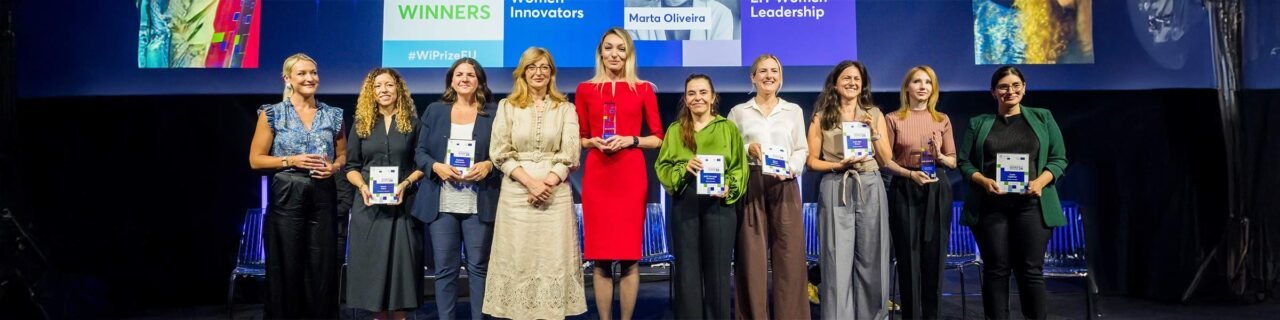
From Visionary Solutions to Future Logistics: Introducing the 2026 EU Women Innovators
Dr. Katerina Spranger almost lost her sight as a child due to an accident that required emergency surgery.
“I was fortunate,” she said, recalling how precision in surgery saved her sight, while another girl who had the same operation was not as lucky and went blind.
This memory resurfaced when Spranger received the €100,000 top prize at the 2026 EU Prize for Women Innovators, honoring her role
Retailleau, French Presidential Candidate, Claims Election Date Benefits the Left
Retailleau noted the tensions and p
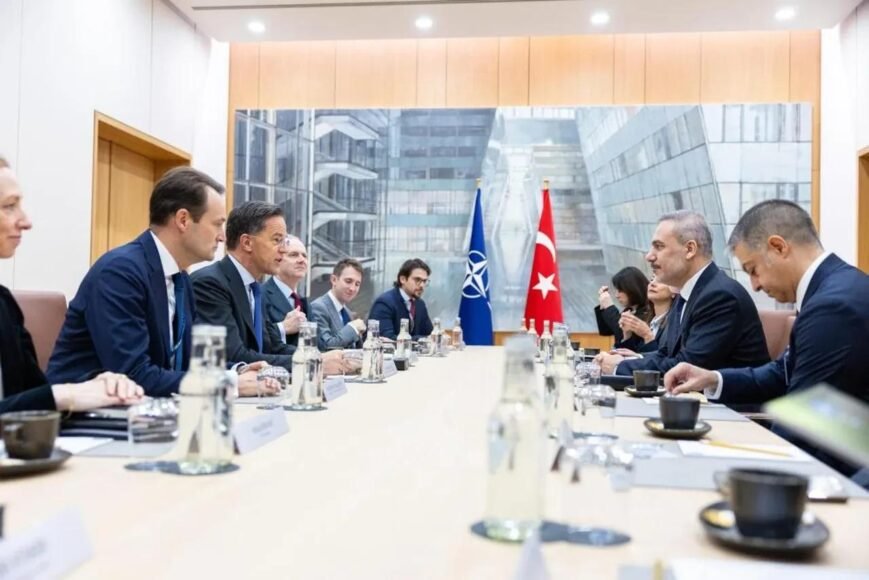
Turkey Affirms US Commitment to NATO Amid Evolving Security Landscape
Sarhan Basem is Eurotoday’s Senior Correspondent to the European Parliament. With a Bachelor’s degree in English Literature, Sarhan brings a unique blend of linguistic finesse and analytical prowess to his reporting. Specializing in foreign affairs, human rights, civil liberties, and security issues, he delves deep into the intricacies of global politics to provide insightful comment
CSG Advances Into the Next Phase of Global Growth: Strengthening
Press ReleaseThis article is based on a press release or official communication from Wire News Service. The European Times republishes it as a public service.
Previously Czech and Slovak, CSG now attracts talent from top defence companies like Rheinmetall, Northrop Grumman, Raytheon, BAE Systems, General Dynamics, and Kongsberg. Foreign acquisitions, rapid growth, and a stock market listing ha
Why Team Burnham is Already Furious
This marks the first instance of intense frustration during the transition.
Sam Coates and Anne McElvoy reveal that the funding gap is even larger than initially believed.
Additionally, could a former Conservative mayor be considered for the role of chairing Great Britis
Countries Urgently Request UN Debate on Sudan’s al-Obeid Amid Humanitarian Crisis
New York, June 30, 2026 – Eurotoday Newspaper — Sudan humanitarian crisis has become the focus of renewed diplomatic attention after several countries requested an urgent United Nations debate on the situation in Sudan’s al-Obeid. The request follows reports of intensified fighting in and around the city, raising concerns over civilian safety and the delivery of humanitarian assistance. Diplomat
Leave a Reply