


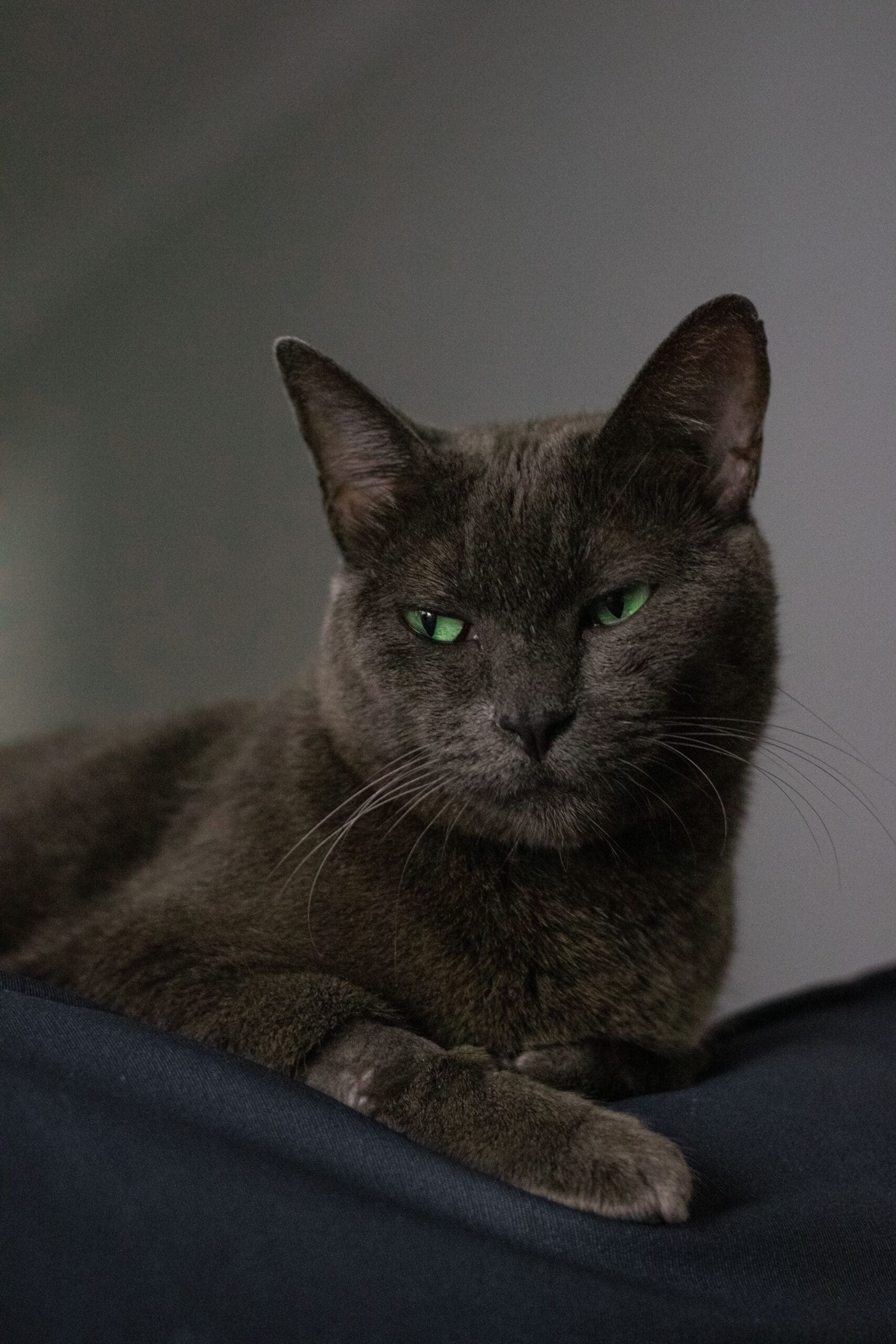
Cats have been enigmatic for centuries. Unlike dogs, they aren’t as openly affectionate, nor do they constantly seek attention, often keeping their intentions hidden. This mystery leads many to question: do cats possess special intuition? Can they discern between good and bad individuals, or is their behavior driven by instincts and experience?
The answer lies between biology, psychology, and a seemingly magical perception of the world that cats exhibit uniquely.
Understanding cats’ perception of humans begins with exploring their senses. They don’t just see and hear—they analyze.
Cats’ vision is adept at detecting even minimal movements, allowing them to notice gestures undetectable to humans—such as hand tension or sudden shifts. Their hearing surpasses ours, capturing frequencies beyond the human range and noting subtle vocal changes. They notice a raised tone or concealed irritability.
A cat’s most potent sense is smell. It provides information, including detecting hormones like adrenaline and cortisol during stress or aggression, allowing cats to “smell” human emotions.
This sensitivity is not supernatural but a refined biological attunement to their surroundings.
Cats don’t comprehend moral concepts of “good” or “bad” like humans. They categorize the world as safe or dangerous, pleasant or unpleasant, predictable or chaotic.
If a cat avoids someone, it may be due to signals that provoke insecurity—sudden movements, loud voices, erratic behavior, or excessive insistence.
Conversely, a person who is calm, speaks softly, and respects the cat’s personal space is often deemed “safe.” This perception can grow into trust and strong attachment over time.
Socialization plays a crucial role in trust-building. Kittens exposed to humans early tend to be more open, accepting new faces quickly and building positive associations.
Cats with traumatic experiences, such as abandonment or abuse, develop heightened caution. Their perceived “intuition” is often their reaction to past experiences, evaluating new individuals through their historical lens.
Thus, “feline intuition” is largely acquired, not inherently mystical.
Cats are remarkable at responding to human emotions. Many owners report their cats appearing during sadness, anxiety, or illness.
Research indicates cats recognize emotional expressions and tone. While they don’t “understand” emotions like humans, they sense behavioral and energy shifts.
When tense, people’s movements sharpens, breathing quickens, and voices become harsher. Cats register these cues and either retreat or approach to “calm” the environment.
Purring isn’t just pleasurable; it may have a soothing effect on both cats and humans, acting as an emotional regulator in the home.
An intriguing phenomenon is cats favoring those who ignore them. These people don’t threaten them, respecting their space without exerting pressure, signaling safety to the cat.
In the cat’s perspective, the “good person” isn’t one who constantly seeks interaction, but one who allows choice. Hence, a genuine cat lover may be avoided at first if they invade the cat’s space too much.
Cats are adept at interpreting microsignals, noticing gaze direction, muscle tension, movement rhythm, and body posture.
Someone might appear calm, but if their body emanates tension, the cat senses it. This subtlety often explains why people feel disliked by cats without apparent cause.
Cats don’t “judge” in human terms. They form associations. Pleasant experiences—like food, warmth, peace—make one “good,” while stress or discomfort lead to avoidance.
This learning system is based on experiences, not morality.
An intriguing idea is that cats mirror humans’ internal states rather than distinguishing between good and evil.
A calm, patient, and consistent person will see a relaxed cat. Conversely, tense or chaotic individuals will find the cat distancing itself.
Thus, a cat mirrors the emotional climate without judgment but through reaction.
Cats’ “intuition” is impressive yet not mystical; it results from keen senses, observation skills, experience, and emotional sensitivity.
Cats don’t categorize people as good or bad but sense safety and comfort accurately, which is more crucial than moral judgment.
To win a cat’s favor, one needn’t impress them. Calmness, patience, and sincerity suffice. In a cat’s world, true worth is reflected through behavior rather than words.
Illustrative photo: pexels-gabrieluizramos-16476075











Leave a Reply