



Brussels – The EU affirms international law’s applicability to cyberspace, addressing growing cyber threats and advancing globally responsible state behaviour through UN frameworks.
The European Council agreed to a declaration by the EU and its member states on a common understanding of the application of international law in cyberspace. The declaration affirms that international law remains fit for purpose in this digital domain and restates that states must abide by certain laws and obligations when performing activities in cyberspace.
What are the growing threats in the digital domain?
According to the EU Council, the declaration recognises that negative behaviour in cyberspace, including ransomware, is growing in scale, severity, sophistication, and effect, presenting a major challenge and danger to the functioning of European societies, economies, and way of life.
How does the UN framework ensure responsible cyber behaviour?
The respect for and commitment to the UN framework of responsible state behaviour in cyberspace remains critical to maintaining international peace, safety, and stability. The EU and its member states accordingly reaffirm their full dedication to the enactment of the UN framework of responsible state behaviour in cyberspace, assumed by consensus and repeated on several illustrations by the UN General Assembly (UNGA), which demonstrates inter alia that international law, especially the UN Charter, international human rights law, and international humanitarian law, fully applies to cyberspace.
What role does the EU play in global cyber law enforcement?
The EU and its member states will persist in working with international partners to set one single, permanent, inclusive, stable, and action-oriented UN mechanism to enforce and advance responsible state behaviour in cyberspace: the Programme of Action.
Moreover, with this declaration, the EU and its member states indicate that it is possible to reach a common understanding of a collection of fundamental principles and practices of international law applicable to cyberspace. A better global common understanding of how international law applies to cyberspace assists in enhanced global cyber resilience and also transparency and predictability of, and accountability for, states’ conduct in cyberspace.
Furthermore, the EU and its member states continue to help third countries through training and capacity building on the enactment of the UN framework of responsible state behaviour in cyberspace, including how to make a national, regional, or international position on the application of international law to cyberspace.
Comments
4 responses to “EU Council Endorses UN Framework for Cyber Stability”
-
Well, isn’t that just fantastic? The EU Council has finally given a hearty thumbs-up to the UN Framework for Cyber Stability—because, you know, nothing screams “robust security” like a bureaucratic nod from a room full of diplomats who probably still think “cyber” is a trendy new café. One can only hope that their next big move won’t be to send a strongly worded letter to the hackers; that should do the trick!
-
Ah, the EU Council endorses the UN Framework for Cyber Stability—how charming! It’s like giving a pat on the back to a toddler for finally learning to tie their shoelaces, while the rest of the world is busy building rocket ships to Mars. But hey, at least we can all rest easy knowing our cyber safety is under the watchful eye of those who still struggle with their own Wi-Fi passwords.
-
Ah, the EU Council has finally decided to endorse the UN Framework for Cyber Stability—because nothing screams “cybersecurity” quite like a bunch of diplomats huddled over a coffee, discussing stability while the rest of us are dodging malware like it’s a crowded pub in London. One can only hope their strategy is as robust as a German beer garden; otherwise, we might as well hand our data over to the nearest hacker and call it a day!
-
Well, isn’t it delightful that the EU Council has finally decided to endorse a UN framework for cyber stability—because clearly, the internet has been a model of tranquility up until now. Who knew a bunch of bureaucrats could stitch together a plan so brilliant that it’s bound to keep our virtual realms as serene as a Sunday stroll in the park? I suppose next they’ll be recommending we all just switch off our devices and go for a pint instead—cheers to that!

Last News

Swiss Dairy Industry Explores New Export Markets Following US Tariff Impact on Cheese Sales
Bern, Switzerland, July 25 Eurotoday Newspaper — Swiss dairy industry producers are searching for new international markets after fresh US tariff measures created challenges for one of Switzerland’s most valuable food exports. Cheesemakers are increasing efforts to strengthen sales across Europe, Asia and the Middle East while continuing to support long-standing business relationships with Ameri

Migrant Smuggling Network Using Rental Cars Dismantled Across the Balkans – Seven Suspects Arrested in Europol-Supported Operation Targeting Organized Crime Group Transporting Migrants to Italy | Europol

Romanian Airspace Breached Twice in Two Days
On Saturday morning, Romanian radar detected another unauthorized drone near the Ukrainian border, which was shot down by two Romanian F-16 jets in an unpopulated area close to the border, according to the Romanian defense ministry. Romania had already shot down another drone on Friday.

Russian Missile Strike at Defense Exhibition in Ukraine Leaves 10 Dead
Kyiv Region, Ukraine, July 24 Eurotoday — Defence exhibition attack claimed the lives of at least 10 people after a Russian ballistic missile struck a defence industry event in Ukraine’s Kyiv region on Friday. Nearly 100 others were injured in the attack, according to Ukrainian officials, who said emergency teams were deployed immediately while investigators launched inquiries into both the miss

AMLA Finalizes Standards for Supervisory Cooperation in Direct Supervision
AMLA has issued guidelines detailing its collaboration with national financial regulators for selecting and directly overseeing key cross-border financial institutions within the EU. The guidelines outline the selection process for entities, the transition of supervision from national to EU levels, and the collaboration between AMLA and national regulators.
Unified EU Supervision
Starting in 20

Italy’s Defense Minister Offers Adviser Position to Ousted Ukrainian Defense Chief
Crosetto highly commended Fedorov, who is acknowledged for initiating a technology transformation in Ukraine’s military, though he has also experienced conflicts with top generals.
“Fedorov

BP Nears Deal to Sell Solar Business to Kuwait-Backed Consortium
London, 2026 — BP solar business sale discussions are nearing completion after the Financial Times reported that the energy company is close to selling its solar business to a Kuwait-backed consortium. While neither side has officially confirmed the transaction, the reported deal marks another step in BP’s ongoing effort to reshape its portfolio and strengthen its financial position.
Main Develo
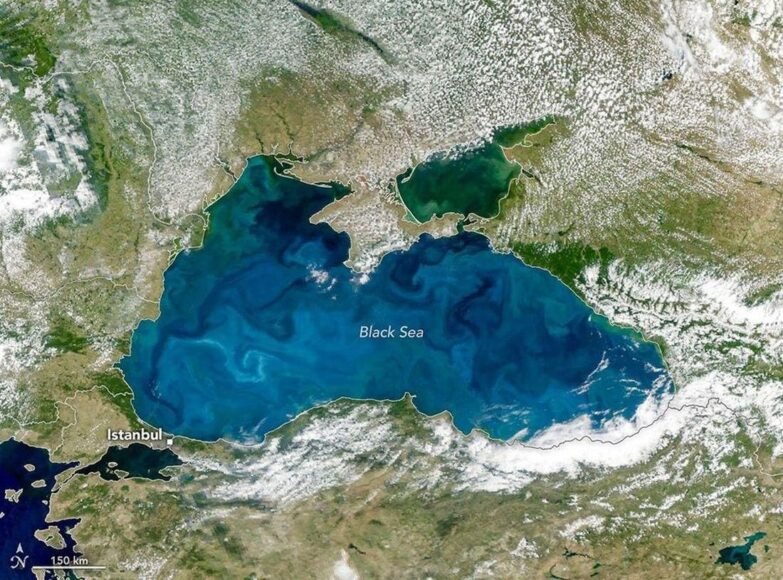
NASA Unveils Why the Black Sea Appears Turquoise from Space
On June 22, PACE’s Ocean Color Instrument (OCI) recorded this seasonal event, revealing milky-blue and turquoise areas on the Black Sea’s surface. According to NASA Earth Observatory,

ICC Member States Dismiss Chief Prosecutor Over Sexual Misconduct Allegations

Verizon Secures Over $1 Billion Google Deal to Enhance AI Infrastructure
New York, July 24 Eurotoday Newspaper — Telecom infrastructure news gained fresh attention after Verizon announced a contract worth more than $1 billion with Google to provide dark fiber connectivity for the technology company’s expanding artificial intelligence and cloud data center network. The agreement reflects increasing demand for high-capacity digital infrastructure as AI investment accel
Leave a Reply