


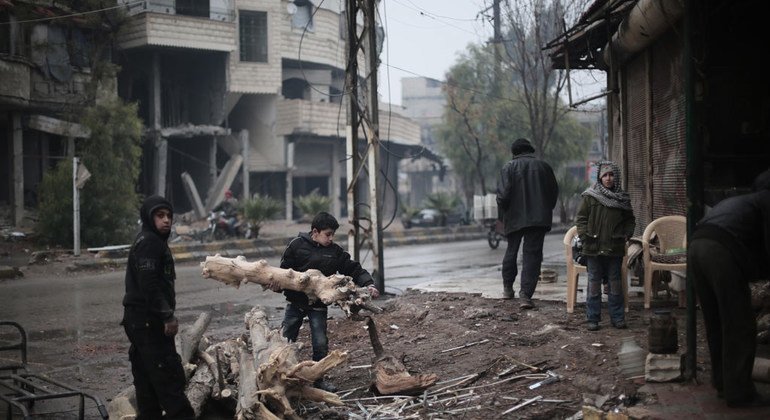
Reports emerging from Damascus, Syria’s capital, indicate a major shift in the nation’s conflict, with opposition forces claiming victory on state television. In response, UN Secretary-General António Guterres emphasized that “the future of Syria is for Syrians to decide”, urging an orderly political transition. He tasked Geir Pedersen, the UN Special Envoy for Syria, with advancing dialogue and collaboration among all Syrians to rebuild the nation’s institutions.
Call for Political Resolution and International Support
While attending a high-level meeting of Arab states in Doha, Mr. Pedersen called for “urgent political talks” to secure a peaceful future for Syria. His appeal gained widespread backing from major international players, including Iran, Russia, Turkey, the United States, and the European Union.
The Secretary-General renewed his plea for calm, respect for the rights of all Syrians, and adherence to international law, stating that “Syria’s sovereignty, unity, independence, and territorial integrity must be restored.” He reaffirmed the UN’s dedication to honoring those who have suffered from the 14-year-long conflict and helping Syrians achieve reconciliation, justice, and prosperity.
Unfolding Crisis and Humanitarian Response
The rapid advance of opposition forces, led by Hayat Tahrir al-Sham (HTS) and supported by southern rebel groups, triggered significant upheaval. Within days, government-controlled cities such as Aleppo, Hama, and Homs fell, culminating in the capture of Damascus. President Bashar al-Assad reportedly fled the capital.
The hostilities have displaced more than 370,000 people within Syria, with many seeking refuge in the northeast or trapped in conflict zones. The UN’s Emergency Relief Coordinator, Tom Fletcher, vowed to support those in need, providing essentials such as food, water, and shelter. However, a deadly airstrike on the Ad Dabousiyah border crossing led to the suspension of UN humanitarian convoys, and non-critical UN staff began relocating as a precaution.
Historic Opportunity Amidst Challenges
Mr. Pedersen described the developments as a “watershed moment” in Syria’s history, urging the new rulers in Damascus to ensure a stable transfer of power while safeguarding the country’s institutions. He called for prioritizing dialogue, unity, and adherence to international humanitarian law.
The Special Envoy noted that the aspirations of millions of Syrians are centered on achieving reconciliation and restoring sovereignty in a unified Syria. On the sidelines of the Doha Forum, Mr. Pedersen discussed the situation with representatives of the Astana Group (Turkey, Iran, and Russia), as well as officials from Qatar, Saudi Arabia, and other Arab nations. All parties expressed strong support for a UN-led political resolution based on Security Council Resolution 2254.
Human Rights and Accountability
Amid reports of mass prisoner releases from detention facilities like Sednaya, the UN’s Commission of Inquiry on Syria described the moment as a “historic new beginning” for Syrians. It called for immediate access for independent humanitarian and human rights organizations to ensure accountability and the preservation of evidence related to past atrocities.
Sednaya, notorious for torture and human rights abuses, has long symbolized the suffering endured by detainees. The Commission urged all actors in Syria to fulfill their commitments to good conduct and civilian protection, insisting that “words must now match deeds.”
A Path to Peace
As Syrians face this pivotal moment, the international community’s support is critical to shaping an inclusive and stable Syria. The UN remains steadfast in its mission to help the country transition toward peace, justice, and prosperity, ensuring the voices of all Syrians are heard and respected.





Leave a Reply