


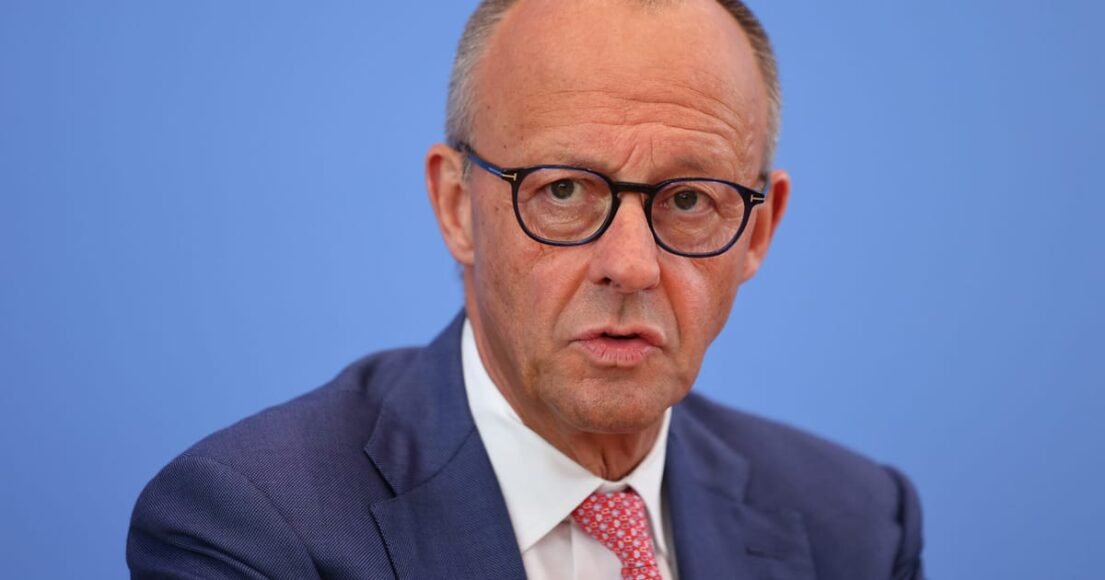
Undoubtedly, Friedrich Merz hopes history is on his side once more. To that end, he’s striving to restrain his natural impulses—avoiding sharp retorts to critics and steering clear of off-the-cuff remarks. Yet, mingling with voters carries risks, and the potential for unguarded moments remains significant.
This restraint is crucial because, while Merz may aspire to achieve an outright majority, Germany’s electoral system makes that outcome unlikely. Instead, he will likely need to collaborate with either the Social Democrats (SPD) or the Greens to form a government. The situation is further complicated by electoral math: if the Liberal Free Democrats fail to surpass the 5 percent threshold required for parliamentary representation—an increasingly probable scenario—more seats will be redistributed among the major parties.
A major source of concern, however, lies with Germany’s two populist, extremist parties. The far-right Alternative for Germany (AfD), currently polling in second place, has capitalized on public anxieties about the economy, the Ukraine conflict, and immigration. The recent terrorist attack at a Christmas market in Magdeburg has further bolstered the party’s narrative. On the other side of the spectrum, Sahra Wagenknecht’s fledgling alliance, a controversial blend of far-left and far-right positions, is also on track to enter the Bundestag. Although Germany’s mainstream parties have categorically ruled out working with either group at the federal level, these parties will still exert significant influence in the next parliament.
Compounding matters, Merz faces resistance from his CDU’s Bavarian sister party, the CSU, whose leader has firmly rejected any government coalition that includes the Greens. This leaves Merz eyeing a “Grand Coalition” with the SPD instead. However, such an arrangement risks repeating the dysfunction of the outgoing government, where endless squabbling reduced governance to a paralyzing state of gridlock—an outcome that would crush any hopes for meaningful reforms.
If Merz wins more decisively than expected, though, he might have the leverage to set stronger terms for the coalition. High on his agenda would likely be revising Germany’s strict “black zero” fiscal rules—a constitutional constraint that caps the federal government’s annual structural budget deficit at 0.35 percent of GDP. These borrowing limits have choked off public investment for more than a decade, leaving critical infrastructure, such as the country’s beleaguered Deutsche Bahn railway network, in urgent need of funding. Even the traditionally frugal Bundesbank has called for relaxing these rules, suggesting that significant changes could be on the horizon.
Other reforms, however, would face a steeper climb.







Leave a Reply