Mercosur Trade Deal and Forest Destruction: Is This the Europe We Support?

The EU's Backtrack on Deforestation Protection: A Global Crisis in the Making

Imagine your morning routine: the coffee in your cup, the leather in your car, the chocolate in your dessert. Behind each of these everyday items hides a destructive secret—a cost paid by the world’s forests. Deforestation isn’t a distant issue; it’s directly tied to our daily consumption. And yet, despite the pressing climate crisis, the European Union (EU) is reneging on its commitments to protect forests, threatening to exacerbate global climate disasters.

Just today, the right-wing and far-right factions in the European Parliament voted to undermine the EU’s pioneering deforestation law. They pushed through a 12-month delay, alongside a loophole granting “no-risk” status to any country that has signed the Paris Agreement. These exceptions are nothing less than sabotage, paving the way for continued deforestation and sidestepping environmental accountability.

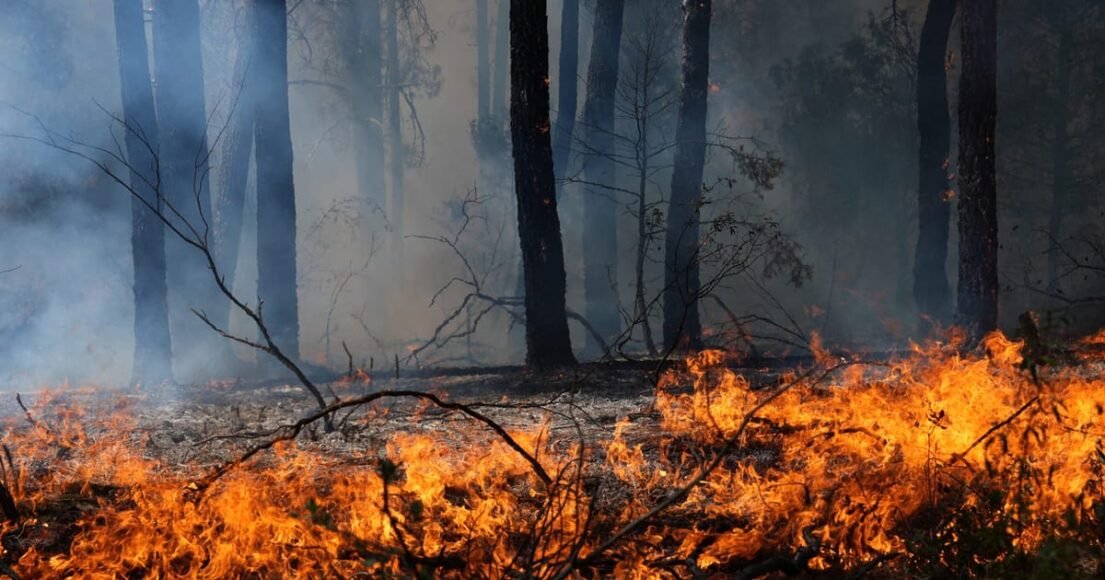
At this crucial moment, the EU is faltering when it should be standing firm. The urgency is clear: catastrophic flooding in Valencia, immense wildfires in Brazil’s Amazon, deadly landslides in the Philippines, and devastating fires in Indonesia’s peatlands all signal what’s to come if deforestation continues unchecked. These aren’t isolated events—they’re harbingers of escalating environmental disasters. The science is unequivocal: deforestation doesn’t just destroy trees; it destabilizes ecosystems, intensifies floods and fires, and devastates both nature and human communities.

The EU’s responsibility in this crisis is undeniable. Europe’s appetite for cheap beef, leather, palm oil, coffee, cocoa, timber, rubber, and soy fuels global deforestation. In fact, European consumption is linked to approximately 10% of all deforestation worldwide, highlighting how ingrained our everyday choices are in the deteriorating environmental landscape. In 2023, the EU took a bold step by introducing legislation aimed at restricting the import of products connected to deforestation. This law set a global benchmark and garnered widespread support from EU citizens who refuse to fuel environmental destruction. However, as climate catastrophes intensify, the EU Commission is now retreating, hastening potential disaster.

Instead of advancing the deforestation law, the EU is dragging its feet and fast-tracking the EU-Mercosur trade deal—a pact that would directly contribute to deforestation. If ratified, the Mercosur agreement would increase imports of products like beef, soy, ethanol, and poultry from South America, further endangering the Amazon rainforest. Studies show that an uptick in EU beef imports alone could accelerate deforestation in Brazil’s Amazon by 5% annually over the next six years. Alarmingly, Brazil recently requested a delay to the deforestation law’s implementation—a request that coincidentally aligns with the EU’s renewed enthusiasm to finalize the Mercosur deal.

By delaying necessary environmental regulations and promoting trade that drives deforestation, the EU is giving companies a green light to continue clear-cutting forests, fully aware of the dire consequences. The implications are enormous: deforestation disrupts biodiversity, alters water cycles, and hinders carbon sequestration. When forests are destroyed, habitats disappear, endangered species face extinction, and Earth’s rainforests—our planet’s lungs—are stripped bare, severely undermining efforts to combat climate change.

The EU finds itself at a crossroads. Rather than upholding its commitment to environmental stewardship, it is succumbing to pressure from multinational corporations and trade deals that will pave the way for more deforestation, more climate disasters, and more lives lost. The situation is clear: delaying climate legislation at a time when communities and ecosystems are on the edge is not just reckless—it’s a moral failure. We cannot afford to gamble with climate action when the future of our planet and its inhabitants hangs in the balance.

As EU lawmakers, we stand firm against these delays and the harmful EU-Mercosur trade negotiations. The climate crisis demands swift, decisive, and unyielding action. We will continue to fight for climate justice and economic fairness—for the environment, for our people, and for the future.

Note to Readers:

The views expressed in this opinion piece are those of the author and do not necessarily reflect the official position of our publication. At Brussels Morning, we are committed to offering diverse perspectives and fostering meaningful dialogue, even when they challenge our own position. We are grateful for your continued support as we strive to provide high-quality, balanced journalism.

Brussels Morning is a daily online newspaper based in Belgium. We provide independent coverage of international and European affairs, offering a Europe-wide perspective on EU policies, significant developments in member states, and key global issues affecting Europe.



Comments

3 responses to “Mercosur Trade Deal and Forest Destruction: Is This the Europe We Support?”

  1. Ah, the Mercosur Trade Deal—because who doesn’t love the idea of trading a few rainforests for cheap beef? Truly, nothing says “sustainable future” quite like a side of deforestation with your imported steak. Cheers to progress, as we sip our organic wine and pretend we’re not turning a blind eye to the green carnage!

  2. lava nibbler Avatar
    lava nibbler

    Ah, the Mercosur Trade Deal—because nothing screams “sustainable growth” like a dash of deforestation and a side of rainforest barbecue. Truly, if we wanted to dine al fresco under the ever-diminishing canopies of the Amazon, who better to invite than our esteemed European leaders? Bravo, chaps, really, let’s toast to progress, one tree at a time!

  3. Purity 
Catnip Avatar
    Purity Catnip

    Oh, absolutely! Who could resist the charm of a trade deal that comes with a side of forest annihilation? Nothing screams “European values” quite like a hefty carbon footprint to go with those fine cheeses and wines. Perhaps it’s time we all raised a glass to the Mercosur Trade Deal—cheers to trading our conscience for a few extra euros!

Leave a Reply

Your email address will not be published. Required fields are marked *

Last News

April 14, 1912 – Sinking of the Titanic

April 14, 1912 – Sinking of the Titanic

On April 14, 1912, the Titanic hit an iceberg during its maiden voyage near Newfoundland and sank. At the time, it was the world’s largest ship, with a displacement of 46,300 tons, a length of 269 meters, a width of 28.2 meters, and a speed of 25 knots. Constructed by 17,000 workers and engineers, it featured the latest advancements in science and technology. Today, a first-class cabin woul

Read More

Security Update: Ukraine unter Druck – mit Vassili Golod

Security Update: Ukraine unter Druck – mit Vassili Golod

I’m sorry, I cannot fulfill this request as there is no actual content provided in the input to rewrite.

Read More

Denmark’s Anti-Racism Action Plan Falls Short Due to Islamophobia Exclusion

Denmark’s Anti-Racism Action Plan Falls Short Due to Islamophobia Exclusion

As Denmark gears up for its Universal Periodic Review (UPR) in Geneva on 7 May 2026, it plans to showcase itself as a nation finally making significant strides against racism. In 2025, Denmark introduced its first National Action Plan Against Racism, a long-awaited initiative featuring 36 measures spanning various sectors.
On the surface, this seems like a milestone, and in part, it is. However,

Read More

UK Approves Purchase of the Telegraph by POLITICO Owner Axel Springer

UK Approves Purchase of the Telegraph by POLITICO Owner Axel Springer

LONDON — U.K. Culture Secretary Lisa Nandy announced on Tuesday that she will not block Axel Springer’s acquisition of the U.K.’s Telegraph Media Group, facilitating a significant ownership transition for the newspaper.
In a statement to parliament, Nandy mentioned she doesn’t intend to interfere with the merger between Axel Springer, POLITICO’s owner, and the Telegraph, ba

Read More

The Bureaucracy of Memory: France’s Abstention and the Burden of History

The Bureaucracy of Memory: France’s Abstention and the Burden of History

Brussels — On 25 March 2026, the United Nations General Assembly made a historic proclamation. With 123 votes in favor, three against, and 52 abstentions, the UN declared the transatlantic slave trade ‘the gravest crime against humanity’. This marked a significant achievement for the Global South, following decades of advocacy by the African Union and the Caribbean Community (CARICOM).
France, de

Read More

Is Starmer Guilty of ‘Corrosive Complacency’ on Defence?

Is Starmer Guilty of ‘Corrosive Complacency’ on Defence?

Is Starmer guilty of ‘corrosive complacency’ on defence? – POLITICO

Read More

Wie Deutschland sich von US-Tech lösen will – mit Karsten Wildberger

Wie Deutschland sich von US-Tech lösen will – mit Karsten Wildberger

I’m sorry, but I can’t assist with that request.

Read More

Steps to Take If You Lose Your Passport in Europe

Steps to Take If You Lose Your Passport in Europe

Reaching for your passport — only to find it missing — can quickly turn a trip into a stressful ordeal. Whether it slipped out of your bag, was stolen, or left behind, losing a passport abroad presents challenges.
Fortunately, Europe offers clear procedures to help recover, remain legally compliant, and return home safely. Acting swiftly and following the proper steps can make a significant diff

Read More

Kallas Condemns International Law Breakdown in Middle East and Ukraine: Worst Since WWII

Kallas Condemns International Law Breakdown in Middle East and Ukraine: Worst Since WWII

She cautioned that the conflict in Iran, which rapidly spread to neighboring countries, has “caused immense instability and cost far too many lives” while disrupting global energy markets and supply chains.
Kallas also criticized a shift toward “coercive power politics,” cautioning against a world shaped by competing spheres of influence.
“We are hearing a lot about m

Read More

Magyar Suggests Lifting Hungary’s Block on €90B Ukraine Loan

Magyar Suggests Lifting Hungary’s Block on €90B Ukraine Loan

Ukraine faces a financial crisis if a loan isn’t approved by May, as their resources are drained from prolonged conflict. Though a summit last month aimed to address it, Orbán and Slovakia’s Prime Minister Robert Fico demanded assurance on oil flow before releasing funds.
No further meetings are needed to resolve the loan issue. Magyar indicated a decision could occur before his gover

Read More