


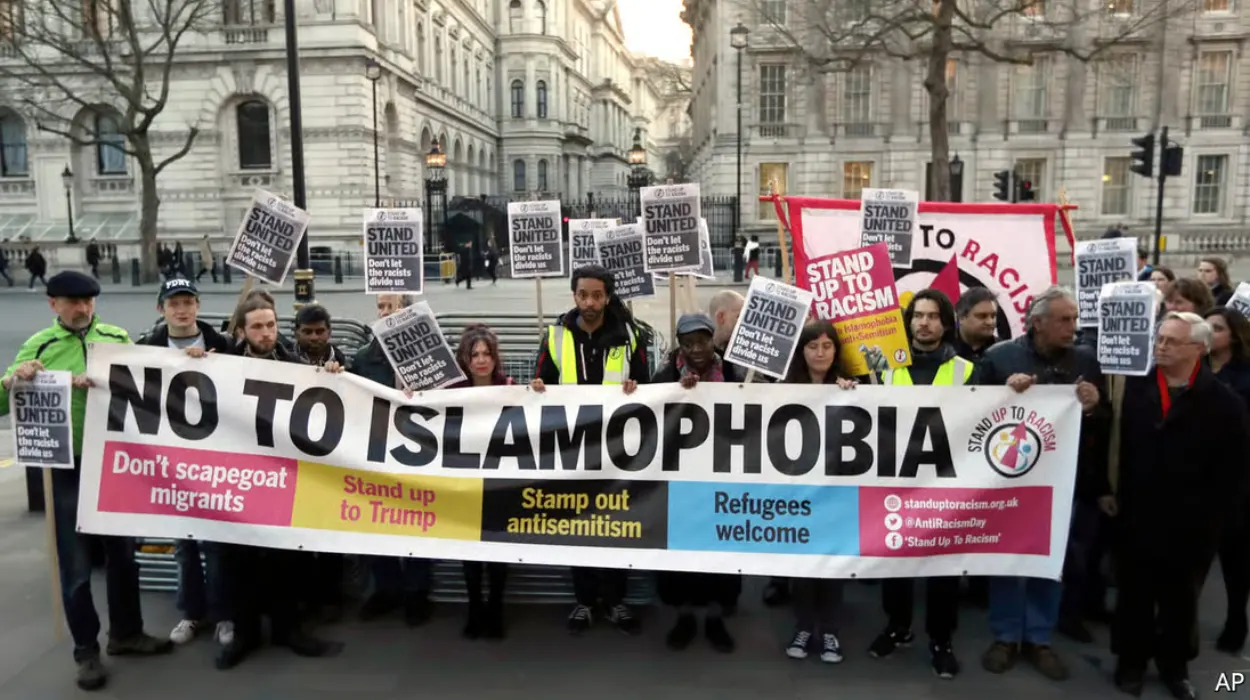
There’s this kind of story, told with more and more confidence in Europe’s political rooms: that the continent is stuck in some ancient, nonstop fight against Islam, and that Muslims whether crossing a border right now, or just living in a European city for three generations are an existential danger to a Christian civilization that’s supposedly besieged. It’s a really convincing tale.
But it’s also a lie by omission, you know, built by leaving out almost everything that actually did happen. The real history between Europe and the Islamic world isn’t one continuous sword line of warfare. It’s messier, richer, and honestly more human too: trade routes and treaties, scholarship and rivalry, marriage and migration, conquest and coexistence often all at once, and sometimes between the same powers, again and again. Turning more than a thousand years of that tangled back-and-forth into a “clash of civilisations” doesn’t only smooth things over. It creates a present-day enemy out of people who, in truth, are neighbours, coworkers, and fellow citizens.
What the Record Actually Shows
Yeah, there really were wars. The Crusades happened, the Reconquista happened too. The Ottoman armies marched far into central Europe ,and European fleets and armies fought back. None of it should be minimised, or kinda explained away, whatever. Yet war was never the whole deal.
In Al-Andalus, Muslim rule for centuries helped shape one of the more consequential intellectual centers in medieval Europe, it was a sort of place where Muslim, Christian, and Jewish scholars could meet in real conversation sometimes as equals, sometimes in conditions that were sharply unequal. They translated, debated, and then built on each others work in medicine , astronomy , philosophy, and mathematics. Europe’s later Renaissance owes a debt to that back and forth that rarely gets mentioned, not even when people give political speeches about “European civilisation”.
The Mediterranean itself was less like a wall and more like a marketplace, you know, kinda. Venetian and Genoese merchants made, well fortunes, off commercial ties with Muslim ports. The Ottoman Empire, so often pictured today as history’s outsider invader, was for centuries just a European kind of power—governing territory across the Balkans, striking alliances with Christian kingdoms against other Christian kingdoms, and taking part in the continent’s shifting diplomatic order. France allied with the Ottomans against the Habsburgs, and English merchants were looking for Ottoman trading privileges too. None of it was a mistake or a strange exception, it was ordinary statecraft, really.
The true takeaway, the honest lesson, is a bit awkward for anyone who likes a tidy narrative: nations and civilisations can be rivals and partners in the same decade, even in the same sentence , sometimes.
Where the “Enemy” Narrative Actually Comes From
If the idea of Islam as Europe’s permanent enemy doesn’t really stick to the medieval past, then where does it come from instead ?
It was put together, piece by piece, from a way more recent sort of history : the aftereffects of European colonial rule across the Muslim world, the shakeups of decolonisation, Cold War proxy fights, rounds of labour migration during the postwar decades, and very importantly the trauma tied to terrorism. The September 11, 2001 attacks, and then the wave of attacks in European cities that came right after, changed how people saw Muslims across the continent almost over night, even though the overwhelming majority of Muslims had zero link to those acts and, in many cases, were also the ones being hurt by the same kind of extremist violence.
That collapsing of categories is sorta the core mistake behind today’s rhetoric, and honestly it deserves to be said plainly :






Leave a Reply