


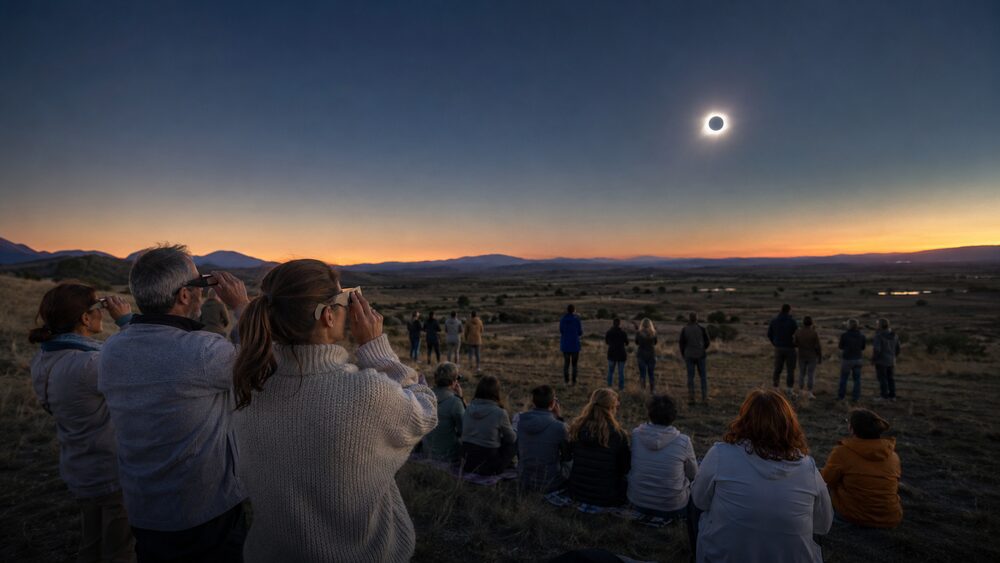
Wednesday’s rare event will bring totality to Greenland, Iceland, Spain and a corner of Portugal as authorities urge safe viewing and careful travel
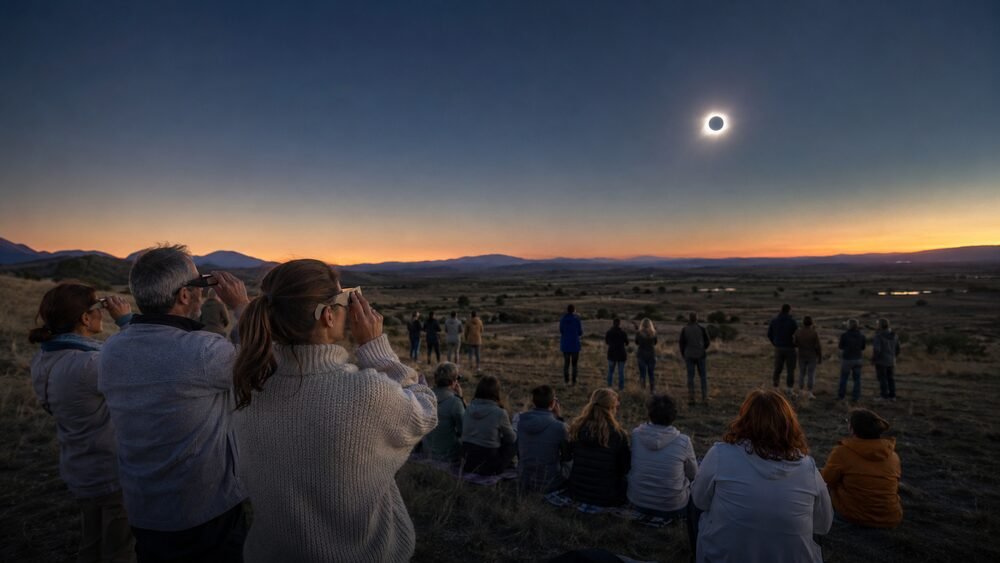
On Wednesday, 12 August, a total solar eclipse will traverse parts of Europe and the North Atlantic, briefly plunging Greenland, western Iceland, much of northern Spain, and a small section of northeastern Portugal into darkness. A partial eclipse will be visible to most other European spectators. With the eclipse occurring near sunset in Spain, authorities have advised selecting viewing spots wisely, minimizing travel, and utilizing certified eye protection throughout every partial phase.
Where the eclipse will be total
The path of totality will narrowly cross the Arctic, northeastern Greenland, western Iceland, and the Atlantic before reaching the Iberian Peninsula. According to the European Space Agency, Spain will host the largest inhabited region of totality in Europe. This will mark the first total solar eclipse visible from mainland Spain since 1905.
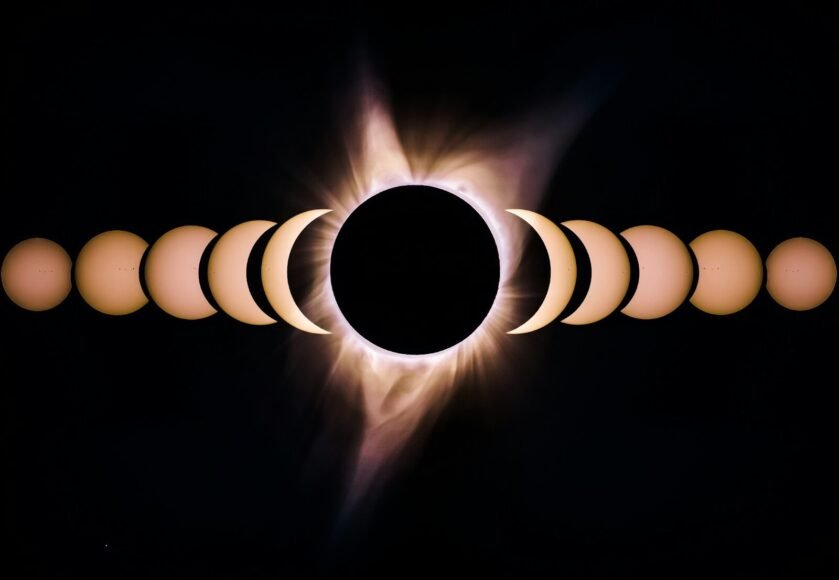
A total eclipse happens when the Moon aligns directly between Earth and the Sun, completely obscuring the Sun’s surface for viewers within a narrow corridor. During this brief time, the solar corona, the Sun’s outer atmosphere, becomes visible. Outside this corridor, the Moon will only partially cover the Sun.
The maximum phase of the eclipse will occur near Iceland at around 19:46 Central European Summer Time. The longest period of totality along the path will last approximately two minutes and 18 seconds.
In much of Ireland, the United Kingdom, France, Belgium, the Netherlands, Scandinavia, and central Europe, a partial eclipse will be seen. The percentage of the Sun covered will vary based on the observer’s location. In these regions, no safe period exists for viewing the Sun without proper protection.
Spain’s low evening Sun changes the view
Being near the end of the eclipse path, in Spain, totality will occur with the Sun low in the western sky. Obstructions such as buildings, hills, trees, and even slight terrain changes could hinder the view. Thus, selecting a location with an unobstructed western horizon is as crucial as the travel distance.
The Spanish National Geographic Institute’s official eclipse information provides local timings and visibility details. In A Coruña, the partial phase is set to start at 19:31, with the maximum at 20:28. Totality should last approximately 76 seconds, with the Sun about 12 degrees above the horizon.
In Burgos, the eclipse will begin at 19:33, reaching its maximum at 20:29, with totality lasting about 104 seconds, though the Sun will be only eight degrees above the horizon. In Palma, the maximum is expected at 20:32, with the Sun just two degrees high and close to setting.
These differences make last-minute travel risky. A slight move might improve the view, but heavy traffic could leave travelers without a clear horizon or access to an official viewing site.
Certified viewers are essential
Ordinary sunglasses, regardless of darkness, are inadequate for safe solar viewing. Viewers should use eclipse glasses or handheld solar filters meeting the EN ISO 12312-2:2015 standard. Products sold in the European Union should also bear the proper CE conformity marking and identify the manufacturer.
Certified protection is necessary during every partial phase. Only those in the path of totality may remove it, and only once the Sun is completely covered. Protection must be replaced when the first bright sunlight reappears.
Cameras, telescopes







Leave a Reply