


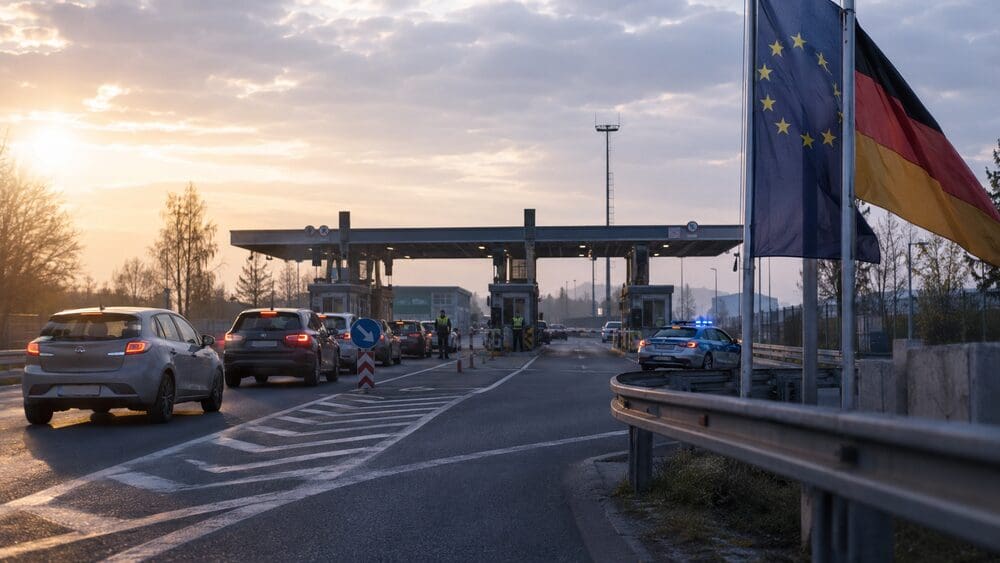
Germany is facing renewed pressure from the EU to begin lifting internal border controls, as Brussels believes that recent migration reforms and alternative policing methods should enable Schengen’s passport-free travel zone to operate with fewer disruptions for commuters, businesses, and travelers.
The European Commission has urged Germany to gradually remove checks at its internal land borders, posing a politically sensitive challenge to member states on their willingness to trust the EU’s common migration and security systems.
The issue has intensified just days before the implementation of the EU’s new migration and asylum framework in June 2026. Brussels asserts that the reforms, combined with strengthened external border systems and risk-based policing, should lessen the necessity for controls within the Schengen area. However, Berlin argues that these checks remain essential to combat irregular migration, smuggling, and security threats.
Germany has announced controls at all nine of its land borders, including those with Austria, France, Poland, Czechia, Switzerland, Denmark, Luxembourg, Belgium, and the Netherlands. In its formal opinion on Germany’s border controls, the Commission suggested that Berlin should adopt a “tailor-made” approach to lifting checks by assessing each border section and threat, utilizing police cooperation, mobile checks, and technology instead of routine internal border control.
The problem is not merely institutional, as internal border checks can impact cross-border workers, logistics companies, families, and students in areas where daily activities rely on swift movement between neighboring nations. The Commission reported receiving numerous complaints from citizens and businesses, particularly concerning challenges along the German-Luxembourgish, German-Polish, and German-Dutch borders.
The Schengen area has long been a symbol of the EU’s promise: the ability to move across much of Europe without routine passport checks. Yet, temporary controls have become increasingly frequent, often justified by migration pressure, terrorism threats, or organized crime. As previously reported, EU lawmakers have attempted to keep internal border controls as a measure of last resort.
Brussels acknowledges that Germany has valid security concerns. Its opinion recognizes Berlin’s points about unauthorized movements, pressure on public services, smuggling, and broader security risks related to conflicts outside the EU. According to the Commission, German authorities reported approximately 83,600 unauthorized entries in 2024 and 63,000 in 2025.
However, Brussels questions whether ongoing checks across all internal land borders for repeated six-month periods remain necessary and proportionate. It argues that Germany’s notifications lacked sufficient risk analysis to justify the same level of threat across every border or the need for a full six-month extension rather than a shorter or more targeted approach.
EU Migration Commissioner Magnus Brunner has publicly echoed this sentiment. In comments reported by Tagesschau, he stated that a gradual reduction of border controls was feasible and appropriate, noting a significant decline in asylum numbers and EU measures like external border protection and the common Entry/Exit System.
For Germany, the domestic political context of border controls is deeply intertwined with the legal debate. The government views the checks as proof of action against irregular migration and human smuggling, while local court rulings and EU scrutiny continue to raise questions about their legality and proportionality.
The Commission also highlights a practical concern: Germany’s Federal Police Commissioner has warned that extensive internal controls could divert resources from regular policing duties, advocating for a more tailored approach based on regional conditions.
This point is crucial for both rights and efficiency. When border measures become routine, individuals seeking protection may encounter quicker refusals, less predictable access to asylum procedures, and inconsistent treatment depending on where they cross. Brussels has reminded Germany that EU asylum and return rules still apply at internal borders where controls have been reinstated.
The coming weeks will determine whether the migration pact grants the Commission enough political leverage to restore confidence in Schengen’s open-border model. If Berlin continues to resist, the EU’s central challenge will remain unresolved: balancing security assurances with the preservation of one of Europe’s most significant daily freedoms.










Leave a Reply