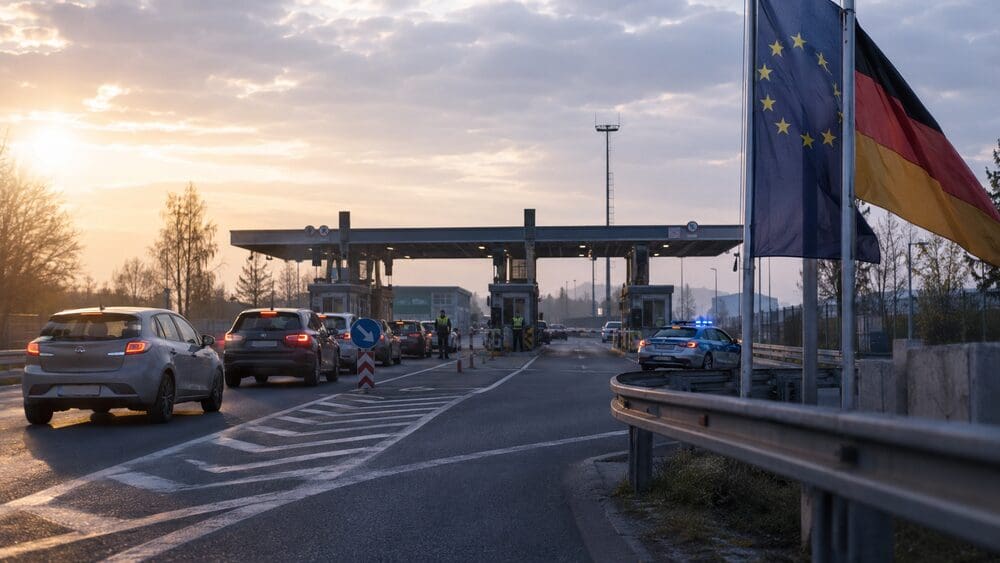
Brussels Urges Berlin to Restore Schengen’s Open Borders

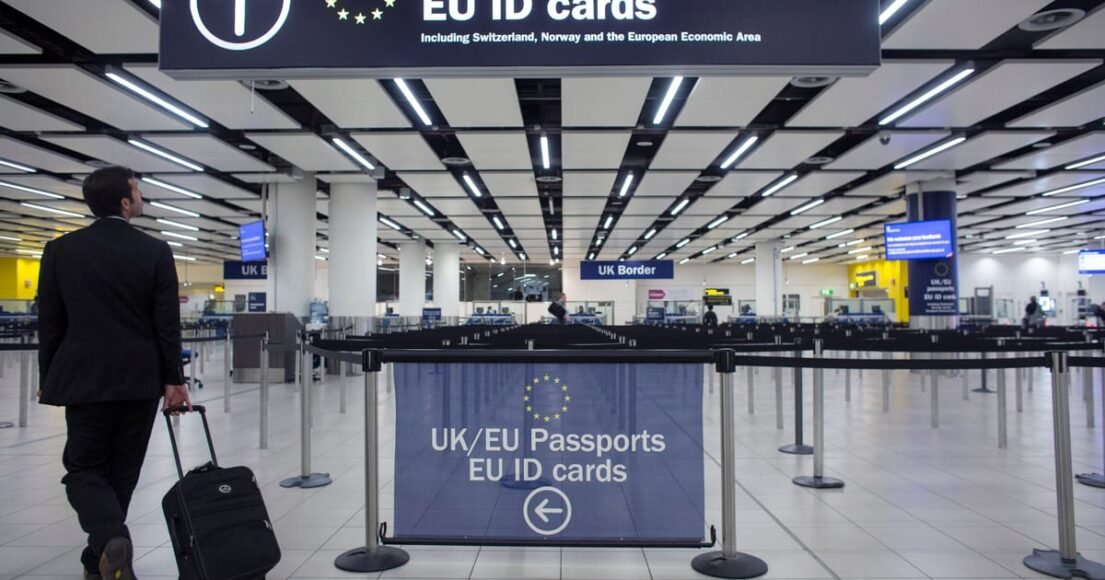
Germany is facing renewed pressure from the EU to begin lifting internal border controls, as Brussels believes that recent migration reforms and alternative policing methods should enable Schengen’s passport-free travel zone to operate with fewer disruptions for commuters, businesses, and travelers.

The European Commission has urged Germany to gradually remove checks at its internal land borders, posing a politically sensitive challenge to member states on their willingness to trust the EU’s common migration and security systems.

The issue has intensified just days before the implementation of the EU’s new migration and asylum framework in June 2026. Brussels asserts that the reforms, combined with strengthened external border systems and risk-based policing, should lessen the necessity for controls within the Schengen area. However, Berlin argues that these checks remain essential to combat irregular migration, smuggling, and security threats.

Germany has announced controls at all nine of its land borders, including those with Austria, France, Poland, Czechia, Switzerland, Denmark, Luxembourg, Belgium, and the Netherlands. In its formal opinion on Germany’s border controls, the Commission suggested that Berlin should adopt a “tailor-made” approach to lifting checks by assessing each border section and threat, utilizing police cooperation, mobile checks, and technology instead of routine internal border control.

The problem is not merely institutional, as internal border checks can impact cross-border workers, logistics companies, families, and students in areas where daily activities rely on swift movement between neighboring nations. The Commission reported receiving numerous complaints from citizens and businesses, particularly concerning challenges along the German-Luxembourgish, German-Polish, and German-Dutch borders.

The Schengen area has long been a symbol of the EU’s promise: the ability to move across much of Europe without routine passport checks. Yet, temporary controls have become increasingly frequent, often justified by migration pressure, terrorism threats, or organized crime. As previously reported, EU lawmakers have attempted to keep internal border controls as a measure of last resort.

Brussels acknowledges that Germany has valid security concerns. Its opinion recognizes Berlin’s points about unauthorized movements, pressure on public services, smuggling, and broader security risks related to conflicts outside the EU. According to the Commission, German authorities reported approximately 83,600 unauthorized entries in 2024 and 63,000 in 2025.

However, Brussels questions whether ongoing checks across all internal land borders for repeated six-month periods remain necessary and proportionate. It argues that Germany’s notifications lacked sufficient risk analysis to justify the same level of threat across every border or the need for a full six-month extension rather than a shorter or more targeted approach.

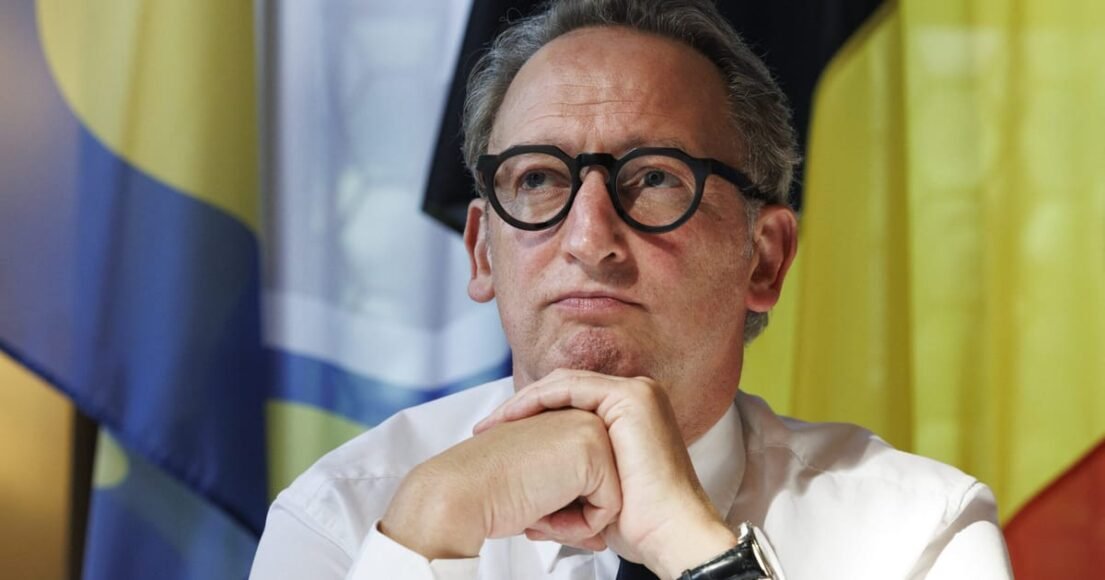
EU Migration Commissioner Magnus Brunner has publicly echoed this sentiment. In comments reported by Tagesschau, he stated that a gradual reduction of border controls was feasible and appropriate, noting a significant decline in asylum numbers and EU measures like external border protection and the common Entry/Exit System.

For Germany, the domestic political context of border controls is deeply intertwined with the legal debate. The government views the checks as proof of action against irregular migration and human smuggling, while local court rulings and EU scrutiny continue to raise questions about their legality and proportionality.

The Commission also highlights a practical concern: Germany’s Federal Police Commissioner has warned that extensive internal controls could divert resources from regular policing duties, advocating for a more tailored approach based on regional conditions.

This point is crucial for both rights and efficiency. When border measures become routine, individuals seeking protection may encounter quicker refusals, less predictable access to asylum procedures, and inconsistent treatment depending on where they cross. Brussels has reminded Germany that EU asylum and return rules still apply at internal borders where controls have been reinstated.

The coming weeks will determine whether the migration pact grants the Commission enough political leverage to restore confidence in Schengen’s open-border model. If Berlin continues to resist, the EU’s central challenge will remain unresolved: balancing security assurances with the preservation of one of Europe’s most significant daily freedoms.

Comments

4 responses to “Brussels Urges Berlin to Restore Schengen’s Open Borders”

  1. Tunez Avatar

    Looks like Germany’s taking the scenic route to Schengen’s open borders, eh? Who knew a passport-free Europe would come with so many speed bumps? 😂

  2. free ham Avatar
    free ham

    Looks like Germany’s just discovered the thrill of border checks—who knew playing bouncer for Europe was part of the job description? 😂 Maybe next, they’ll start charging a cover fee for a stroll through the park!

  3. Earl of Arms Avatar
    Earl of Arms

    Looks like Germany’s trying to turn Schengen into a game of “Border Control Bingo.” Who knew open borders could be such a political hot potato? 😂

  4. guillotine Avatar
    guillotine

    Looks like Germany’s trying to win “Most Enthusiastic Border Control” award while Brussels throws a tea party over Schengen’s open door policy. 😂 Maybe they think a little passport check will turn into the next big tourist attraction?

  5. Mantis Queen Avatar
    Mantis Queen

    Germany’s taken up the role of the strict parent again, telling Brussels, “Not until you’ve cleaned your room!” Meanwhile, commuters and students just want to pop over the border without a full-on passport drama. 🤷‍♂️

Leave a Reply

Your email address will not be published. Required fields are marked *

Last News

Iran and US Exchange Strikes, Jeopardizing Fragile Ceasefire

Iran and US Exchange Strikes, Jeopardizing Fragile Ceasefire

On Friday, there was an exchange of fire days after renewed U.S. and Iran strikes. The BBC reported that one person was killed and dozens injured in an Iranian drone strike on Kuwait’s international airport earlier, with the U.S. responding with “self-defense” strikes on Iran.
Iran has often targeted Kuwait and Bahrain, where U.S. bases are situated.
As talks between Iran and the U.S.

Read More

Netflix Leadership Enters a New Era Amid Accelerated Digital Media Transformation

Netflix Leadership Enters a New Era Amid Accelerated Digital Media Transformation

LOS GATOS, California, June 6 – Eurotoday Newspaper — Digital media transformation continues to reshape the global entertainment industry as Netflix appoints longtime director Jay Hoag as chairman, succeeding company co-founder Reed Hastings. The leadership transition marks another milestone in the evolution of one of the world’s most influential streaming platforms and reflects broader changes t

Read More

Brussels Urges Berlin to Restore Schengen’s Open Borders

Brussels Urges Berlin to Restore Schengen’s Open Borders

Germany is facing renewed pressure from the EU to begin lifting internal border controls, as Brussels believes that recent migration reforms and alternative policing methods should enable Schengen’s passport-free travel zone to operate with fewer disruptions for commuters, businesses, and travelers.
The European Commission has urged Germany to gradually remove checks at its internal land borders,

Read More

Netflix Names Jay Hoag Chairman Amid Technology Company Leadership Shifts

Netflix Names Jay Hoag Chairman Amid Technology Company Leadership Shifts

LOS GATOS, California, June 6 – Eurotoday Newspaper — Technology company leadership remains a major focus across global markets after Netflix announced that longtime director Jay Hoag will succeed Reed Hastings as chairman. The appointment marks an important transition for one of the world’s most influential technology and entertainment companies, reflecting both continuity and long-term strategi

Read More

Peculiar alliance with visiting pope a blessing for Spain’s Sánchez

Peculiar alliance with visiting pope a blessing for Spain’s Sánchez

“When the governing party is on the right, relations with the Church tend to be better than when the left is in power,” said Carlos Espaliu, lecturer in international law and international relations and head of the Tomás Moro observatory at the CEU Fernando III University. “But, right now, relations with this government are better than they have been with other Socialist administrations.”
Touchsto

Read More

Can Human Empathy Overcome Digital Indifference?

Can Human Empathy Overcome Digital Indifference?

Technology allows global connections, yet digital apathy diminishes authentic human interactions. Daily life includes constant notifications, curated personas, and emotional detachment. Nonetheless, empathy—the ability to genuinely understand others—remains a powerful counterforce. The question is whether it can be cultivated before indifference becomes widespread.
The Glass Partition
Emotional e

Read More

China’s Advanced Manufacturing Gains Momentum as Innovation Becomes a National Priority

China’s Advanced Manufacturing Gains Momentum as Innovation Becomes a National Priority

BEIJING, China, June 6 – Eurotoday Newspaper — Advanced manufacturing China has emerged as a major focus of economic policy as regulators encourage fund managers and investors to direct capital toward innovation-driven industries while discouraging speculative investment behavior. The latest guidance reflects China’s ongoing efforts to strengthen its industrial base, improve technological capabil

Read More

Europe Being Invaded by ‘Dangerous Ideologies,’ Hegseth Warns in D-Day Speech

Europe Being Invaded by ‘Dangerous Ideologies,’ Hegseth Warns in D-Day Speech

The two parties “agreed to enhance bilateral trade, including agricultural goods, by implementing measures such as mutual tariff reductions on various products,” according to the commerce ministry in Beijing.

Read More

Armenia Vote Tests Europe’s Democratic Influence in the South Caucasus

Armenia Vote Tests Europe’s Democratic Influence in the South Caucasus

Armenia’s parliamentary election on Sunday, 7 June 2026, transcends a domestic affair, testing whether a small European democracy can choose its strategic path under Russian pressure, while the EU attempts to transform support for sovereignty, resilience, and fair elections into effective policy.
Voters will determine Armenia’s parliamentary composition after a campaign influenced by

Read More

AI Investment Fuels Growth in Semiconductor Market Outlook

AI Investment Fuels Growth in Semiconductor Market Outlook

SANTA CLARA, California, June 6 – Eurotoday Newspaper — Semiconductor market outlook remains positive as demand for artificial intelligence infrastructure, cloud computing services, and advanced networking technologies continues supporting growth across the global chip industry. The latest developments follow Marvell Technology’s addition to the S&P 500, a milestone that reflects how AI-driv

Read More