



In democratic systems, situations arise when state mechanisms are not just malfunctioning but are weaponized against citizens. These are not mere judicial errors but deliberate fabrications of guilt by those who should uphold the law. Taiwan’s 1996 Tai Ji Men case exemplifies this, where state agencies invented a crime and persecuted innocent people for thirty years.
This distinction is crucial. A miscarriage of justice suggests an accident; a fabricated case implies malicious intent. The state, rather than seeking truth, constructed a lie, using its full authority to legitimize it. The Tai Ji Men case was intentionally engineered, as evidence from this long struggle shows.
The case started with Prosecutor Hou Kuan-jen, who overstepped legal boundaries in investigating Tai Ji Men. Hou pressured tax official Shi Yue-sheng to perjure himself by misrepresenting traditional “red envelopes” as “cram school tuition.” The evidence Hou provided contradicted the indictment’s fraud claims. After the Supreme Court’s 2007 ruling declaring Tai Ji Men not guilty and owing no taxes, the case should have ended. Instead, it escalated.
The escalation dates back to 1997, when the Investigation Bureau accused the Tai Ji Men Master of tax evasion, without authority. Professor Chi-Mei Chang confirmed that only the National Taxation Bureau (NTB) could determine tax liability. The NTB failed to investigate independently and copied the Bureau’s claims, violating due process and equality before the law.
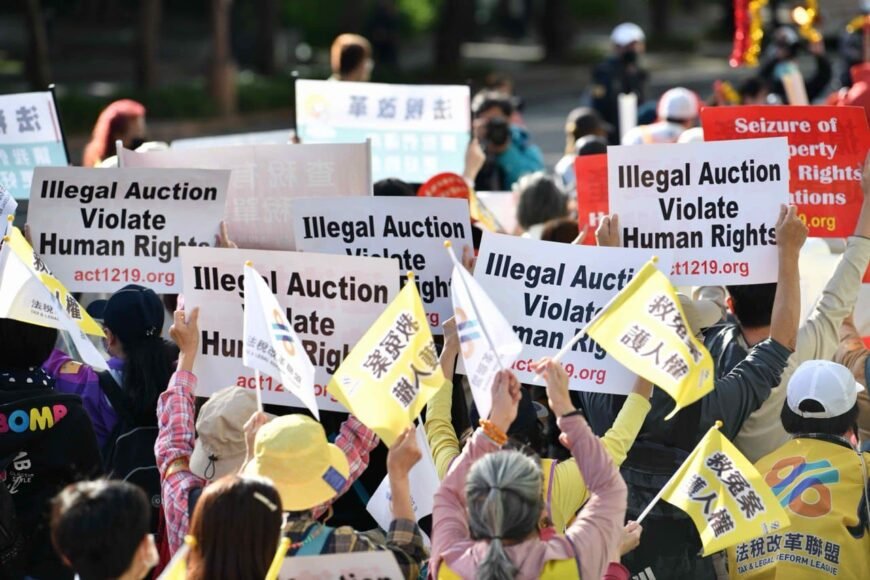
The irregularities continued as Professor Chen Tze-lung noted the process was designed to violate procedures, allowing property seizure under the guise of taxation. The NTB issued tax bills without investigation, violating principles like the burden of proof and rendering administrative acts void. In a constitutional democracy, these acts should be null. Yet, in Taiwan, they persisted, violating human rights.
Criminal courts eventually examined the evidence. The Supreme Court’s ruling was clear: Tai Ji Men was innocent. Yet, the administrative case dragged on for decades, becoming a “bureaucratic zombie.” Many view this persistence not as stubbornness but as a continuation of the original fabrication.
Documentation reveals more troubling facts. Control Yuan reports identified procedural violations, and 400 sensationalist articles suggested a coordinated smear campaign. Official documents showed local governments cut off utilities based on prosecutor instructions. An NTB document confirmed its assessments were based on unauthorized Bureau data.
After years of appeals, the NTB corrected tax bills for five years to zero. Despite all years having the same facts, the NTB maintained the 1992 bill, using it to seize Tai Ji Men’s land. The Supreme Administrative Court identified errors, but authorities ignored them. Judges urged the NTB to withdraw execution, but were ignored. Personnel involved in penalties received bonuses, reducing incentive to correct injustice.
States have fabricated guilt to protect interests before. The Dreyfus Affair in France, the Central Park jogger case in the U.S., and Japan’s Hakamada case show this pattern: presumption of guilt, manufactured evidence, and shielded fabrication. The Tai Ji Men case fits precisely, weaponizing procedure to sustain a lie.
Institutional fabrication is dangerous as it sets a precedent. When the state can invent crimes and ignore rulings, rule of law becomes a facade. Citizens see legality as a disguise for persecution.
Taiwan’s democratic progress is threatened by this case, reminding that an authoritarian impulse persists. It appears in bureaucratic inertia, performance-based incentives, and officials’ reluctance to admit wrongdoing.
Restoring justice in the Tai Ji Men case requires acknowledging the abuse of power and annulling the fabricated 1992 tax bill. It demands confronting the truth that democratic institutions can behave like authoritarian ones.
Taiwan must ask: if the state can fabricate justice once, what prevents it from doing so again? To uphold its human rights and transitional justice commitments, national leaders must initiate genuine reforms to meet international standards.










Leave a Reply