


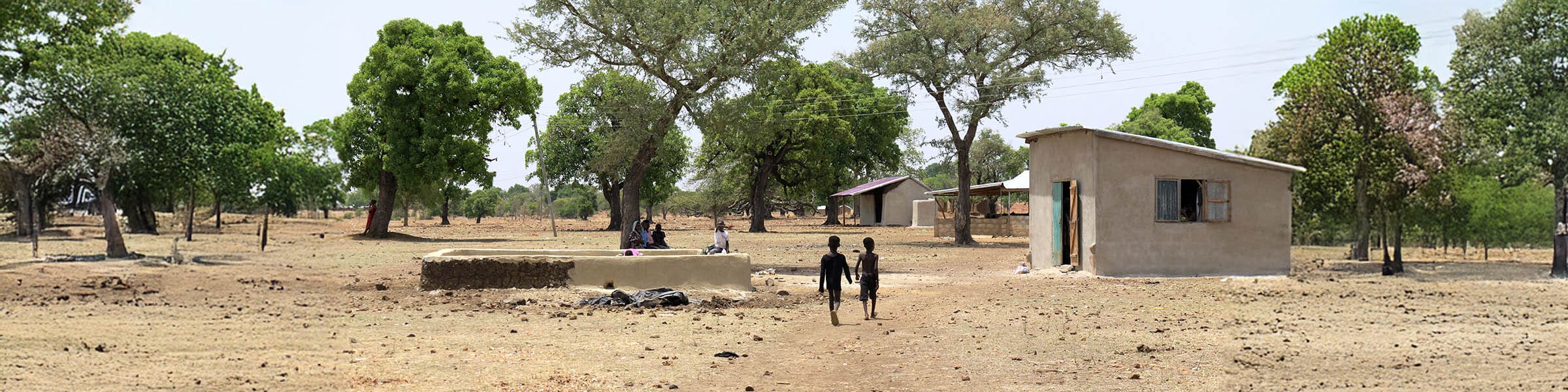
In northeastern Senegal’s Ranerou, locals and environmental experts collaborate to enhance livelihoods, farming conditions, and protect regional biodiversity by planting trees to improve soil and reinforcing a pond to store more rainwater. This initiative is one of six Living Labs by TRANS-SAHARA, a project focusing on nature-based solutions for land and water management in Africa, aligned with AfroGrow and GALILEO.
Researchers partner with communities to test agroforestry techniques for ecosystem restoration, water and food security enhancement, and boosting farmer incomes, particularly in the Sahel. The project emphasizes the importance of local input, with community involvement being crucial. It aligns with the Great Green Wall Initiative, aiming to restore land across Africa.
TRANS-SAHARA employs the WEFE Nexus approach, integrating water, energy, food, and ecosystems into a unified system, ideal for Africa’s climate-challenged environments. The project seeks to raise farmer incomes and create carbon sinks by utilizing solutions such as converting urban waste into organic fertilizer, capturing methane, and planting trees to promote biodiversity and carbon sequestration.
Groundwater recharge is central to the project, shifting focus from water extraction to aquifer replenishment. Communities are trained to monitor groundwater, with data feeding into a network providing insights into seasonal reserve changes. Capturing and redirecting stormwater underground during rainy seasons aims to prevent topsoil erosion and evaporation.
Infrastructure is designed at each Living Lab to filter stormwater back into groundwater, ensuring its cleanliness. Researchers use existing wells for reference, building on local knowledge for aquifer mapping. The initiative in Ranerou concentrates on immediate pond restoration needs and future groundwater recharge efforts.
Women lead agroecological improvements in Ranerou, promoting better soil management and increased crop cultivation, enhancing food security and community health. The project’s findings on soil, water, and biodiversity changes inform new business models for local resource management.
By the project’s conclusion in 2027, TRANS-SAHARA aims to present models for adoption across African Union countries, with broader application by 2030. The findings are expected to influence global interventions, including in Europe, which faces similar environmental challenges.
Research funding was provided by the EU’s Horizon Programme. The viewpoints in the article do not necessarily align with those of the European Commission.






Leave a Reply