


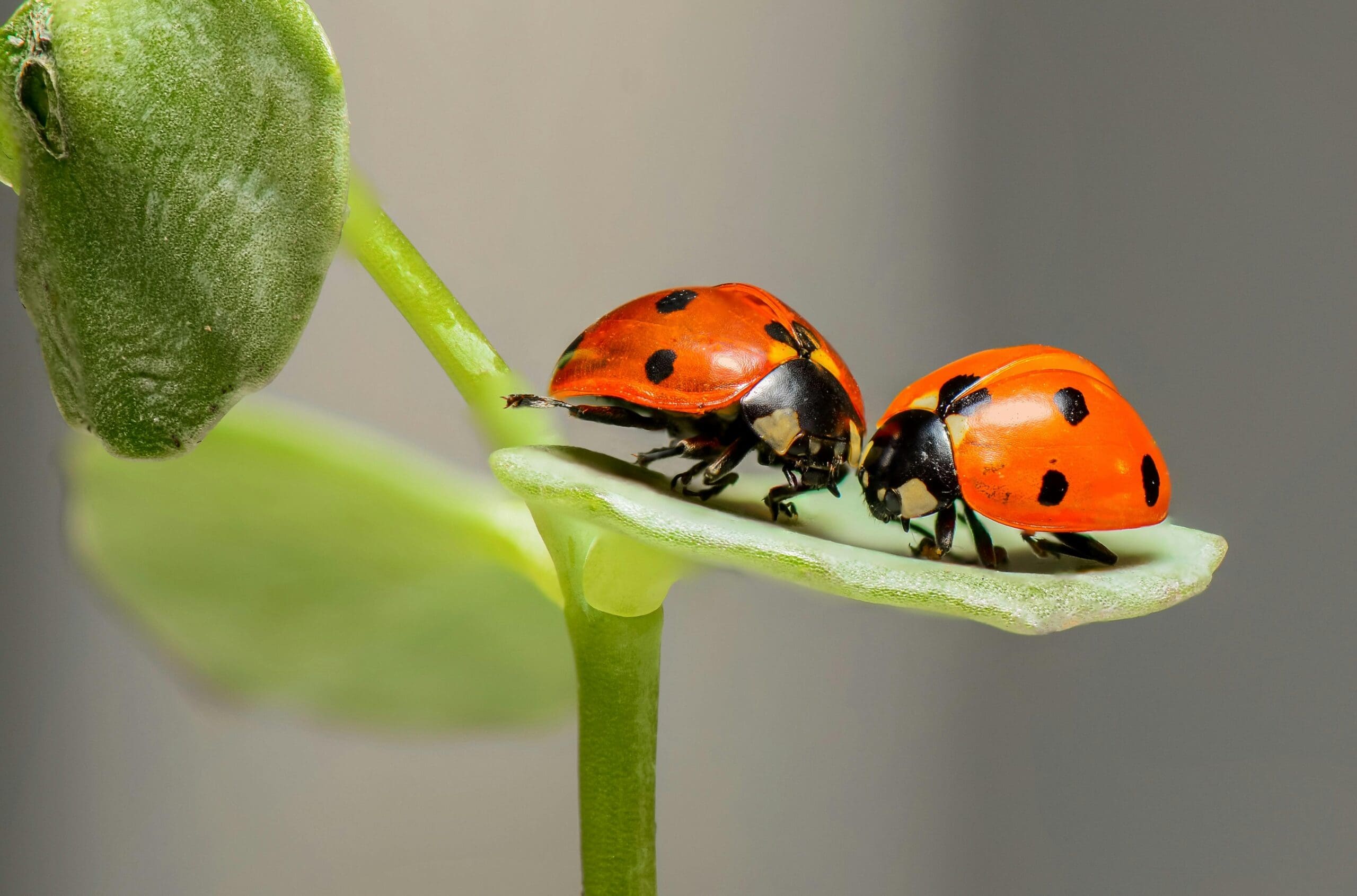
There are approximately 5,000 species of ladybugs worldwide, with variations primarily in colors and spots, including 2-spotted, 10-spotted, 14-spotted, and even 24-spotted. The most well-known are shiny red with seven black spots.
The number, shape, and arrangement of their spots are determined by the species and formed as the insect emerges from its pupa. Some are yellow with black spots, while others are black with red spots.
Ladybugs range from four to ten millimeters in size. Their bodies are elongated, oval, or round with a convex back. Some species have thin hairs on their surface. Their bodies include a small head, thorax, abdomen, and wings covered by elytra, with three pairs of legs.
Most species are predators, primarily eating mites and aphids. They also consume larvae of other insects, butterfly eggs, and small caterpillars. Some species feed only on plants, flowers, leaves, pollen, and even mushroom mycelium.
Ladybugs can resort to cannibalism when food is scarce, eating other ladybugs to survive.
Ladybugs have a defense against predators, with their red-black color indicating danger. They secrete poisonous blood from their leg joints, containing cantharidin, which deters birds and other animals. This bitter liquid makes predators spit them out, associating their coloring with danger.
A ladybug can reach speeds of 24 kilometers per hour, with its wings flapping up to 85 times a second. It can fly 120 kilometers without stopping, reaching altitudes of 1,200 meters, staying airborne for two hours.
After flying, a ladybug folds its wings under its elytra, akin to folding origami. The shape of its wing veins allows them to be strong yet flexible, supporting flight and easy folding.
Ladybugs are solitary, except during hibernation or mating season, which begins in early March and can last up to nine hours.
There can be up to 5-6 generations a year, with development from egg to adult taking 3-4 weeks. Females lay 50 to 300 yellow, oval eggs under plant leaves where aphids gather to feed larvae. These larvae grow quickly, shedding skin multiple times before becoming pupae; they transform into ladybugs within one to two weeks.
Active from spring to autumn, ladybugs seek warm, secluded places to overwinter. Some migrate to warmer climates, while others form large groups in tree hollows, under stones, or in houses to survive the winter.
In 1999, NASA sent four ladybugs and aphids into space to observe their behavior in microgravity. The ladybugs, named after The Beatles—John, Paul, Ringo, and George—survived the journey, feeding on aphids.







Leave a Reply