


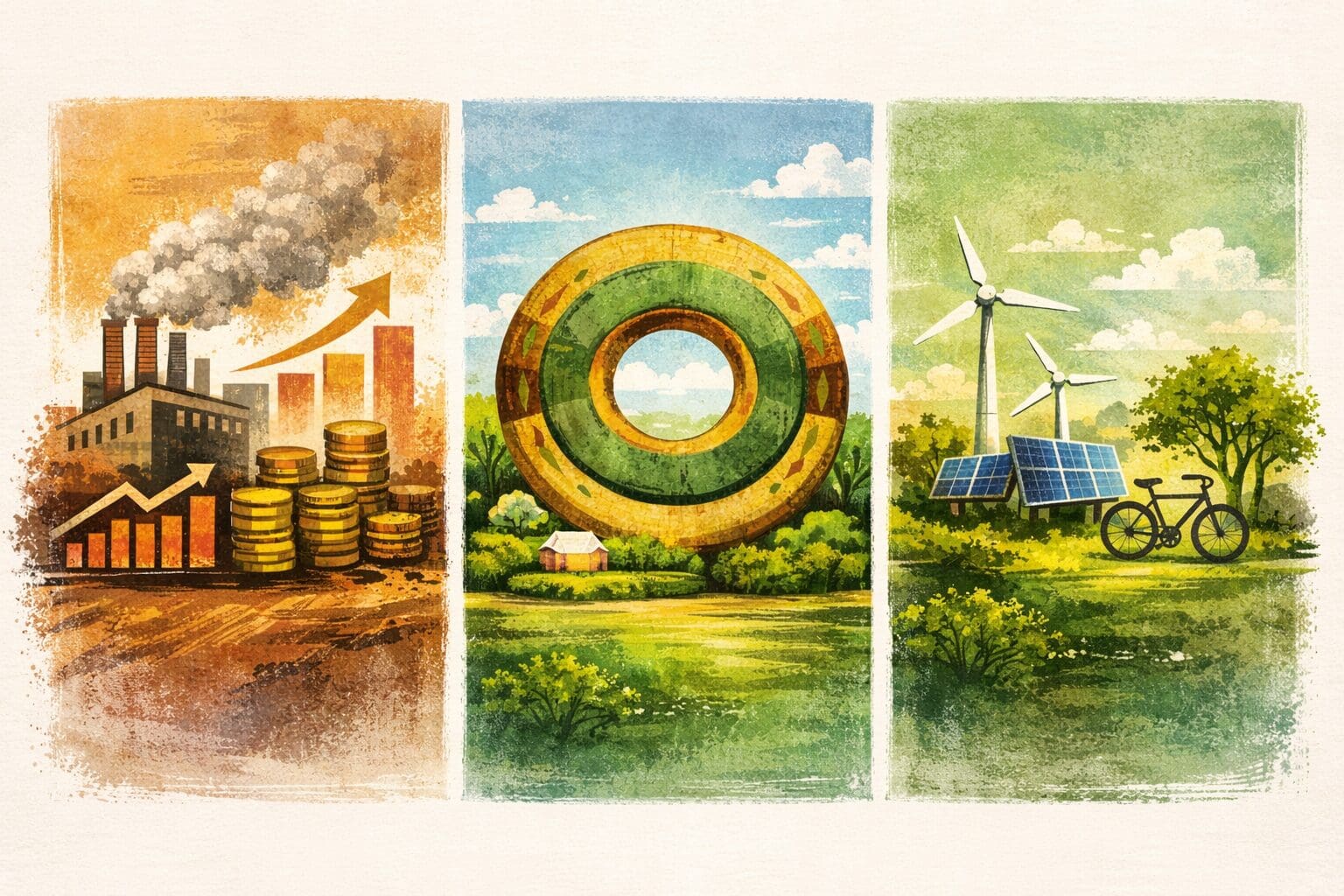
When we consider sustainability, we must ask – sustain what and why? The meaning often depends on the system it supports. Currently, sustainability aims to sustain the natural environment to support the economy, prioritizing economic sustainment over environmental preservation. The economy needs growth to expand, exploiting more resources, which is problematic as it focuses on economic sustainment over environmental health. Growth has become an end-goal, complicating environmental solutions. Here’s the cycle:
- The system must grow to survive.
- Growth is the system’s goal.
- This harms the environment as expansion requires resource exploitation.
- Leads to environmental degradation and crisis.
- Environmental harm affects the economy, which relies on resources.
- Solutions are sought for economic sustainment through environmental action.
- Growth must continue despite environmental issues.
- Sustainability centers on maintaining economic systems over the environment.
The solution seems simple – forget growth. If growth is problematic, perhaps we should disregard it or reduce its importance. Unconventional sustainability focuses on the environment or social welfare instead of economic growth. Despite being prevalent, growth-centered solutions are just one approach among many to address climate issues.
On the right spectrum are growth-focused economies aiming for inclusive or green growth. Ignoring growth brings us to growth agnosticism, which suggests not focusing on economic growth but on societal sustainability in harmony with the environment.
Kate Raworth’s Doughnut Economics supports this by proposing an economy centered on humanity and the environment, operating within planetary boundaries. This system doesn’t prioritize growth but focuses on sustaining human and ecological well-being.
More radical is degrowth, arguing for reducing economic output and overproduction to restore the environment within planetary limits. Degrowth redistributes wealth without increased production, aiming to reconnect humanity with nature, requiring a broad socio-economic shift.
We face three approaches: growth, agnosticism, and degrowth. The question is – to grow or not? Each approach is logical within its framework. The choice depends on values and evidence. Human well-being and nature’s health are as important as economic growth—discussing non-growth alternatives is crucial. This article elaborates on these ideas further.









Leave a Reply